
Chaco Culture National Historical Park in northwestern New Mexico is one of the most incredible yet least visited national park units in the United States. It has the largest ancient structures in the United States and has a combined total of 700 rooms!
Chaco Culture National Historic Park can be visited in one day. Visitors should begin at the visitor center, where they can pick up field guides to explain the ancient ruins they will be seeing. Though there are 6 great houses visitors can explore, the main highlight is Pueblo Bonito, where guests can view it from above as well as actually walk through the structure! The park has limited services, and guests should pack a picnic and fill up on gas before entering the park.
I’m Cheryl, and I live in the West! My husband and I write travel guides and spend 70 days a year on the road, including exploring the Four Corners area. We think Chaco Canyon is a hidden treasure, and we can’t wait to help you plan your trip.
Get our done‑for‑you, 1-4 day route with exact drives, maps, and must‑see stops so you don’t waste time in traffic or miss the best views.
Inside the guide:
*Step-by-step plan for Monument Valley + the most efficient driving routes to connect them
*Exact time frames and star ratings so you can make the best use of your time and money
*Includes other great spots like Valley of the Gods, Hovenweep, Fort Bluff, and more
*Best Friend Guarantee: Love it or get your money back
*Visiting more in the West? Save big $ and get guides for Utah’s parks and the Grand Canyon with our Grand Circle Bundle.
This itinerary is written for first-time visitors to Chaco. We’ll walk you through what to see, which ruins are worth your time, and how to prepare for a full day in a remote desert landscape. You don’t need to be a serious hiker to enjoy Chaco, but you do need to be prepared for rough roads, full sun, and limited services.
Because of its remoteness, the park sees only about 50,000 visitors per year. This means you’ll avoid the crowds but also need to be self-sufficient. There’s no cell service and almost no shade.
Chaco Canyon is open year-round, but you should be aware of the temperatures and plan accordingly.

Best Ruin: Pueblo Bonito
Best Overlook: Pueblo Alto Trail Overlook
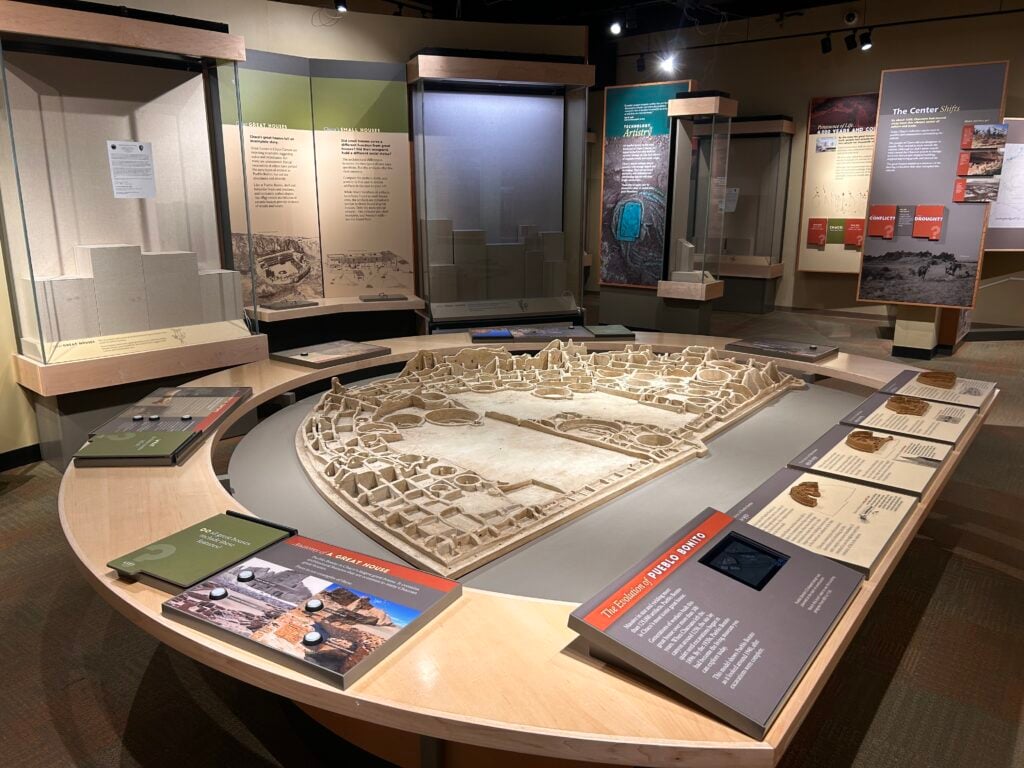
Best Visitor Center Stop: Great House Diorama
Best Practical Stop: Refill your water at the Visitor Center
13 road trip ideas across the West so you know where to go, how long to stay, and what to see
*Sample routes from 4–31 days across national parks and hidden gems
*Driving times + best stops so you don’t miss the good stuff
*Season + weather notes to avoid closed roads and peak‑crowd days
*Lodging ideas in the right spots so you cut backtracking
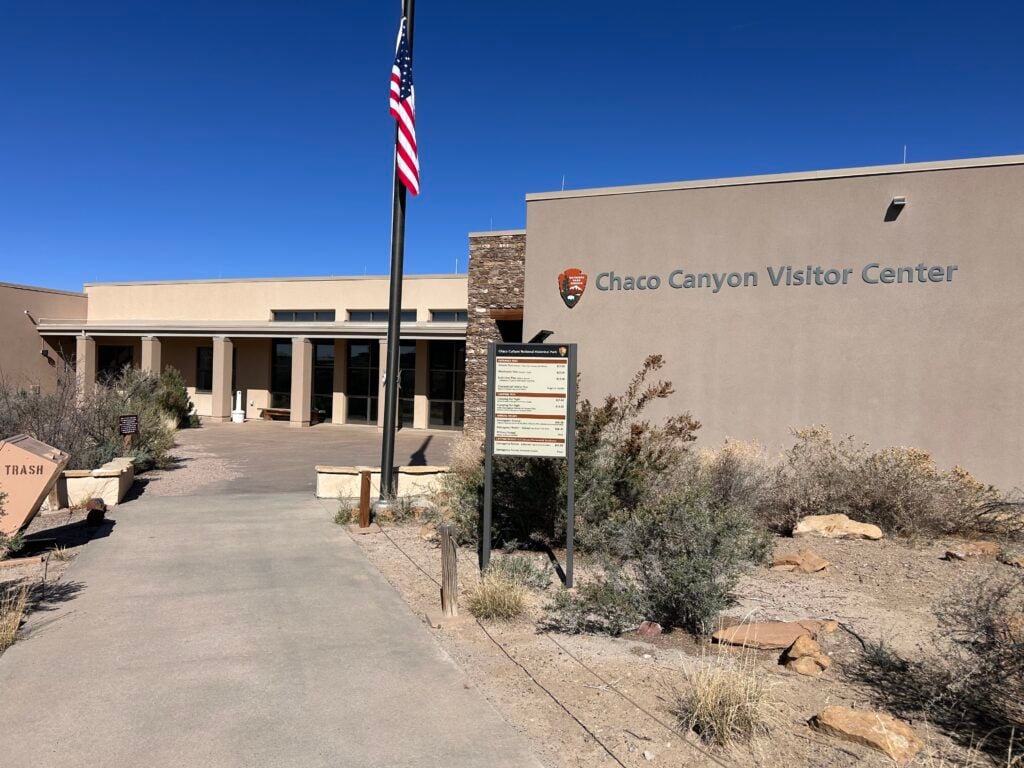
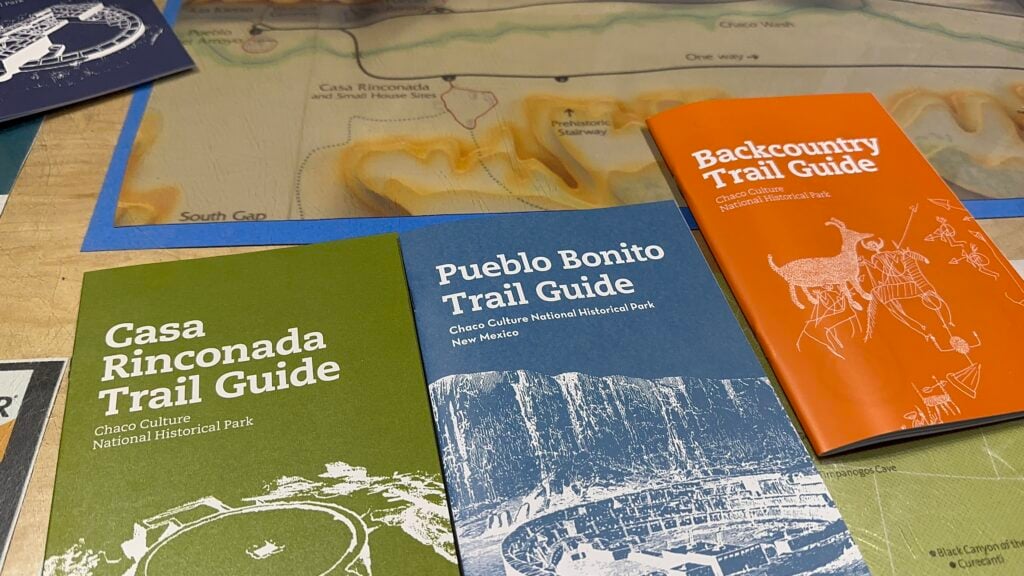
Stop #1: Chaco Canyon Visitor Center. It has clean, flushing toilets, water refill stations, and a gift shop where you can buy $2-3 trail guides for each of the major stops. These are really important because the ruins do not have signs explaining what you are seeing.
The exhibits are well done, including a light-up diorama of Pueblo Bonito. There’s also a park movie, though it wasn’t working during our visit.
GOOD TO KNOW: The park road closes at 7:00 pm, and the visitor center closes at 5:00 pm.
Take the one-way loop road through the park. You will pass Hungo Pavi, which is a great ruin, but nothing compared to what you will see next. Stop here if you have plenty of time.
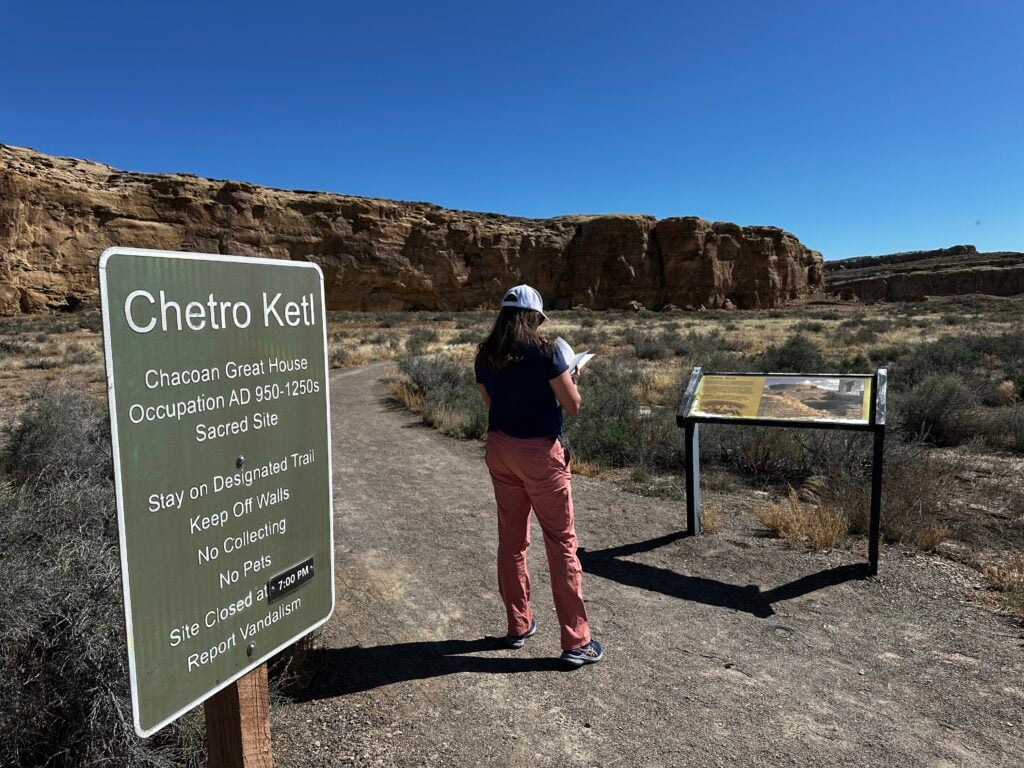
Stop #2: Chetro Ketl. This site shares a parking lot with Pueblo Bonito and the Petroglyph Trail. This was the largest Puebloan site we’d ever seen (until we walked around Pueblo Bonito, coming up soon) — massive walls, dozens of rooms, and tall structures that once reached 3 to 4 stories high. It took around an hour to walk the site. The kiva was so large that wooden pillars were needed to support the roof, which wasn’t possible with logs alone.
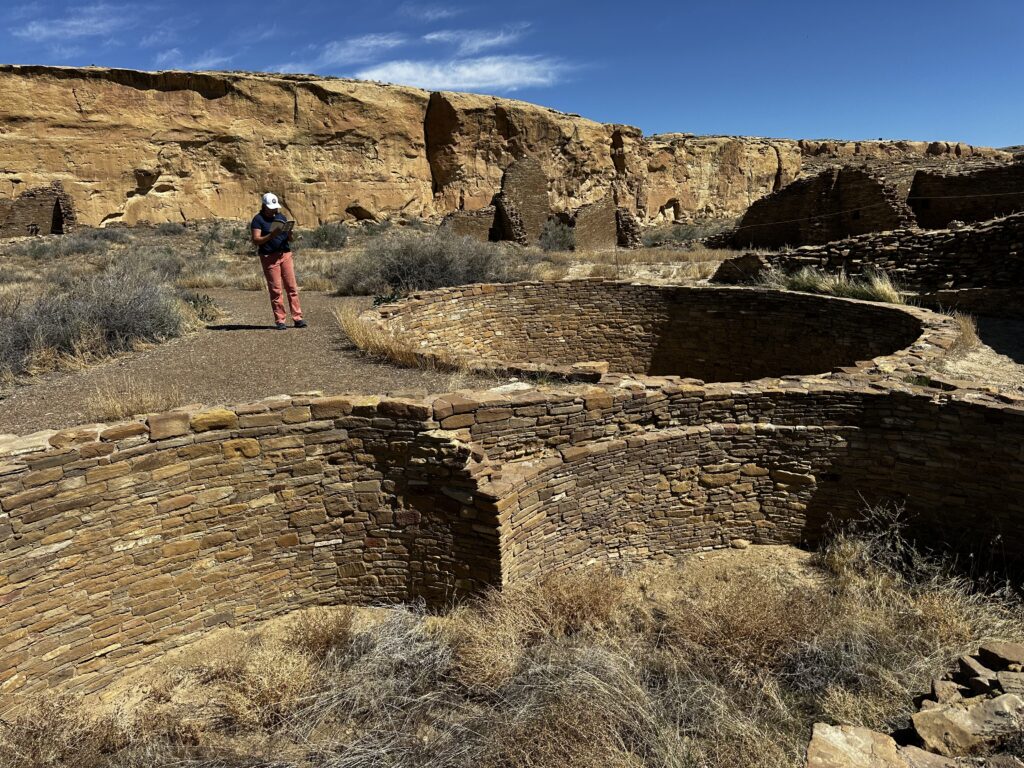
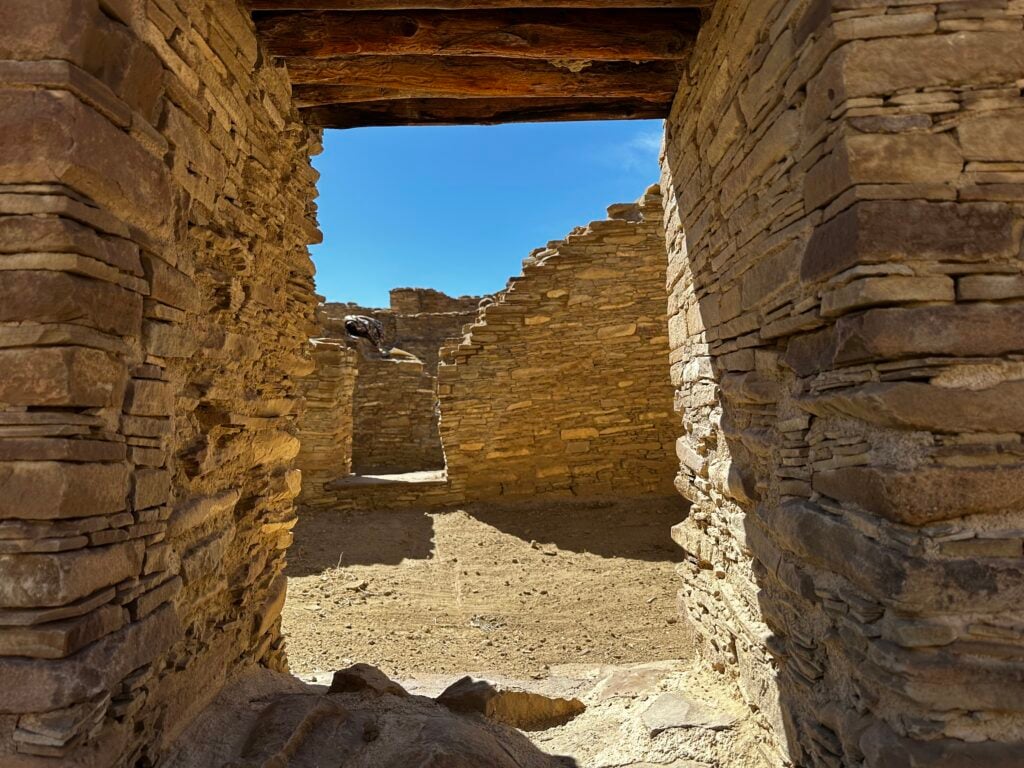
The stonework here is especially beautiful. Thin decorative stones were placed between bricks to create visual contrast. The walls themselves are 3–4 feet thick, and the exterior is different from the interior, revealing how much thought went into their design.
The path is flat but on dirt — not technically accessible, but easy to walk. You’ll also notice areas being stabilized with modern materials to help preserve them from erosion and shifting ground.
Optional Stop: Petroglyph Trail. We tried this trail, but wouldn’t recommend it. Even with the guidebook, it was difficult to follow. There are no signs explaining the petroglyphs, and the markings themselves were hard to spot. We ended up doing it backwards, which didn’t help. The walk itself is easy, but the experience is confusing. If you will be visiting Canyon de Chelly, Arches, or Canyonlands on your trip, we recommend skipping this because you will see better petroglyphs at these parks
Stop #3: Pueblo Bonito. This is the highlight of Chaco Canyon — and one of the most incredible archaeological sites in the U.S. Pueblo Bonito contains over 100 rooms and dozens of kivas, and it was built more than 900 years ago. It took 300 years to complete.
The trail to the ruins is flat and gravel, but not accessible. People were using walking sticks to navigate the stairs and uneven ground. You start by walking around the perimeter, and then suddenly you actually get to enter it! You’ll walk through room after room, some with low doorways that require stooping. It’s easy to get disoriented, which only adds to the feeling of stepping into another world.
Some walls are wider at the base than the top because they were intentionally built to support multiple stories, possibly four. One part of the structure was destroyed by a rock slide, but what remains is breathtaking.
There are a few areas roped off and no guardrails. You have to look out for your own safety. But the lack of all the safety measures and signage allows you to feel more connected to the site and experience it more like the people did 1,000 years ago.
I sat on a bench for about 15 minutes and imagined what it must have been like to arrive at Pueblo Bonito. I’m sure its grandness was overwhelming. Perhaps a child was arriving there for a special rite of passage ceremony, or perhaps a family was hoping to trade for goods for the winter.
It’s thought that Pueblo Bonito was used for a number of things, including ceremonies, meetings, celebrations, trade, and housing people who were passing through.
INTERESTING: Even though about 2,000 people lived in this area, historians believe that only 100 people lived here.
We spent at least two hours exploring here, and it was our favorite stop in the park.


Stop #4: Pueblo Alto Overlook. If you have more energy, climb up to an overlook for an aerial view of Pueblo Bonito. It’s a great way to grasp its scale and placement within the canyon. The hike is fun too! It’s 2 miles round trip, exposed, and the beginning of it is challenging.
Optional Stop: Casa Rinconada. After Pueblo Bonito, nothing impressed us much, but the biggest kiva structure is at this stop. We took the short walk out to it and thought it was great. Check it out if you have the time and interest.
Final Thoughts. There are six Great Houses in the park, but honestly, nothing comes close to Pueblo Bonito. You’ll get a feel for the park by visiting one or two others, but the rest don’t have the same emotional impact or accessibility.
This is a full-day park, and you need to be prepared. There’s no cell reception, limited bathrooms (mostly pit toilets), and no food for sale. There are a few picnic tables and trash cans, but very few amenities.
-When to Start Your Day: The park actually has hours that vary by season, so make sure to check the park’s website before you visit. Because it gets so hot, especially in the summer, start your day as early as possible to beat the heat.
-What to Wear: A wide-brimmed hat, sunglasses, sunscreen, and a sunshirt (something light with long sleeves to protect you from the sun). There is very little shade here. Also, make sure you have some sturdy tennis shoes with good traction.
-What to Bring: Binoculars to see the ruins better, a bottle of water, and trekking poles (if you use them for stability). See our recommended gear for more.
-For Your Safety: There are very few railings to protect visitors from falls into the kivas. Be careful. Also, make sure to drink plenty of water and bring salty snacks.
–Road Conditions: The road through the park is paved and can be driven on by regular cars and RVs. The roads into the park, including the road from Gallop or Farmington, are rough, washboard, dirt roads. You can drive them in a regular car, but it’s pretty uncomfortable.
-Cell Phone Service: I was off the grid my entire time in the park.
–Don’t Bring Your Doggo: Pets are allowed on the backcountry trails and at the campground, but aren’t allowed at the archaeological sites. It gets way too hot here to leave them in your car.
–Services Within the Park: There are no gas stations or food within the park. There are water refill stations and restrooms with flushing toilets at the visitor center. There are pit toilets throughout the park.

Get our done‑for‑you, 11‑17 day route with exact drives, maps, and must‑see stops so you don’t waste time in traffic or miss the best views.
Inside the guide:
*Day‑by‑day plan for the Grand Canyon, Utah’s Parks, and
Monument Valley
*Exact times, routes, and photo stops
*Includes audio stories to listen to as you drive
*Best Friend Guarantee: Love it or get your money back
We drove in from Gallup, NM. It was a 2-hour drive, and 20 miles of it was on a dirt road. It’s passable with a regular car or RV, but not enjoyable. When we exited the park, we drove on the road to Farmington, NM. It was also a dirt road, but only 13 miles this time.
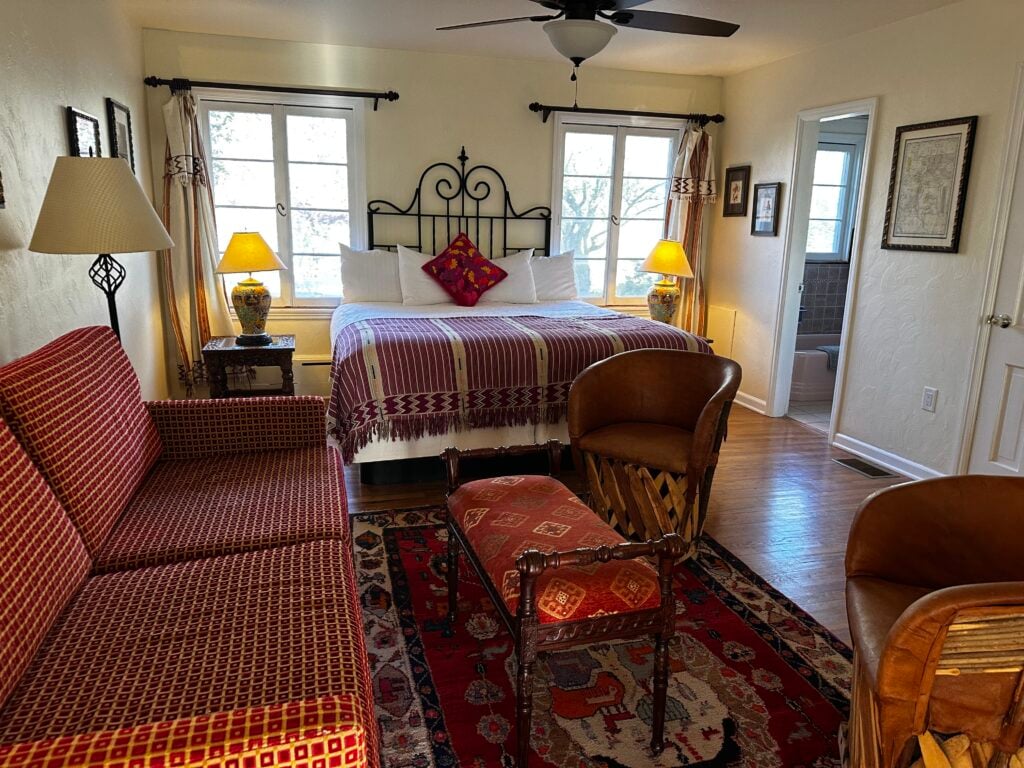
Although there is a campground in Chaco Canyon, most people choose to stay outside the park. You can stay in Albuquerque (3 hours away), Gallup (2 hours away- stay at the El Rancho Hotel (book here)- all the movie stars from old Western movies used to stay here), or Farmington (1.5 hours away; stay at the Casa Blanca Inn & Suites (book here)- delightful!)
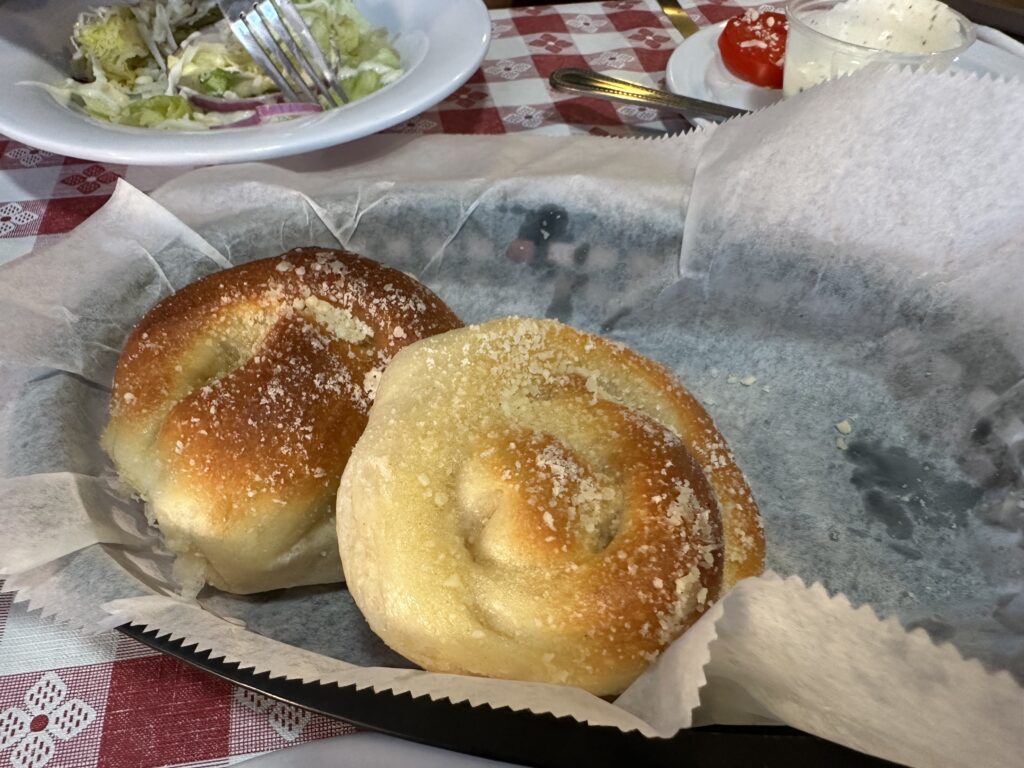
We packed our own picnic, and there are grocery stores in all of these towns. For a good meal, check out Joe’s Italian Restaurant in Farmington, NM.


Chaco Canyon is a special place that gives you a sense of scale, ingenuity, and sacredness. If you’ve visited other ancestral sites like Mesa Verde or Bandelier, you’ll be amazed by how vast and intricate Chaco is.

But this is just one of many great spots to visit in the Four Corners Region. For even more fun, check out Monument Valley, Mesa Verde, Petrified Forest, and Canyon de Chelly!
Driving in Monument Valley: 10 Things You Need to Know
How Many Days to Visit Monument Valley? Perfect 1-Day Itinerary with Maps & Must-See Spots
Cliff Dwellings in Navajo National Monument in Arizona
One Perfect Day in Petrified Forest National Park
How to Visit Hovenweep National Monument
How to Visit Canyon de Chelly National Monument: One-Day Itinerary