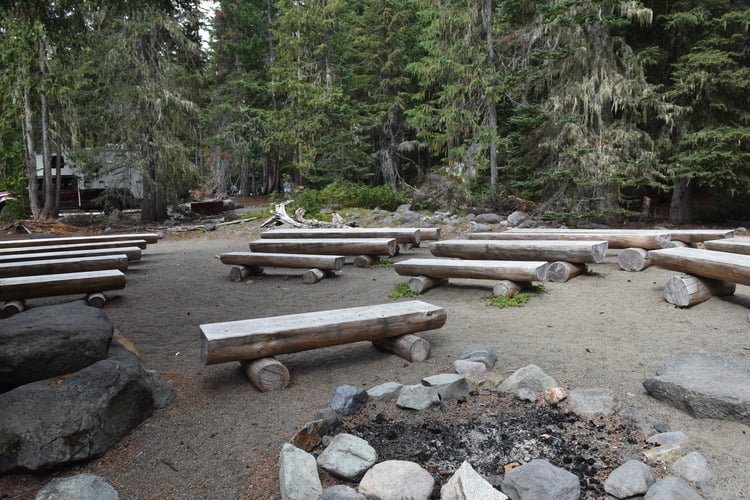
Looking for the smell of a campfire? Possibly s’mores with a view under a star-studded Mount Rainier? Mount Rainier has just what you’re looking for, with an array of campgrounds in the area to meet the needs of all different types of campers.
The three main campgrounds within Mount Rainier National Park are Cougar Rock, Ohanapecosh, and White River, with the most popular being Ohanapecosh. There are also a plethora of permit-based backpacking sites. Outside the park are many more campgrounds featuring RV/trailer-friendly campsites with full hookups as well as free boondocking sites throughout the area.
My name is Lukas Gott, and I lived and worked out of Mount Rainier’s Paradise Inn in the summer of 2024, during which I was a regular weekend car camper, and I stayed at all sorts of campsites in and around the park. So keep reading to find out what campsite best suits you when visiting Mount Rainier!
Mount Rainier is a summer park.
In the winter, Mount Rainier receives nearly 645 inches of snow per year on average, making it the snowiest place in the United States. Hard to believe at first, until driving through the park in late May, because snow will not only still be prevalent, but there is a high likelihood of a few feet, not inches, of snowpack still covering most trails in Paradise and Sunrise.
So…Mount Rainier camping realistically takes place in June (risky) to late August. Even when visiting in early June, there is a chance you’ll have a snowstorm or freak weather event hit (trust me, they happen once every two weeks), and nobody wants that.
Get our done‑for‑you, 2-3 day plan with exact drives and must‑see stops so you don’t waste time in traffic or miss the best views
Inside the guide:
*Step-by-step plan that will take you to the best hikes, drives, wildflowers, and waterfalls
*Exact time frames and star ratings so you can make the best use of your time and money
*Best Friend Guarantee: love it or get your money back
*Visiting more in the PNW? Save big $ and get guides for Olympic, Mount Rainier, the Oregon Coast, and the Columbia River Gorge with our PNW Bundle.
On top of the freak weather, the campgrounds aren’t even open yet. Campgrounds that are run by the NPS, namely Cougar Rock and White River, open in late May and early June, depending on weather conditions.
You’ll find out in my article on the wildflowers of Mount Rainier that the wildflowers arise from the snowpack in late July and produce hundreds of species throughout the park. If you’re visiting after July 25, there’s almost zero chance you’ll miss the wildflowers, no matter where you are in the park.
As mentioned, the snowpack fades in mid to late July, which corresponds with sunny days and frolicking wildlife. In my opinion, the best time to visit and camp in Mount Rainier is in early August.
Even when the sun comes out in Mount Rainier, warm evenings turn into cold nights rather quickly. If you’re planning on camping in Mount Rainier and want to stay up to see the stars, finding a site that allows campfires is in your best interest. As a bonus, the smoke of the campfire will help ward off the fierce mosquitoes in the area.
Mount Rainier is a haven for the mosquitoes of the world. The moist, often rained-on soil in the area houses perfect breeding grounds for the blood-sucking devils. In areas at high elevations, such as Paradise and Sunrise, there’s a chance you’ll be spared, but sadly for campers, there are only backpacking sites for camping at such elevations.
PRO TIP: Skip any natural form of mosquito prevention, such as citronella candles or sprays. I recommend deep woods mosquito spray with 80% DEET, which, while probably not the healthiest for you, will most definitely keep the mosquitoes away.
Now we need to take a step back, real quick, to the whole ridiculously high moisture levels in the area. Mount Rainier gets a lot of rain. Like a lot, a lot. It tends to come out of nowhere on a sunny day and catch you off guard while camping.
I would say check the weather report in the area, but it’s unpredictable, and sometimes the rain is more of a constant drizzle, which tends to be less predictable. The slow drizzle is a killer, though, as after enough of it, everything will get soaked, including you and anything in your campground.
I highly recommend a waterproof tent if tent camping in the area, as well as a rain jacket that actually rejects rain (too many jackets are water-resistant these days). To add to that, even if it doesn’t rain, the nights are moist and will soak anything left out in the campsite by sunrise.
One of the best and worst parts about camping in Mount Rainier is the wildlife. There’s a high chance you’ll see squirrels, chipmunks, birds, and deer scampering around while camping. The other side of this tale is who comes out at night, including black bears and raccoons.
Food should always be put away at night to avoid bear confrontation, especially when camping in the backcountry or while backpacking (a bear box is required and given to you by NPS). There is also a chance you run into a mountain lion, or mountain kitties as I like to refer to them, anywhere surrounding the park. Mountain lions are generally quite skittish and avoid people, but are quite prevalent in the park.
In the case of both black bear and mountain lion confrontations, make yourself as loud and large as possible.
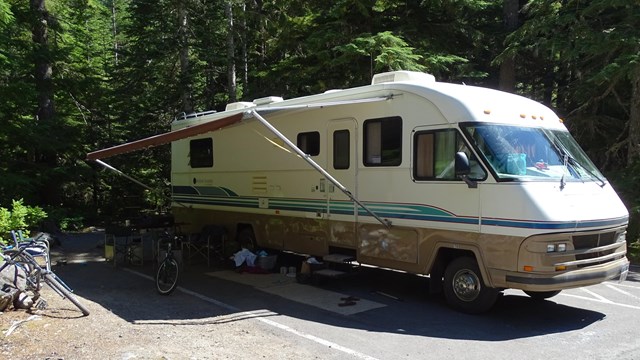
There are three main campsite types available in Mount Rainier: NPS campgrounds, backcountry campsites, and backpacking permit-based campsites.
| Campground | # of Sites | Opening/Closing Dates |
| Cougar Rock | 179 | Late May to Late September |
| Ohanapecosh | 179 | Late May to late September |
| White River | 88 | Late June to late September |
There are three main National Park Service campgrounds in the park: Cougar Rock, Ohanapecosh, and White River. We’ll get into more specifics on these in just a minute, but just know that each campground lines up with one of the three entrances to the park.
The two campgrounds in the Paradise Corridor, Cougar Rock and Ohanapecosh, can be reserved online at Recreation.gov in advance (probably a good idea) or accessed on a first-come, first-served basis for non-reserved sites. White River Campground in Sunrise is exclusively available on a first-come, first-served basis.
All NPS sites cost ~$20 per night and have access to flush toilets, firepits, and water. None of these sites have full hookup capability (electricity, water, sewer) for trailers/RVs, although Cougar Rock does have a dump station.
Camping is limited to 14 Consecutive days, and a maximum of 6 people/two tents are allowed per campsite.
Each NPS campsite is located near hiking spots and in a forest-esque setting.
In general, these sites are normally clean, large enough to fit at least two tents (tent sites vary in size, but normally this does apply), and a great place to camp within the park for easy access to all the park has to offer.
Privately owned campsites only exist outside the park, as private campsites within National Parks under NPS contract, known as concessionaires, don’t exist in this park. These campsites vary in price, full hookup compatibility, and size allowance.
These campgrounds usually have access to toilets and water. This is your best bet for comfort camping if you miss out on booking a NPS site.
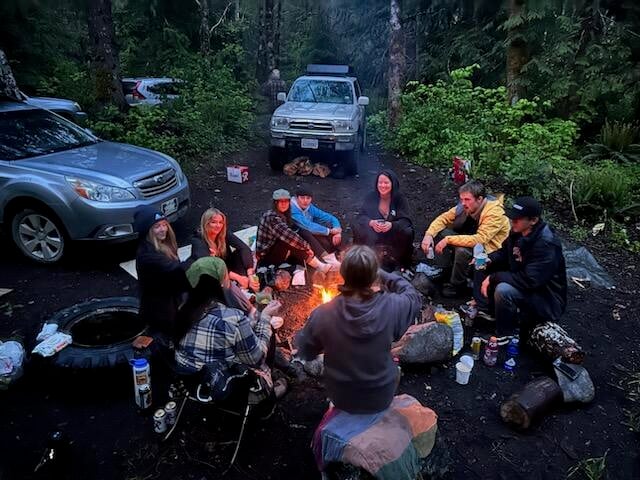
I most definitely boondock most nights I camp.
Boondocking, by definition, is dry or dispersed camping in a remote location without access to toilets, water, or electricity.
Boondocking near Mount Rainier is abundant and typically offers close access to park entrances. These campsites (not campgrounds) exist in National Forest or BLM land, and they’re first-come, first-served sites set up off the road or in the woods nearby. The size of sites varies, but in some situations, I’ve fit over 5 cars in one site and over 15 people.
These sites are in the middle of nowhere, so if you’re with a large party and don’t want to worry about noise, they’re a great option. To find these sites, I recommend using the website iOverlander.
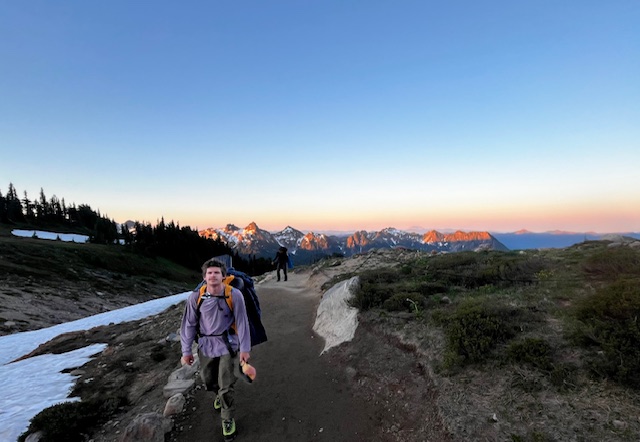
I’ll briefly scan over backpacking camping, but it’s a great experience to try in Mount Rainier National Park. These sites are within the park and have no access by car, requiring a backpack, legwork, and a tent to visit.
Reservations or permits for these sites can be made at the ranger stations in Longmire or Paradise, where they will give you a required bear box to pack with you (it’s about the size of a small sleeping bag).

The layout of Mount Rainier has three different entry points and two gateway towns through which to enter the park. There are only 3 roads in the park.
The Paradise area (southwest) is the park’s most popular spot and is accessed via the Nisqually Entrance. Paradise Road begins at the western Nisqually Gate and finishes at Paradise Inn, passing the tiny town of Longmire as well as tourist stops such as Comet/Carter Falls and Cougar Rock Campground. The small town of Ashford is the closest to this entrance.
The other route leading to Paradise, Stevens Canyon Road, comes from the East. This road starts at the Stevens Canyon Gate, just past the town of Packwood and Ohanapecosh, and passes by tourist stops such as Silver Falls, Box Canyon, and Reflection/Snow Lake.
The Sunrise area is in the Northeast and can be reached from the White River Entrance. Sunrise Road is used purely to access the Sunrise Corridor of Mount Rainier. This road passes through the White River Gate before reaching Sunrise Day Lodge.
| Sunrise | Paradise | |
| Cougar Rock Campground | 1 hour 44 minutes | 23 minutes |
| Ohanapecosh Campground | 56 minutes | 45 minutes |
| White River Campground | 22 minutes | 1 hour 13 minutes |
| Packwood | 1 hour 9 minutes | 56 minutes |
| Ashford | 1 hour 56 minutes | 45 minutes |
| Skate Creek Road (varies) | 1-2 hours | 45 minutes-1 hour |
Personally, staying inside or outside the park is decided by your needs. I think staying inside the park is best if you’re looking for easy access to the beauty of Mount Rainier. I would personally stay outside the park because I’m consistently looking for free and private camping spots. But no matter the situation, all the camping in Mount Rainier is wonderful!
Best Camping Location in the West: Cougar Rock Campground
Best Camping Location in the East: Ohanapecosh Campground
Best Full Hookup Campground in the West: Mounthaven Resort
Best Full Hookup Campground in the East: Packwood RV Park
Best Free Camping: Skate Creek Road
If you are visiting Paradise: Cougar Rock Campground
If you are visiting Sunrise: White River Campground
Most Secluded Camping: In park backpacking sites or the Gifford Pinchot National Forest
The Western half of Mount Rainier is accessed via the Nisqually Entrance, which stems from the nearby towns of Ashford and Elbe, which both have gas, grocery, and accommodation options.
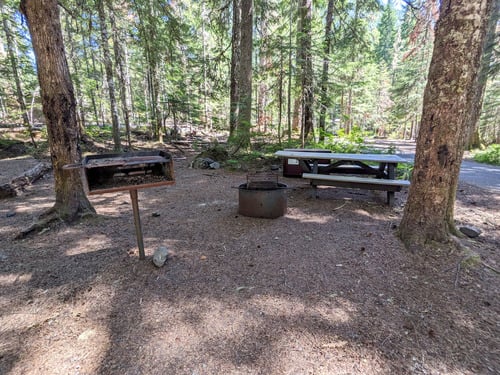
Cougar Rock Campground is located between Longmire and Paradise. This campground has easy access for RV/Trailer setups and is one of the more popular campgrounds in the park. It’s popular because of its location, which is close to Paradise as well as Christine, Carter, and Comet Falls. It’s also the most easily accessible campground from Seattle, which brings regular weekend visitors throughout the summer.
The campground itself is in a dense pine forest and, compared to other areas of the park, has fewer mosquitoes, although still prevalent in the evening. The campground is quite natural and hosts regular wildlife visitors such as deer, bluejays, and squirrels.
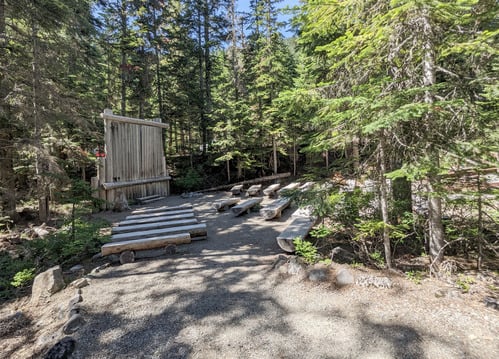
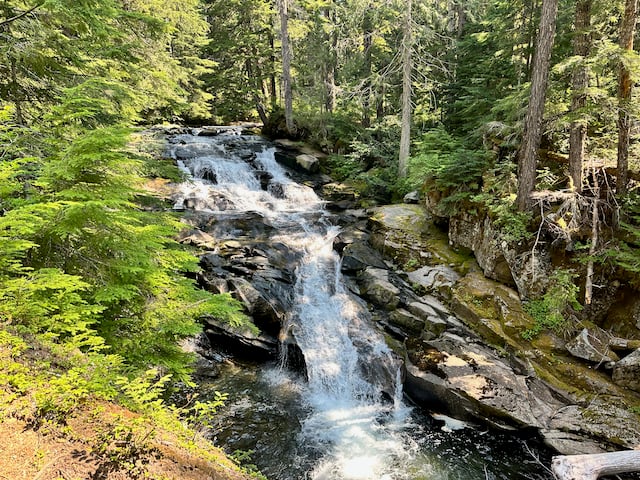
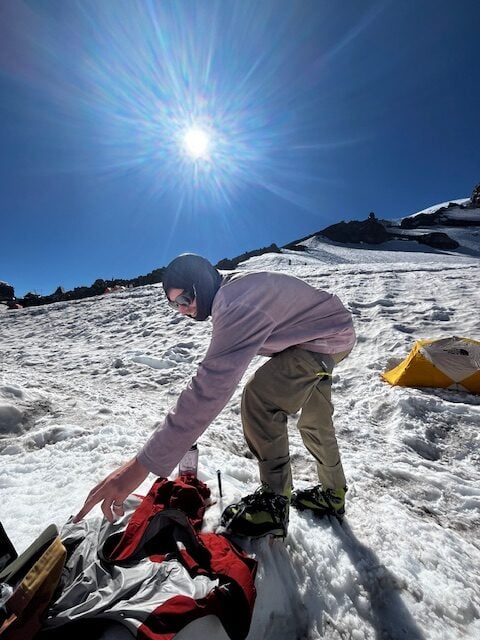
While there is only one true campground in the Western half of the Paradise Corridor, there are bountiful backpacking sites in the area. The Wonderland Trail (which encompasses Mount Rainier) has several campsites accessible behind Longmire. To the far west, there is also Lake George and the hike to Gobblers Knob, with a view of Mount Rainier from a gorgeous fire tower. If you’re feeling extra adventurous and in shape, backpack to Camp Muir, the base camp below Mount Rainier; it’s a crazy experience!

A quick guide to choosing between the Oregon Coast, Olympic, Mount Rainier, and the Columbia River Gorge
*See what you can realistically do in the time you have (3-13+ days)
*Choose the RIGHT regions for you. Do you like to hike, relax, eat good food, take scenic drives?
*Avoid the classic PNW mistakes that waste hours in the car
Call me sneaky, but this is for your benefit, not mine. The lower Paradise Inn overflow parking lot doesn’t prohibit overnight stays due to mountaineers needing overnight capabilities to climb Mount Rainier. As someone who lived nearby, I’ve witnessed numerous people setting up for a night in the parking lot. If you have an RV, car sleeper, or van and you’re desperate to beat the crowds, it’s a free option in a pinch.
While availability is limited, Gateway Inn has 8 nearly full hookup RV sites just 5 minutes (a five-minute WALK) from the park entrance. This Inn also has 20 Cabins available and provides a mini-mart on the property. The location would be top-notch to enter the park and should see quite abundant wildlife, including possible elk from the valley.
Mounthaven Resort is your best bet to get a full hookup, traditional camping situation near the park. The resort’s campsites are kept in good shape, have fire pits, and showers for an ideal camping situation. It’s also only a 30-minute drive from the park via the town of Ashford, which has diverse food options and a gas station.
Skate Creek Road and I are best friends. I’ve camped at almost every site on this road at least 3 times. Skate Creek Road runs east from Ashford all the way to Packwood and is littered with pull-off boondocking sites that vary in shape and size. Some of these sites can fit several cars; some can’t fit any, but they’re all free. My personal favorite site is a tent camping site next to the Nisqually River that overlooks Mount Rainier. It will be hard to find, but when you can first see the Nisqually River from the road and a left-hand turn is down the road, that’s when to stop and investigate the river. All of these sites have basic fire rings and flat grounds for tent camping.
P.S. Mosquitoes are the size of small birds here

Another boondocking option that bends off Skate Creek Road; use iOverlander to lead you to a spot in Gifford, which can be quite rough for non-off-road vehicles in some areas. Also, this forest is particularly remote and there are many makeshift shooting ranges off this road, so travel in groups and be careful. But besides that, this forest is by far the best spot for large group meetups, as its remote sites are huge and nobody will bother you.
The eastern side of the park is highlighted by the lower Paradise Corridor and the only entrance to the Sunrise Corridor. The closest town to both is Packwood, the best town in the area for food, gas, and accommodation.
This is the only campsite in the Sunrise Corridor. White River Campground sits just 10 minutes from Sunrise trailheads in a dense forest near a river. I have heard this road is a bit tougher to access than the other two NPS sites and could be a pain to drive out to if you miss out on one of the first-come, first-served sites, but the ability to be so close to trails in Sunrise is a winner for sure.
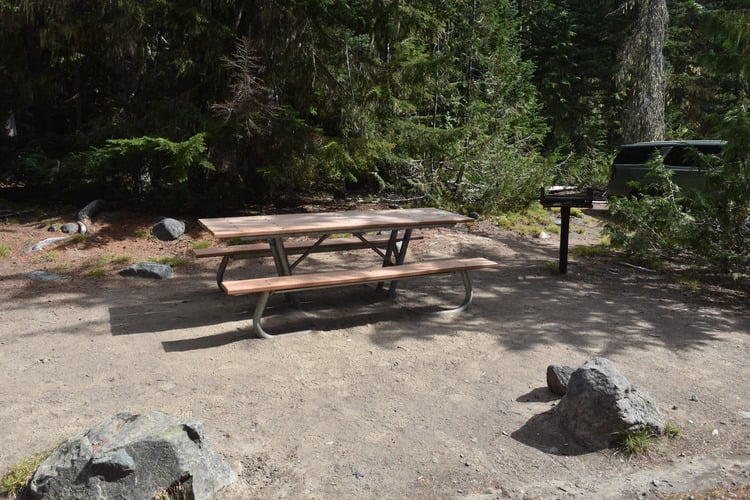
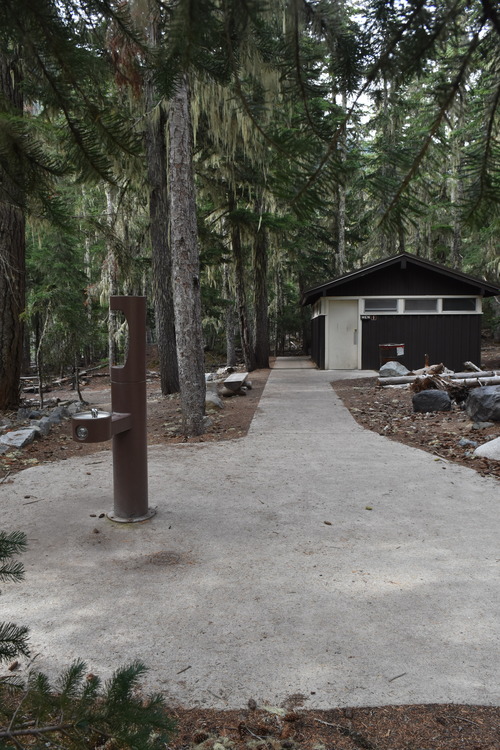
Located right past the Stevens Canyon Gate, Ohanapecosh Campground is in an ideal situation to visit the entire park without having to worry about gas or food.
Being only a quick 20-minute drive to the town of Packwood allows for easy gas refills and food options, and a 40-minute drive to Paradise or the Sunrise Corridor makes for easy movement around the park. On top of that, there is easy access to trails such as the Grove of the Patriarchs and Silver Falls.
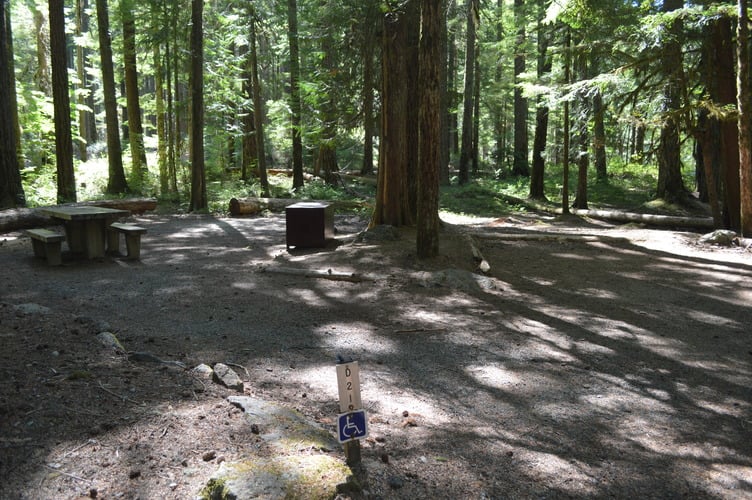
The actual campground sits in a dense forest with abundant wildlife and tons of mushroom growth. It’s a beautiful area of the park to camp in, and the campground itself has great reviews!
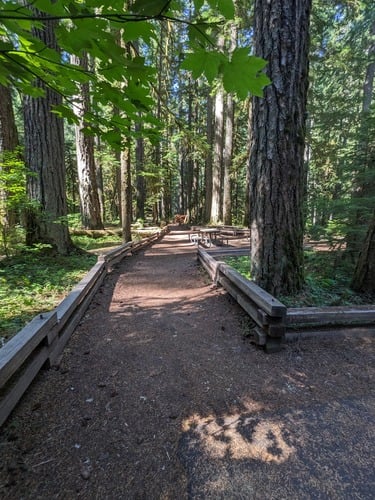
Ask rangers in Sunrise for help choosing a hike, but Sunrise is well known for its access to the Wonderland Trail and its Backcountry Trail Loop!
Get our done‑for‑you, 7‑17 day route with exact drives, maps, and must‑see stops so you don’t waste time in traffic or miss the best views
Inside the guide:
*Day‑by‑day plan for Olympic, Mount Rainier, the Oregon Coast, & the Columbia River Gorge
*Details you need: Time frames, driving routes, and where to sleep each night to reduce backtracking
*Best Friend Guarantee: Love it or get your money back
Silver Springs Campsites
A beautiful alternative to the White River Campground. Located just outside the White River Entrance, this campground is run by the US Forest Service and has beautiful river and forest sites, but lacks showers and many amenities. But if you’re looking for a true camping experience, this is a great option.
Packwood RV Park
Packwood RV Park is the best full hookup campsite option in the town of Packwood. With easy access to food, gas, and grocery options, it makes this RV park luxury living. To add on, it has showers and laundry- shoot, that’s barely camping!
Is there cell service in the park? No, cell service is mostly exclusive to Paradise, Packwood, and Ashford.
Are dogs allowed at the campgrounds? Dogs are allowed to be leashed in park campsites, but cannot roam free. They are not allowed on trails.
Is it safe to camp in Mount Rainier? As long as you’re disposing of food in bear-safe containers, it’s absolutely safe.
Most travelers want to visit the most popular sites and still avoid the crowds. We have a detailed itinerary that gives you a step-by-step game plan so you can get to the best places at the right times.
MOUNT RAINIER TRIP PLANNER: To read or watch all of our content about Mount Rainier National Park, check out our Mount Rainier Homepage.
THINGS TO DO: Don’t miss all that Mount Rainier has to offer in the Paradise and Sunrise areas, including hiking and the beautiful wildflowers.
WHERE TO EAT: Don’t miss the best places to eat in Mount Rainier National Park
KNOW BEFORE YOU GO: Find out which is the best entrance to use, the best time to visit, and all about driving around Mount Rainier