Mount Rainier National Park is a volatile, high-alpine environment that receives extreme weather and holds winter snowpack until late June. For the best experience when visiting Mount Rainier, it’s important for you to know when to visit the park.
For the best experience, Mount Rainier should be visited in late July to early August when the snowpack has melted, the weather is more consistently pleasant, and the wildflowers begin to bloom. The worst times to visit Mount Rainier are in the early season, or May to early June, when weather patterns may be more extreme, and snowpack makes visiting beautiful areas of the park far more difficult.
Hi there, my name is Lukas Gott, and I worked at Paradise Inn at Mount Rainier in the summer of 2024. I’ve walked home from work in blizzards, watched thunderstorms crash outside my dorm room window, and hiked in the early season; read along for my opinion on the best (and worst) times to visit Mount Rainier National Park.

As quickly inferred before, Mount Rainier is a massive biome with its own unique ecosystem surrounding it. At Mount Rainier’s peak (somewhere most likely unrelated to your visit), the weather is just about as dramatic as you can imagine. As someone who’s attempted to climb the mountain, I can confirm the swirling winds, sharp cold air, and freezing temperatures are not all that fun.
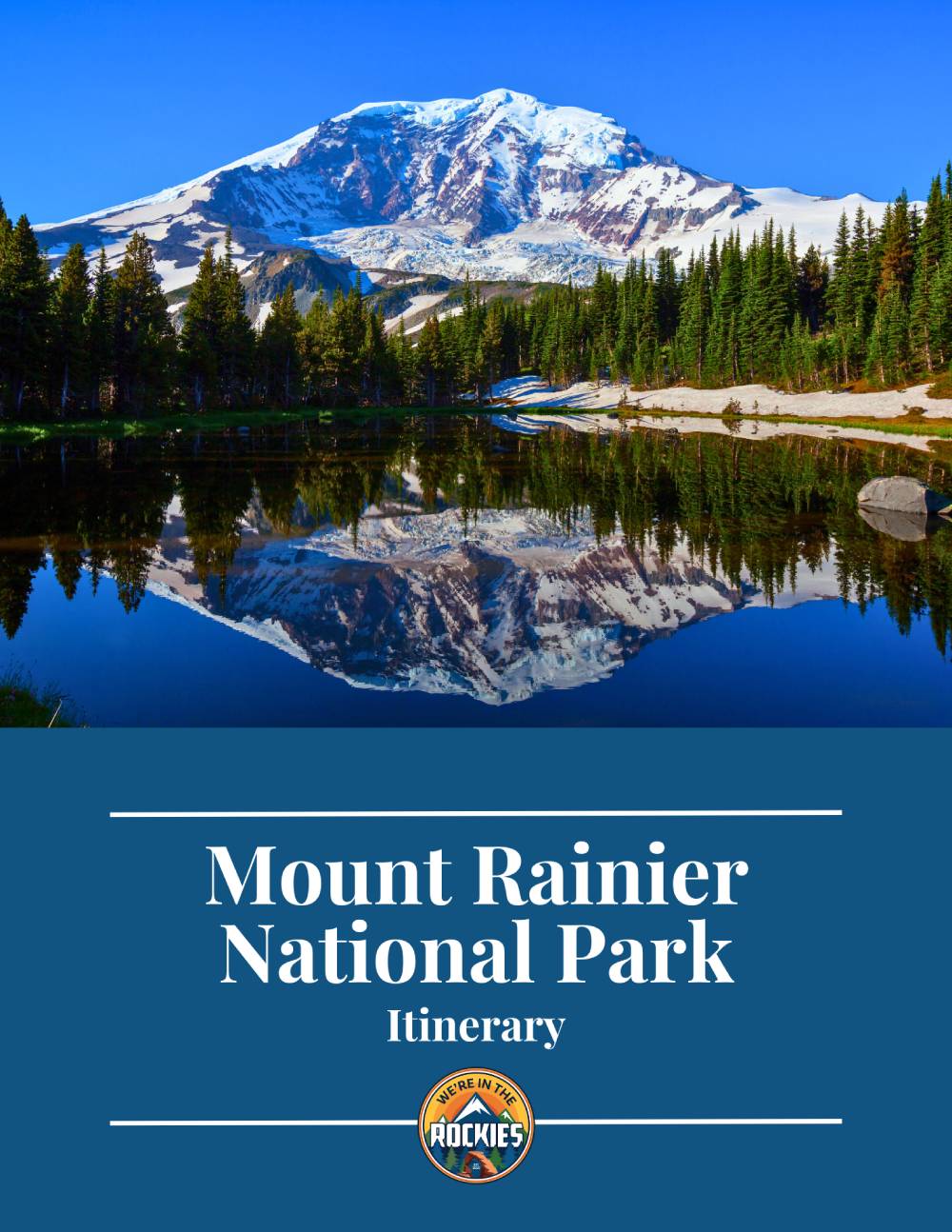
But on the bright side, just 9,000 feet below the peak sit the Paradise and Sunrise areas, which aren’t in nearly the same weather patterns as the peak of the mountain. The lodges and hiking trails around them still receive their fair share of surprising weather patterns, but by midsummer, they become sunny paradises (no pun intended) with blooming wildflowers and abundant wildlife.
As you move into lower elevation areas surrounding the mountain, such as Longmire and Box Canyon, the geography changes dramatically. Rain becomes much more common than snow, lush underbrush filled with ferns and mushrooms is abundant, and trees are filled with mossy branches. It becomes a temperate rainforest. The change is drastic and can all be viewed in one day, showing off the beautiful biodiversity Mount Rainier has to offer.
Get our done‑for‑you, 2-3 day plan with exact drives and must‑see stops so you don’t waste time in traffic or miss the best views
Inside the guide:
*Step-by-step plan that will take you to the best hikes, drives, wildflowers, and waterfalls
*Exact time frames and star ratings so you can make the best use of your time and money
*Best Friend Guarantee: Love it or get your money back
*Visiting more in the PNW? Save big $ and get guides for Olympic, Mount Rainier, the Oregon Coast, and the Columbia River Gorge with our PNW Bundle.
A common theme you’ll notice in this article is how unpredictable the weather can be at Mount Rainier. Before planning a visit, take into account that any sunny hiking day could turn into a rainstorm at any given moment.
Mount Rainier has one road for each section of the park, the Paradise and Sunrise Corridors. Not only are the roads crowded, but by midsummer, any tourist stop near the roads will be packed. As for the lodges and the hiking trails stemming off of them, don’t expect empty trails or quick food access.


Mount Rainier is a hiker’s park. There are easy trails, such as Myrtle Falls in Paradise and the Nature Trail in Sunrise, but for the most part, trails are 3-mile hikes or more. There aren’t many activities outside of hiking available in the park. Biking, swimming (unless you’re brave), and lakeside activities don’t really have a place in this park. So make sure to be prepared to pull out the hiking boots at Mount Rainier. You can read more about my favorite hikes in my article Quick and Easy Guide to Hiking in Mount Rainier.
DON’T MISS: How Many Days You Need to Visit Mount Rainier: 2-Day Itinerary
Mount Rainier sits in the midwest of Washington, and with minimal roads, it makes for a difficult road trip itinerary for some. Trying to visit Sunrise will leave you very far east in Washington, making a journey west to Seattle or Olympic National Park a much further drive. If visiting from the East, the journey becomes much easier, as visiting Paradise last will leave you with only a 2-hour drive to Seattle.
Just like any National Park, Mount Rainier is expensive. But compared to other National Parks, Mount Rainier’s nearby towns are nearly an hour from any entrance, making going in and out to get food or accommodation far more difficult. Packing food makes this trip far more affordable, as otherwise you’ll be stuck with low-quality food for high prices.
Mount Rainier receives nearly 53 feet of snow per year on average, making it the snowiest place in the United States, and debatably in the world (surprising, right?). The winter snowpack covers all hiking trails in Paradise and even down to lower elevation areas such as Cougar Rock and Box Canyon. In the Sunrise Corridor, the snowpack may melt even later in the season, as Sunrise Lodge sits at the highest drivable elevation in the park.
During the winter, snow isn’t the only issue. With the park surrounding Mount Rainier, the weather patterns around a mountain that sits at 14,400 feet tend to be unpredictable and volatile. Throughout the season I worked under the mountain, we would receive storms that consisted of sleet in harsh winds, thunder, and flash-flood-level rain. The park is unforgiving, no matter the season, for those who come underprepared.
In the winter, traveling through the park will be nearly impossible; Paradise Road will be mostly closed, and Sunrise Road won’t open until mid-summer. The winter does bring possibilities of high-quality backcountry skiing and snowshoeing. Winter has also by far the lowest visitor rate at Mount Rainier, so if a sunny snow day is on the forecast, put those chains on your vehicle and enjoy a tranquil Mount Rainier day.

I arrived in mid-May to snowpack covering every building and trail near Paradise Inn. The snow doesn’t begin to melt until late June; it will eventually melt away fully in early to mid-July. Mount Rainier’s spring can be best described as fool’s gold. Aside from Paradise Road opening, everything will still be covered in the previous winter’s snowpack, and the extreme weather still applies. When hiking, it’s important to be prepared for melting snow to create hidden potholes (deadly to the ankles), and equally as important to bring gear for extreme weather (I highly recommend bringing trash bags, lightweight and waterproof, to cover anything a jacket can’t). Check out our recommended hiking gear for more.
On the bright side, spring is the best bet for mountaineering expeditions and backcountry skiing on Mount Rainier, as the hard snowpack tends to create the best conditions for climbing and skiing the glacier-covered mountain. For a brief period, Mount Rainier and Paradise Inn were a backcountry ski resort, and from information I’ve got from backcountry snowboarders who have ridden down from Camp Muir, it was one of the best rides of their lives.
13 done‑for‑you road trip itineraries across the West so you know exactly where to go, how long to stay, and what to see.
*Ready‑made routes from 4–31 days across
national parks and hidden gems
*Driving times + best stops so you don’t miss the good stuff
*Season + weather notes to avoid
closed roads and peak‑crowd days
*Lodging ideas in the right spots so you cut backtracking
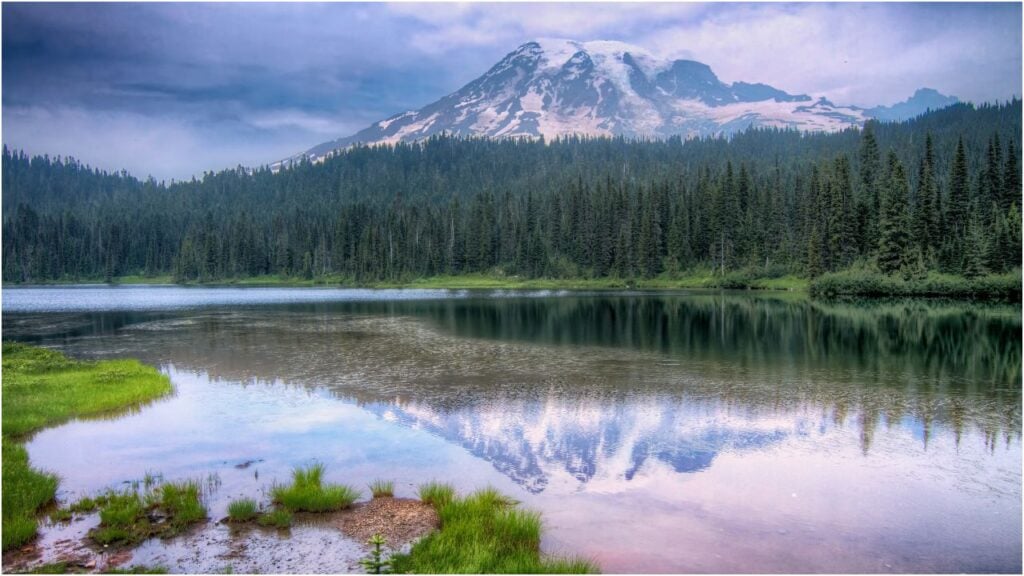
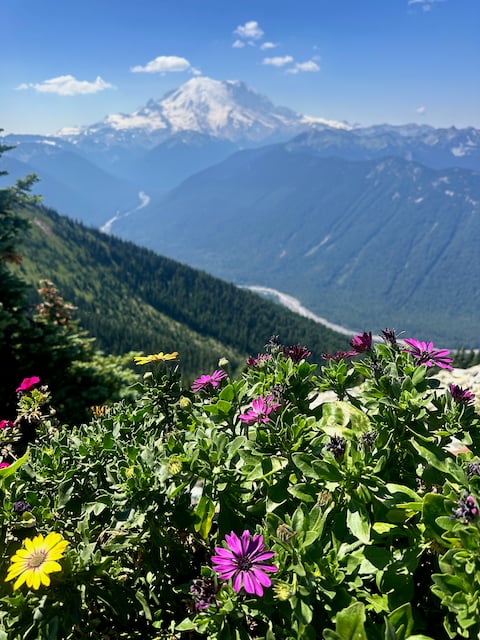
In total sincerity, Mount Rainier’s summer begins in July most years and only extends until early September. But when the warm summer nights and wildflowers start to pop, it’s the best time to be in Mount Rainier National Park. The snowpack finally gives in during early July, and everything begins to bloom in the park. Mushrooms rapidly grow, the smell of pine trees fills the air, and wildflowers bloom just about everywhere.
Sadly, when the park comes in full bloom, so does the rapid rise of tourism in the park. Every parking spot will be taken, trails will be crowded, and accommodations will be a lot harder to come by. Mount Rainier isn’t necessarily a large park; it has one road through the Paradise Corridor and one through the Sunrise Corridor, so be prepared for road conditions by reading my article: Driving in Mount Rainier: 10 Things You Need to Know.
No matter the crowds or driving hazards, summer is still by far the best time to visit Mount Rainier. During July and August, extreme weather becomes far less likely, all trails open up to roam, and nature is at its peak summer beauty.

During early to mid-September, the weather starts to change once again. The air becomes cold, the flowers slowly start to fade away, and the first snow is waiting right around the corner. The park begins to see less foot traffic and everybody gets inside by 8:00 pm. Mount Rainier is still gorgeous in the fall, but doesn’t quite have the fall colors you’d expect. Most trees in the park are evergreens and without wildflowers, the park turns into a foggy green forest.
Hiking may be a bit wet, but as long as you pack warm and come prepared for rain, you may get some trails all to yourself. If visiting in the fall, it’s important to play the timing correctly before the first storm hits, as when it does, the park will fall back into its white winter beauty until the next summer rolls around.

The best time to visit the Paradise Corridor of the park is in early August. Although crowds will still be prevalent, there will be far less than the rush to see the wildflowers bloom in late July. On top of that, in early August, weather will be at its absolute best in the park.
All in all, the weather should be great, the snow will be melted, trails will be open, and wildflowers will reach their peak beauty. Late August represents the best opportunity to get the best experience from the Paradise Corridor of Mount Rainier National Park!
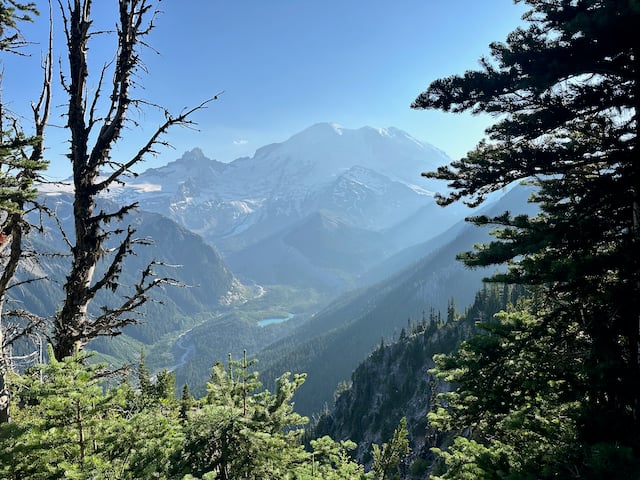
The best time to visit Sunrise is a little bit later than the best time to visit Paradise. As mentioned, Sunrise is at the highest drivable point in the park, and the curvy Sunrise Road will remain slightly icy even after the road’s doors open in July. The best time to visit Sunrise is in August. It doesn’t especially matter when in August, as the whole month should have the corridor filled with wildflowers and wildlife running amok.
A quick guide to choosing between the Oregon Coast, Olympic, Mount Rainier, and the Columbia River Gorge
*See what you can realistically do in the time you have (3-13+ days)
*Choose the RIGHT regions for you. Do you like to hike, relax, eat good food, take scenic drives?
*Avoid the classic PNW mistakes that waste hours in the car

The worst times to visit Mount Rainier National Park are in late May and early June. As mentioned earlier with the weather patterns, it may seem like nice weather in Tacoma or Seattle during the start of summer, but I can almost guarantee a visit to Mount Rainier during the early season will leave anyone disappointed. There will be no trails open, the roads will be icy, there’s an extremely high chance the weather won’t be kind, and most views are likely to be blocked by fog. Don’t be fooled; don’t visit Mount Rainier in May or early June.
Now, the worst time to visit Sunrise is a tough call. Due to Sunrise not opening until July, there’s no fear of weather or snowpack blocking a day visit at any point during its open season. So the only correct answer for the worst time to visit the Sunrise Corridor is in its last open weeks, either late August or early September. Sunrise is far more likely to receive early snow than Paradise, meaning when visiting in the late season, you’re running the risk of having an extremely cold day in the park.

In one of my previous articles on Mount Rainier, Absolute Best Time to See Wildflowers at Mount Rainier + Where to Find Them, we jumped into the wildflower beauty of Mount Rainier.
The best time and place to see wildflowers in Mount Rainier is the last week of July and the first week of August, anywhere on or near the Skyline Trail Loop. The best time of day to view the wildflowers is between 9:00 am and 2:00 pm because the sun makes the colors pop and encourages flowers like lupines and paintbrushes to open fully.
The wildflower show is a spectacular event that begins in early July and continues until late August. When the snowpack fades, hundreds of bright wildflowers pop out of the newly revealed soil, covering the alpine areas of the park in red, yellow, and blue.

The question of where to see the wildflowers is easy enough to answer. Mount Rainier National Park! Despite what anyone might tell you, and despite the previous notion that the Skyline Trail is the best place to see wildflowers (it is), wildflowers are going to be hard to miss anywhere near Paradise or Sunrise Inn. The wildflowers grow in parking lots, on guest walkways, and even on the side of the road. You won’t be able to miss them, so don’t worry too much about where to go. But if you’re looking for the best options for the best show… here are my top 5 locations.
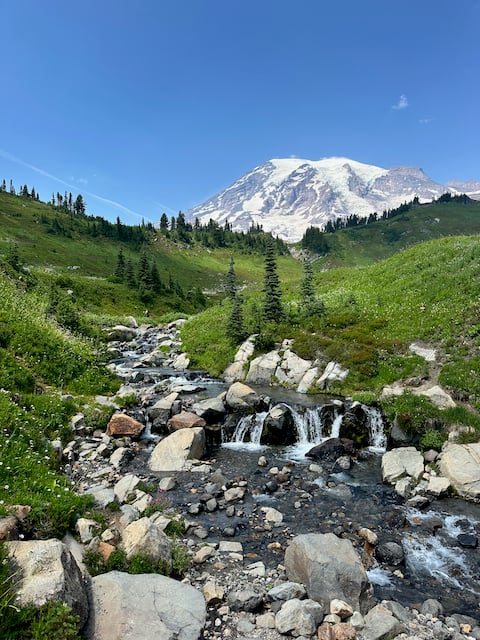
The Skyline Trailhead holds a series of trails above Paradise Inn, all containing wildflower gardens.
The main trails I’ll highlight here are, of course, the Skyline Loop, where the middle of the hike specifically features small streams and valleys bursting with diverse wildflower species and color. The top of this hike is tough and doesn’t quite feature as many wildflowers with the gaining elevation, but the view from Panorama Point is worth the extra effort.
Myrtle Falls, which may be the easiest access point to view a valley of wildflowers, with a short 30-minute walk to reach the falls. The valley near Myrtle Falls also has wandering marmots and stunning views of Myrtle Falls and Mount Rainier.
Lastly, the Nisqually Vista Trail is much easier to hike than the Skyline Loop and features small wildflower gardens in a similar fashion to the Skyline Loop.

The Sunrise Corridor is equally full of wildflowers as the Paradise area, and one hike stands out in particular to get the best wildflower display in Sunrise. The 7.6-mile Berkeley Park Trail features a stunning wildflower valley that should feature one of the strongest blooms in the park by early August. The park trail features wildflowers such as Lupine, both Scarlet and Magenta Paintbrush, as well as Sitka Valerian.
The Berkeley Park Trail will also pass the trailhead to Mount Fremont Lookout, which may be worth visiting for the panoramic views of Mount Rainier and the wildflower-littered valley below.
If the Berkeley Park Trail is a bit far of a hike for you, just know the Sunrise area and Sourdough Ridge (the main Sunrise trailhead and ridge just next to Sunrise Lodge) feature plenty of wildflowers without the extensive hike.
The Sunrise Corridor opens later in the summer season, in late June or July, due to the snowpack melting later in the season, so do ample research to ensure that the Sunrise Corridor is accessible before planning a visit.
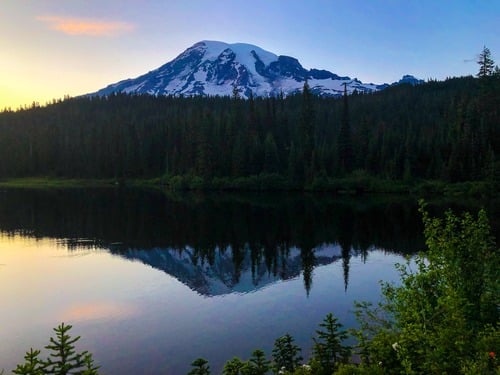
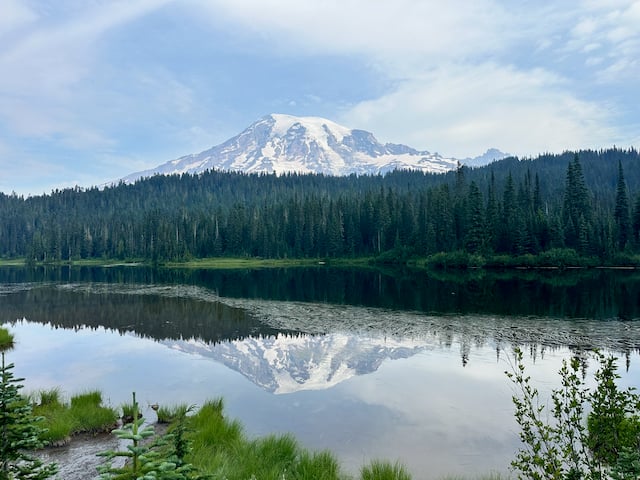
Reflection Lake is one of the easier access points in the park to get wildflower viewing. The lake sits just beside Stevens Canyon Road and has wildflowers surrounding the perimeter of the lake. With Reflection Lake being at a lower elevation than the Skyline Trails, it tends to have blooming wildflowers a few days to a week earlier than the rest of the Skyline area, which is always nice if you mistimed your entry date.
This makes for a great picnic spot or a quick stop at the day-use area before continuing on Stevens Canyon Road east to get to the Sunrise Corridor of the park.
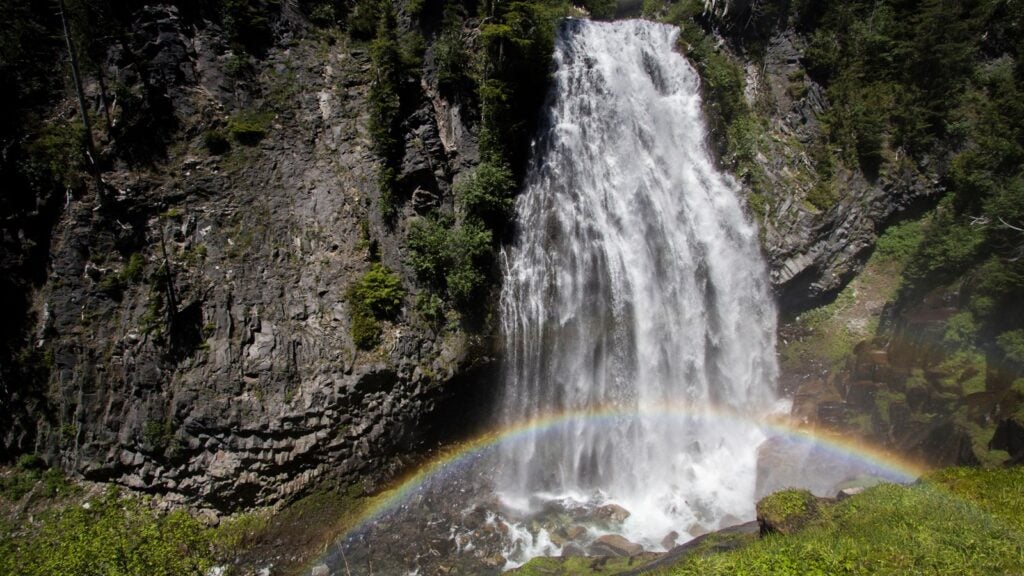
Narada Falls sits between the Skyline Trail and Reflection Lake, with the trail starting at Myrtle Falls and finishing near Reflection Lake. If you’re looking for a diverse wildflower experience, this connecting trail features a wall of beautiful wildflowers on the hillside between Myrtle and Narada Falls. It also has small alpine lakes and wildflower gardens before reaching Reflection Lake.
The area between Narada Falls and Reflection Lake is where I saw the most “Lorax Trees” or Pasque Flower Seed Heads in the park, as well as several bonus mushroom species when descending towards Reflection Lake.
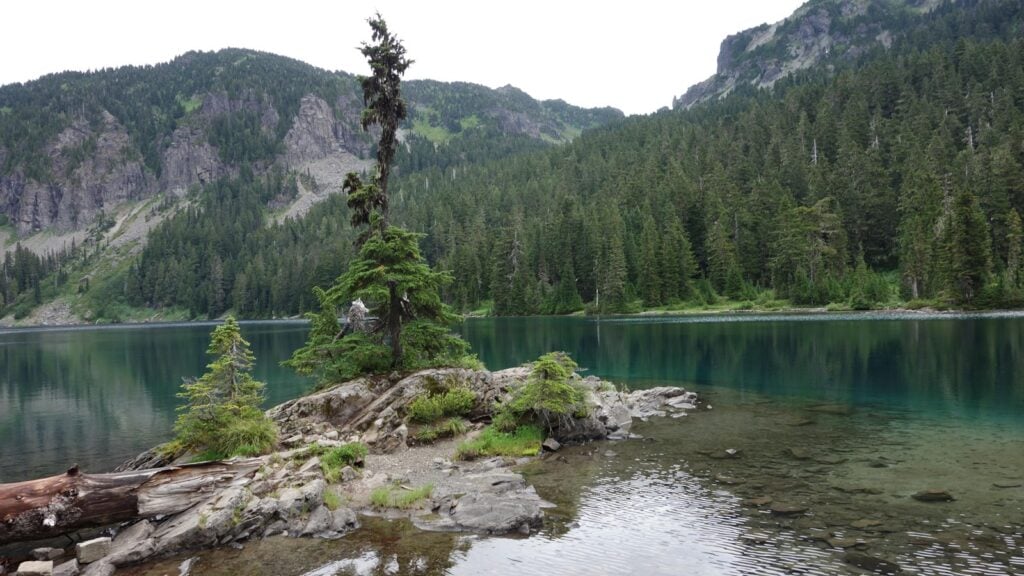
Mowich Lake is one of two sections of the park that never reaches the Paradise or Sunrise Corridors (the other being the Carbon River). But while it is a relatively small and less visited area of the park, it’s a great place for a day hiking trip to view the wildflowers without the heavy crowds and chaos July brings to the inner corridors of the park.
Get our done‑for‑you, 7‑17 day route with exact drives, maps, and must‑see stops so you don’t waste time in traffic or miss the best views
Inside the guide:
*Day‑by‑day plan for Olympic, Mount Rainier, the Oregon Coast, & the Columbia River Gorge
*Details you need: Time frames, driving routes, and where to sleep each night to reduce backtracking
*Best Friend Guarantee: Love it or get your money back
My personal favorite time of the year to visit Mount Rainier is in late summer. The flowers are beautiful in midsummer, don’t get me wrong, but I’m a big fan of Washington’s foggy climate. In late summer, the weather cools down a bit, some flowers are still out, and the fog leaves Mount Rainier as a moody forest wonderland. When the park is calm and quiet, it is far more of an intimate experience for me to enjoy. But that’s just my opinion. Enjoy this park however you’d like!

Most travelers want to visit the most popular sites and still avoid the crowds. We have a detailed itinerary that gives you a step-by-step game plan so you can get to the best places at the right times.
MOUNT RAINIER TRIP PLANNER: To read or watch all of our content about Mount Rainier National Park, check out our Mount Rainier Homepage.
THINGS TO DO: Don’t miss all that Mount Rainier has to offer in the Paradise and Sunrise areas, including hiking and the beautiful wildflowers.
WHERE TO EAT: Don’t miss the best places to eat in Mount Rainier National Park
KNOW BEFORE YOU GO: Find out which is the best entrance to use, the best time to visit, and all about driving around Mount Rainier