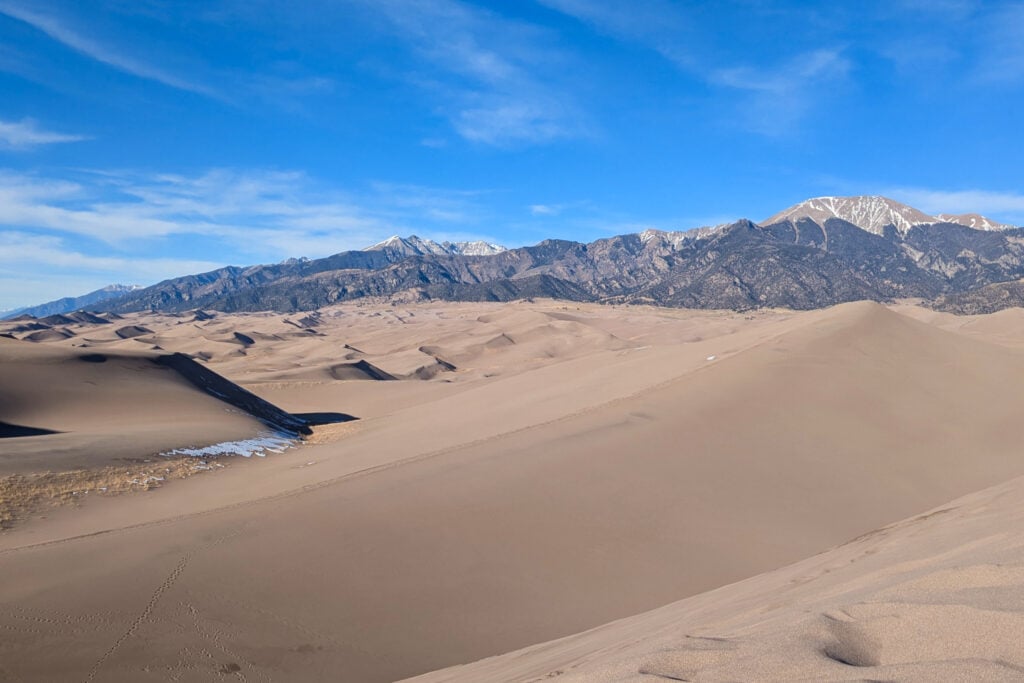
The Great Sand Dunes National Park is located at the base of the Sangre de Cristo Mountains, in southern Colorado. This national park covers 30 square miles of dunes, alpine forests, and wetlands. It is home to the tallest dunes in North America, with the highest peak being around 750 feet above the valley.
It’s easy to spend a full day at the Great Sand Dunes National Park. You can connect to your inner child and prance around the dunes, go sledding, splash around in Medano Creek, hike to a nearby waterfall, take in the incredible sunsets, and more!
I’ve been traveling to the Great Sand Dunes National Park for years. I really enjoy this national park because it’s a park that isn’t overcrowded, and the dunes are always so much fun to play in. In this itinerary, I’ll share with you all about how to spend a full day in the park, plus some extra things to do in the area.
This itinerary is for anyone looking to get the most out of their visit to the Great Sand Dunes National Park. The majority of the park is not ADA accessible.
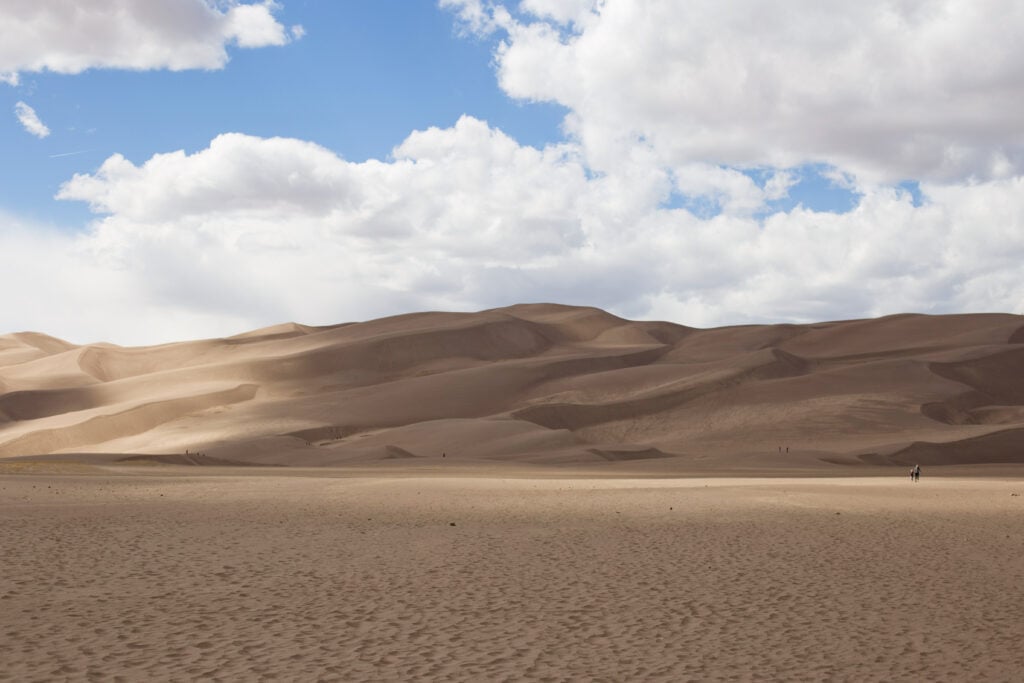
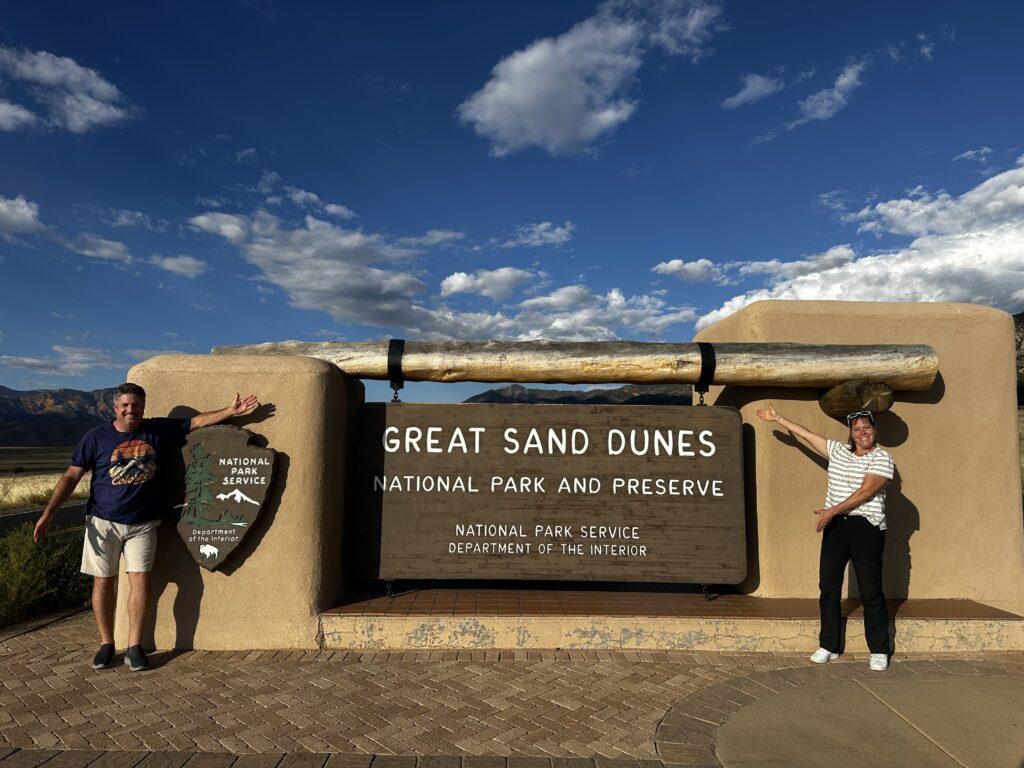
The Great Sand Dunes were founded as a National Monument in 1932 to protect the area from gold mining. In 2004, the Great Sand Dunes became a National Park. With the National Park being formed, they also expanded the amount of land being protected. Now, the park covers about 150,000 acres of preserved wilderness.
The history of the Great Sand Dunes goes back 20,000+ years, with human footprint fossils found from that period. The Dunes themselves began forming around 440,000 years ago from sand sediments of ancient lakes and strong winds, helping to form the dunes.
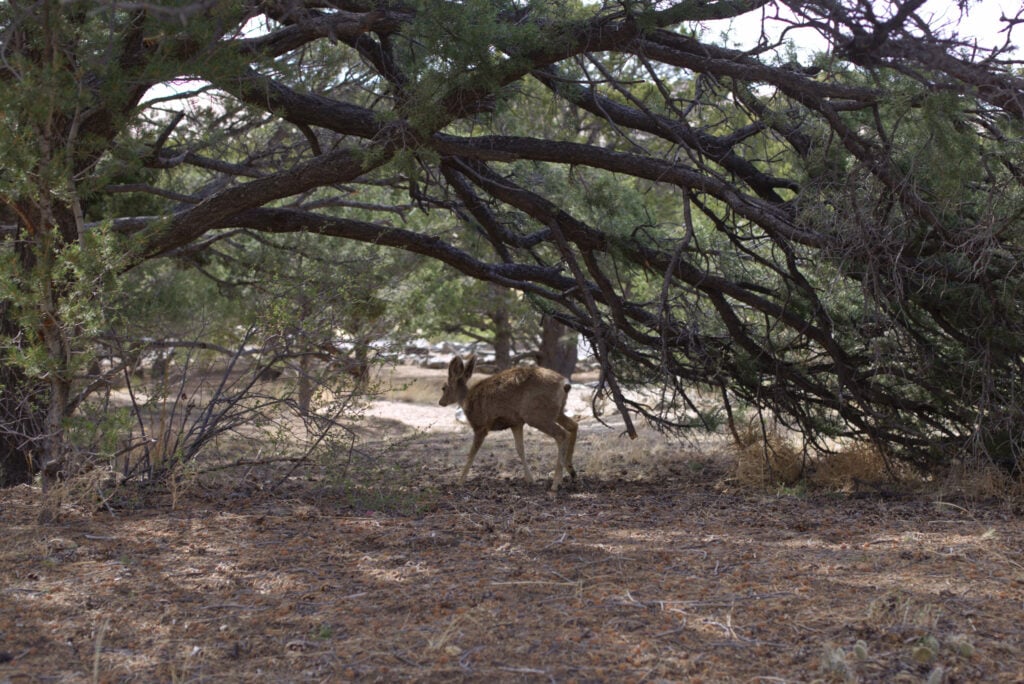
The Great Sand Dunes are home to some interesting species. Here, you’ll find the Great Sand Dunes Tiger Beetle, which is not found anywhere else in the world. The park is also home to frogs, salamanders, black bears, mountain lions, and so much more!
Get our done‑for‑you, 7‑14 day route with exact drives, maps, and must‑see stops
so you don’t waste time in traffic or miss the best views
*Day‑by‑day plans for Colorado’s national parks and mountain towns
*Details you need: Best activities, hikes, drives, and where to sleep each night to reduce backtracking
*Best Friend Guarantee: Love it or get your money back
The Great Sand Dunes is a National Park, so entrance fees are required. The fee is ~$25 for a standard vehicle. Entrance is free with the America the Beautiful Pass. The Park is open 24/7 year-round, including for night sky viewing; if no one is at the toll booth, just drive into the park and check in at the visitor center. No reservations required.
This is a cashless park, so you must pay with a credit or debit card.
There’s one road that leads into Great Sand Dunes National Park. This road takes you to the visitor center and the dunes parking lot (1 mile away from the visitor center). The majority of visitors will only stop at these two spots.
From the Dunes Parking Lot, you can wander onto the sand, sled down the sand, hike up the dunes, or play in Medano Creek (seasonal). Anything beyond this is considered backcountry, which can be explored by 4WD on Medano Primitive Road.
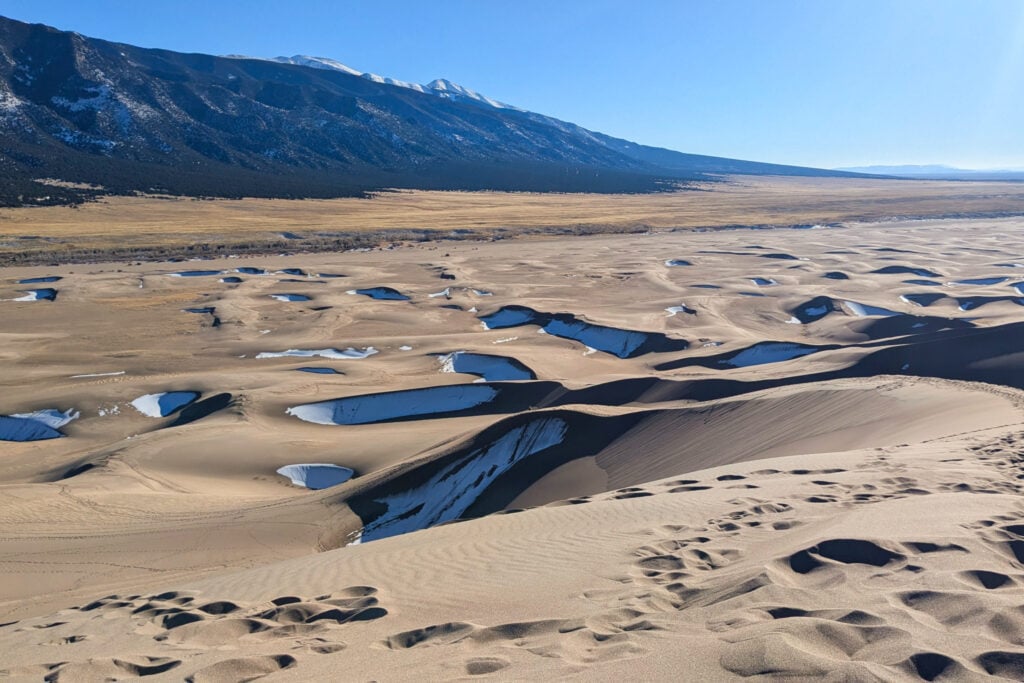
Choosing the perfect time to visit the Great Sand Dunes can make or break your trip. You probably don’t want to visit during the heat of the year or when there are feet of snow blanketing the dunes. My favorite time to visit is at either the end of April or October. The weather is pleasant and there are fewer crowds than in other months.
Spring is a great time to visit because the highs are typically between 50-70°F. Nights can still be quite chilly during this time, but it would be the perfect time for a day trip. There may still be snow on some of the dunes, but I’ve visited in early April and didn’t think it was too much snow to navigate around.
Summer brings warmer temperatures and large crowds. Outside temperatures reach 90°, and the sand temperatures can exceed 140°. Pop-up thunderstorms are likely in the afternoons. While this is the most visited season, it’s also fairly dangerous if you aren’t used to heat, elevation, or dealing with thunderstorms. It’s advised to start your days early during the summer or later in the evening. This is the ideal time to experience the dark sky because the nights are much warmer than other times of the year. This is the most popular season, with 70,000+ visitors each month.
Fall is another great time to visit. Daytime temperatures are mild, the crowds have subsided, and you can see the trees changing colors on the mountains surrounding the park.
Winter brings a season of solitude. With an average of 7,000 visitors per month in the winter, the Great Sand Dunes becomes a ghost town. Temperatures are around freezing, so you’ll want to bundle up. While there are times when the dunes are snow-free, there are also times when they are covered in snow, so you have to be prepared for anything. This is a great time to view wildlife, though!

The Great Sand Dunes Visitor Center is open daily from 9:00 am to 4:30 pm. Here you’ll find exhibits about the sand dunes, including how wind shapes the dunes, what kind of critters live in the park, and how to best experience the night sky at the dunes. There is a 20-minute educational video, rangers available to answer any questions, and a gift shop for all of your souvenir needs. The visitor center also has flush toilets and drinking water available during its open hours.
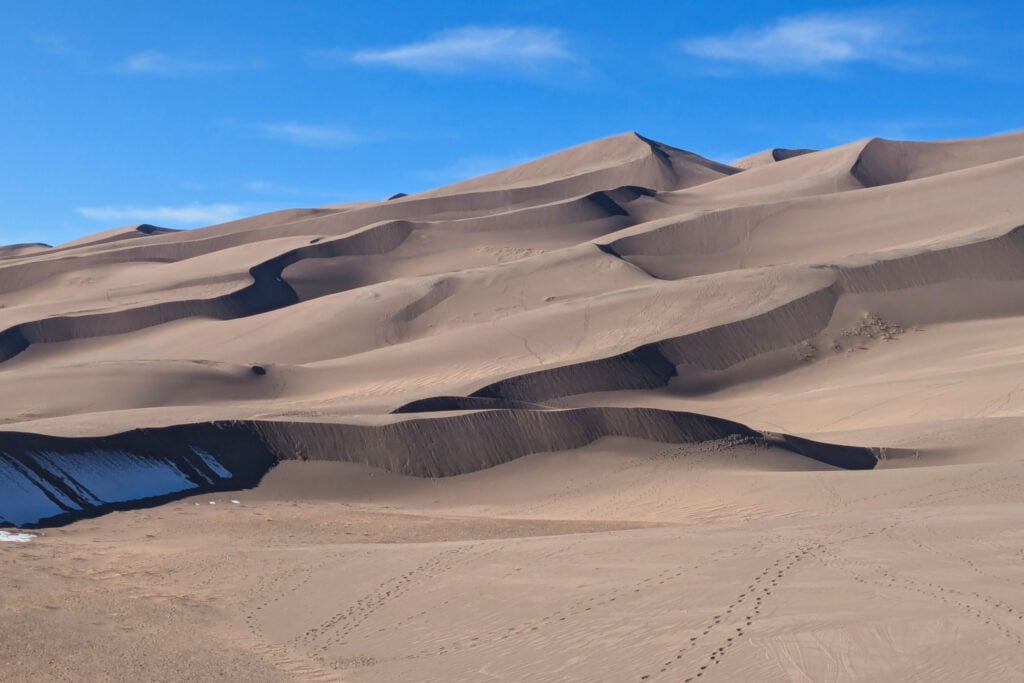
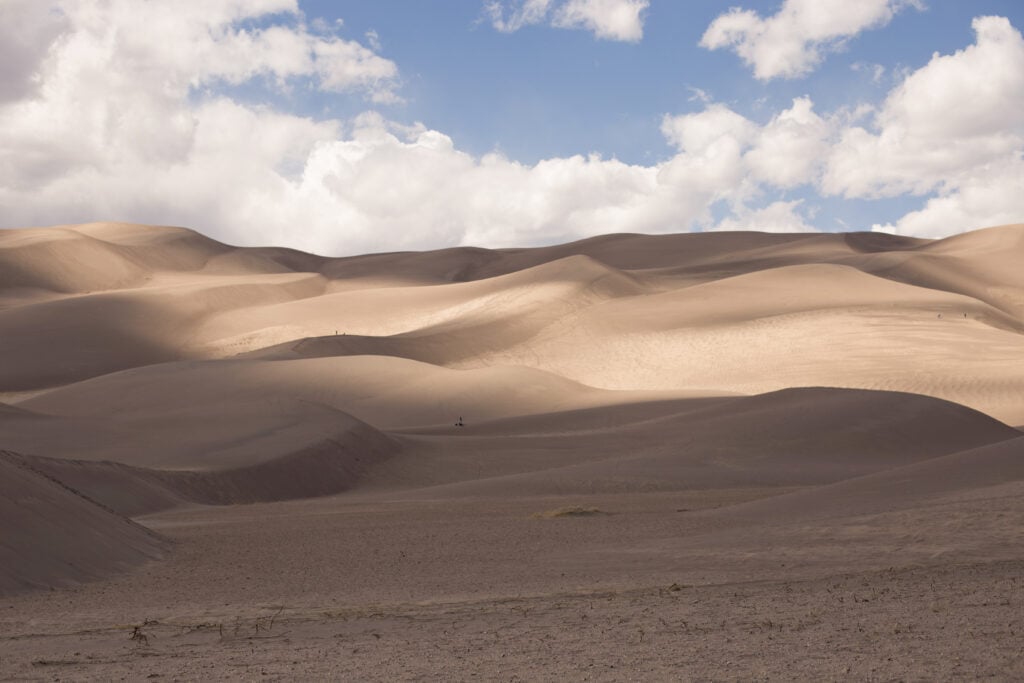
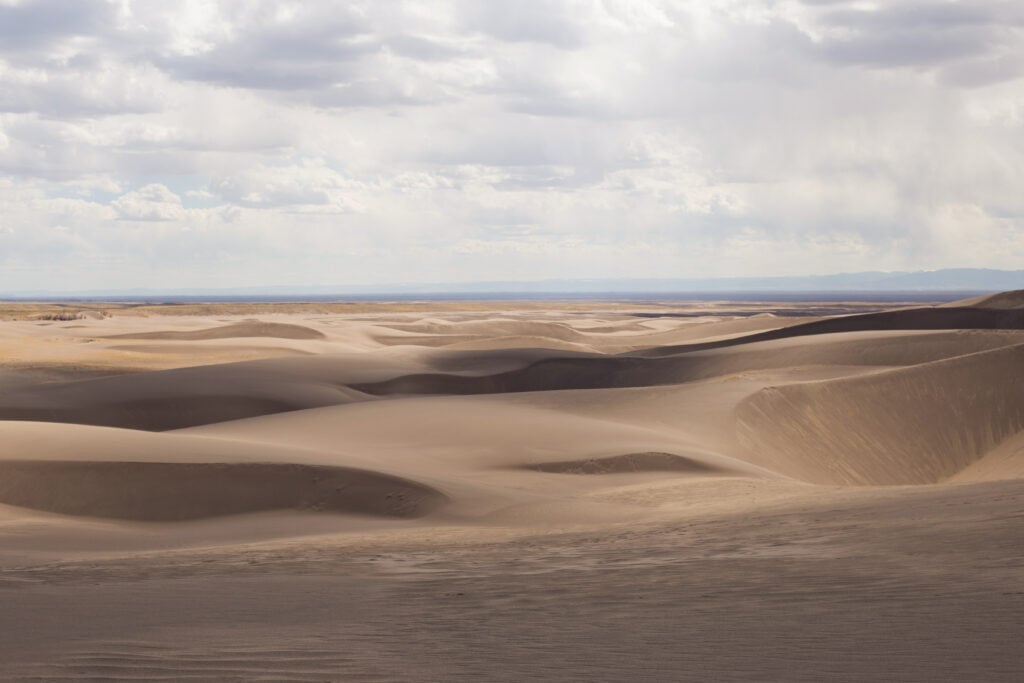
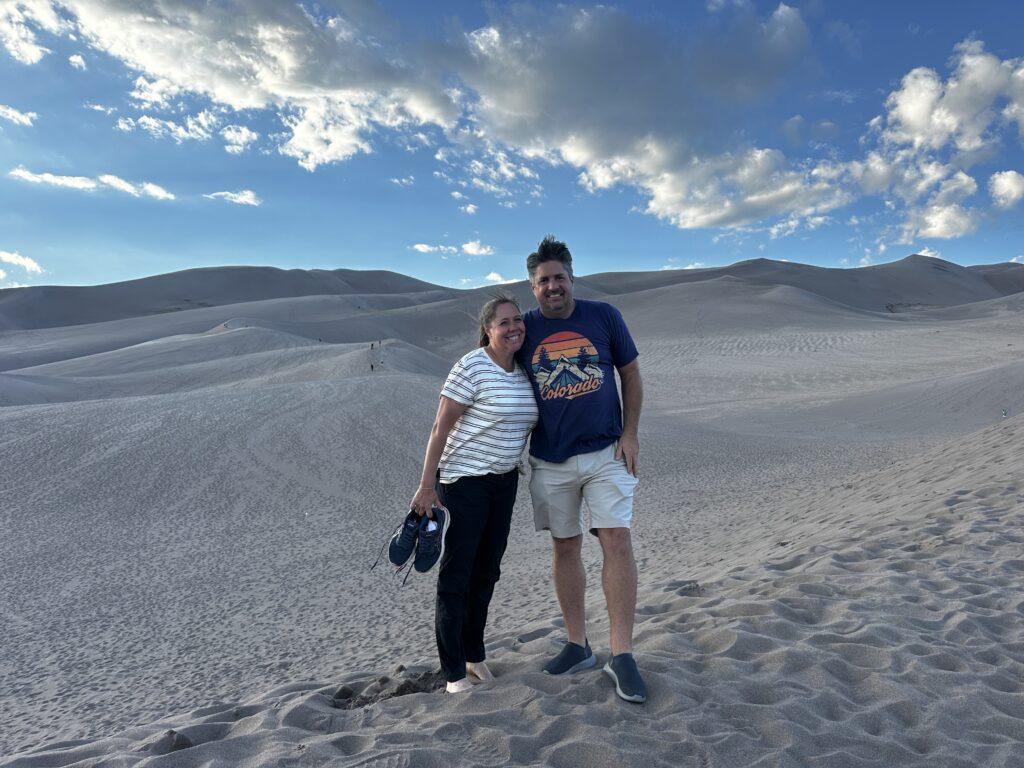
I enjoy hiking in the dunes because it is kind of a choose-your-own adventure. There are no set trails on the dunes, just a series of footprints leading every which way. I love the freedom of being able to wander without a direct path. Plus, it’s really easy to find solitude when you have miles of sand to explore. Hiking the dunes is not an easy feat, though, because sand is very difficult to walk on, especially when you are climbing hills.
A popular path is to hike to High Dune. This trek is about 2.5 miles round-trip. This is a strenuous hike because of the mixture of high elevation and walking through soft sand.
If you’re really feeling adventurous, you can walk to the tallest dune in the park, the Star Dune, which rises 750 feet above the valley floor. This is one of the two tallest dunes in North America. Because there is no direct walking path within the park, the mileage isn’t 100% accurate, but it would be about 6 miles. You should allow for an hour per mile on the hike.
FUN FACT: The dunes are about 30 square miles wide, but winds constantly reshape them, so they never look the same twice.
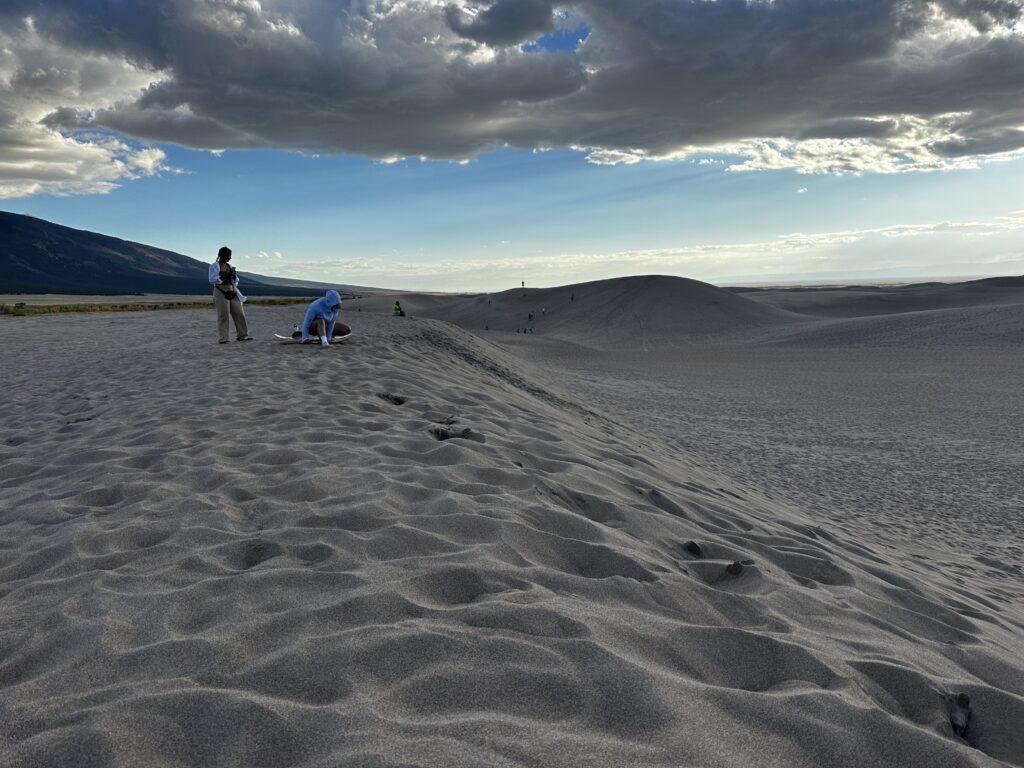
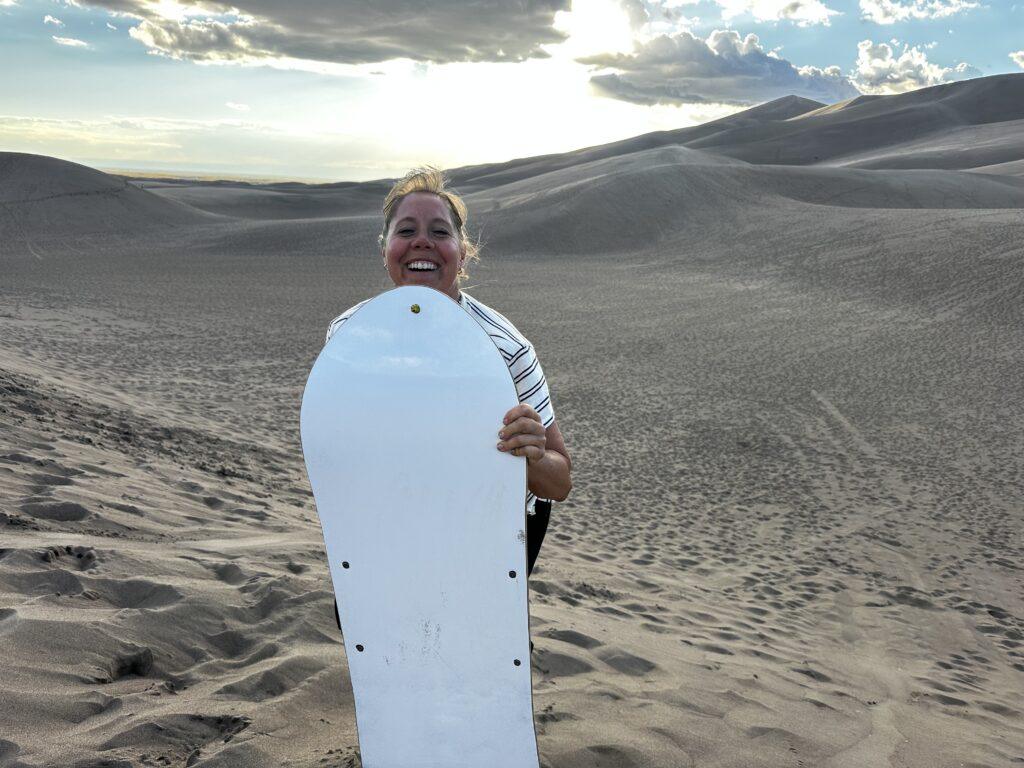
Sand Sledding or boarding is a popular activity to enjoy at the Sand Dunes, especially if you are traveling with kids.
There are no sled rentals within the park, so you’ll have to rent one before arriving. The closest place for rentals to the park is the Great Sand Dunes Oasis Store. This store is located about 5 miles outside of the park. Their rentals are ~$20 a day, which must be paid with a credit/debit card.
There are also a couple of shops that offer rentals in Alamosa, about 30 minutes from the dunes. SpinDrift Sandboards offers rentals for ~$20 per day. They also allow multi-day rentals. Reservations are required through their website.
Sand Dunes Rentals, located in the Dune Valley Distillery in Alamosa, offers sled rentals for ~$20 per 24 hours.
There are a few designated hikes in the Great Sand Dunes National Park if you want to get into the forests with amazing views.
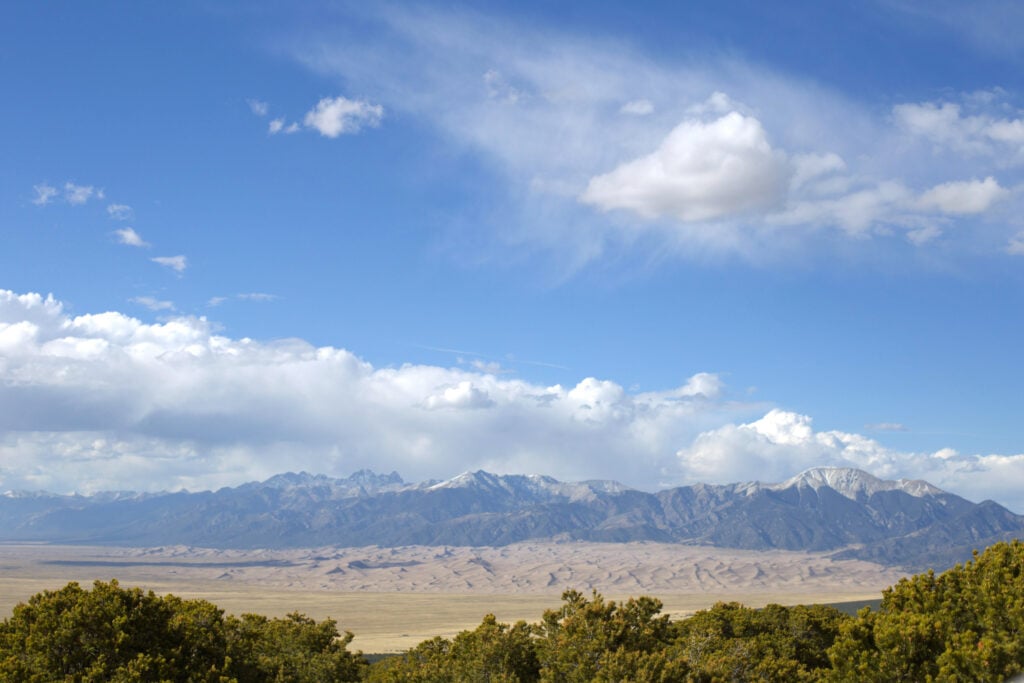
The Montville Nature Trail is an easy, half-mile hike with 91 feet of elevation gain, taking about half an hour to complete. This trail is great if you’re looking for great views with a shorter hike. This trail starts at the Mosca Pass Trailhead and is completed as a loop.
The Dunes Overlook Trail is my favorite hike in the park. I love the scenery along the way and the sweeping views you get from the overlooks. This trail is a moderate 2.7-mile out-and-back with 469 feet of elevation gain. The hike takes an average of 1.5 hours to complete. There are several viewpoints along the hike, with the trail ending at an overlook with a couple of benches. This hike is known for spotting wildlife and picturesque views. The trailhead is located at the Piñon Flats Campground Amphitheater.
Mosca Pass Trail is a moderate 6.2-mile hike with 1400 feet of elevation gain, which takes about 4 hours to complete. This hike is great for adventurous hikers who are looking to gain elevation. The trail can sometimes be overgrown, but it is a peaceful hike with great mountain views. The Mosco Pass Trailhead is located just after the Visitor Center.
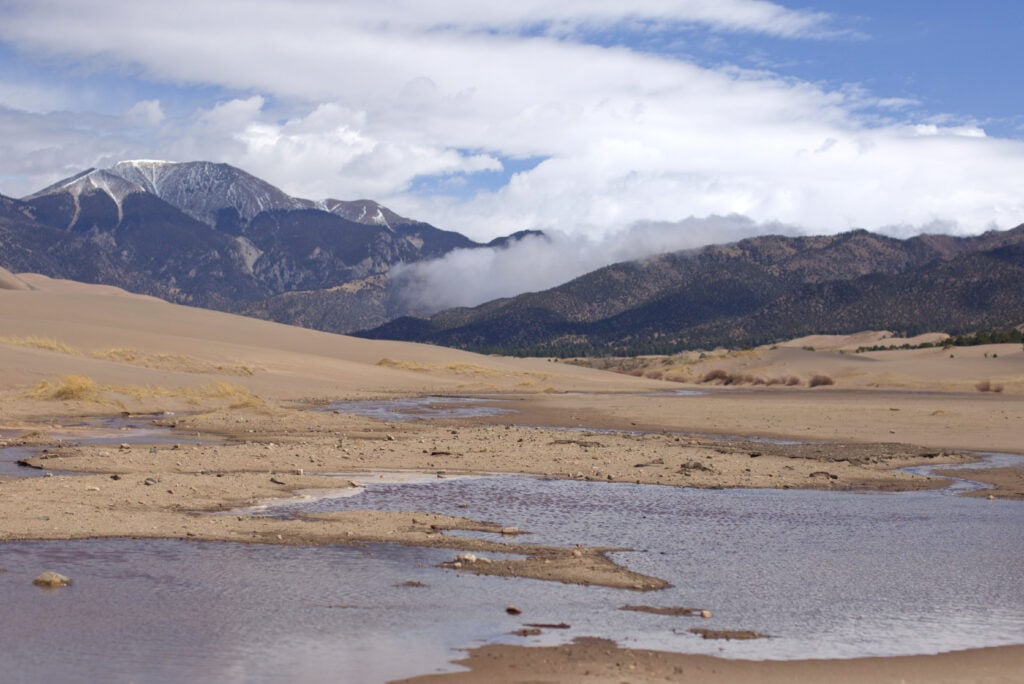
Medano Creek is a seasonal creek that turns into a family-friendly splash zone. It is typically in full flow in spring and early summer due to snow melt. The creek has a phenomenon called surge flow, where little waves form and break just like at the ocean. During this time, you’ll find people hanging out in their lawn chairs, playing in the sand, and splashing in the water, similar to going to the beach.
While this activity takes a little planning to time the creek flow just right, it’s a great activity for kids. Be sure to pack your swimsuits!
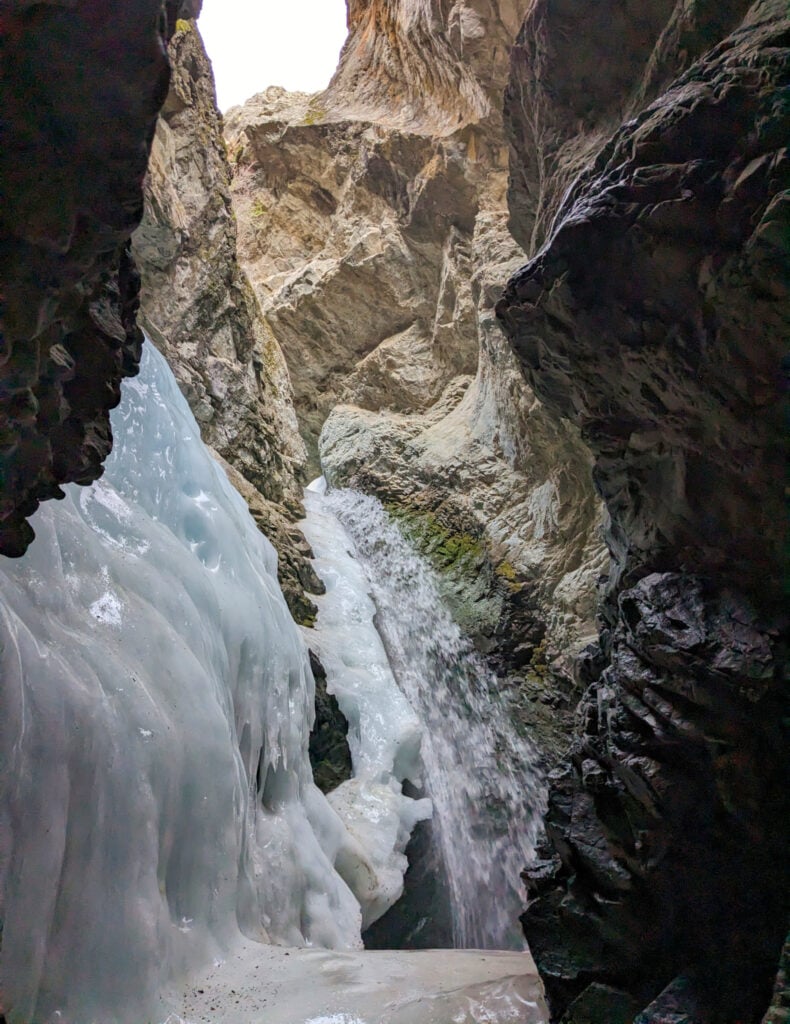
Zapata Falls isn’t technically in the park, but it’s a stop you shouldn’t miss! Hiking to this waterfall is one of my favorite things I’ve done in the area, especially since I’ve only seen it frozen. It’s an easy hike, plus it’s nestled in a cave, so it’s a unique experience all around.
The hike to Zapata Falls is about a mile round-trip with 200 feet of elevation gain. Once you arrive at the end of the trail, you will have to walk through a small crevasse to access the falls. Also, depending on the season, you may have to walk through a creek along the trail.
The road to Zapata Falls is located 8 miles from the Great Sand Dune Visitor Center. Once you turn off CO-150, you have about a 3.5-mile drive down a rough, dirt road. High clearance is recommended, but I have seen sedans do this drive. Just take your time and use caution.
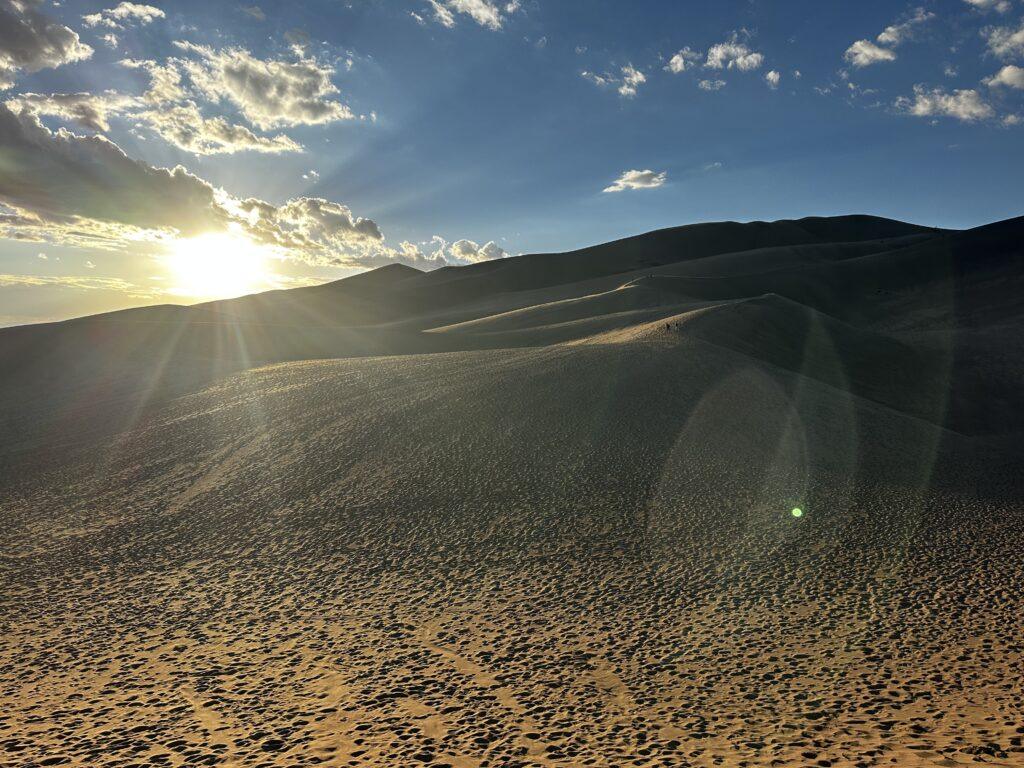
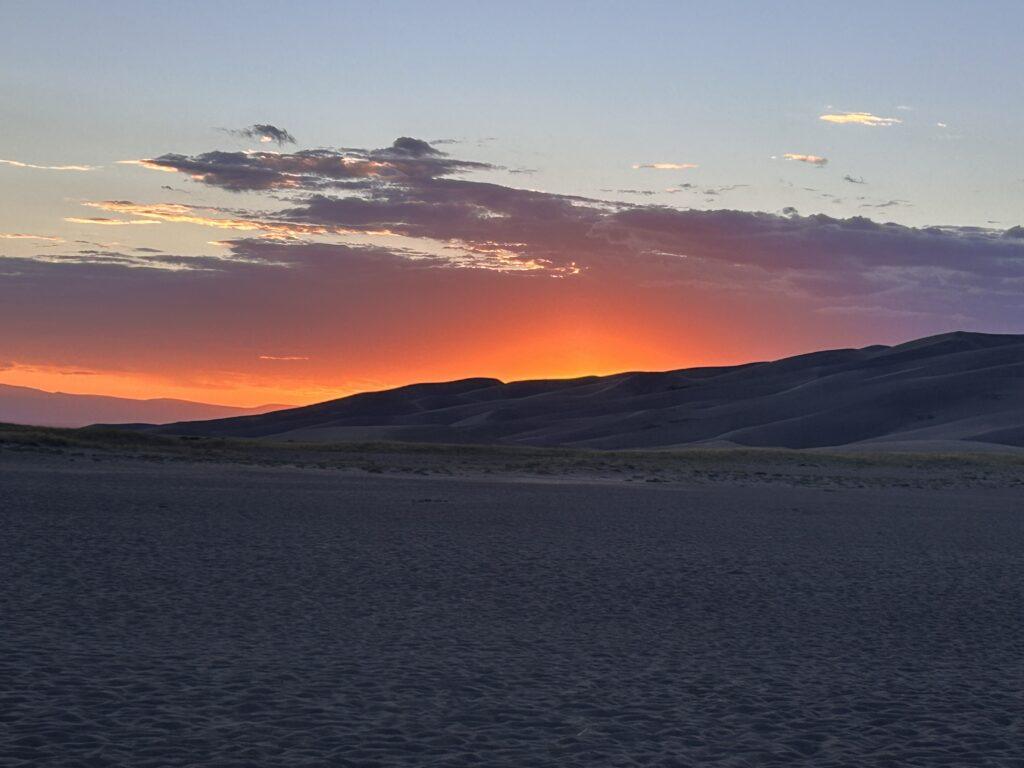
Watching the sunrise or sunset at the Sand Dunes is a wonderful experience. From the dunes, you can watch the sun tuck behind the Sangre de Cristo mountain range, turning the mountains and the sand a beautiful sunset color.
FUN FACT: Sangre de Cristo means “Blood of Christ” in Spanish. This name is derived from the alpenglow that the mountains reflect at sunset, making them glow red.
Consider staying or arriving after dark. Because of the elevation and the low light pollution, the Great Sand Dunes are a designated International Dark Sky Park. On a clear night, you can see the Milky Way and shooting stars over the dunes. If you are planning on staying after dark, bring a headlamp.
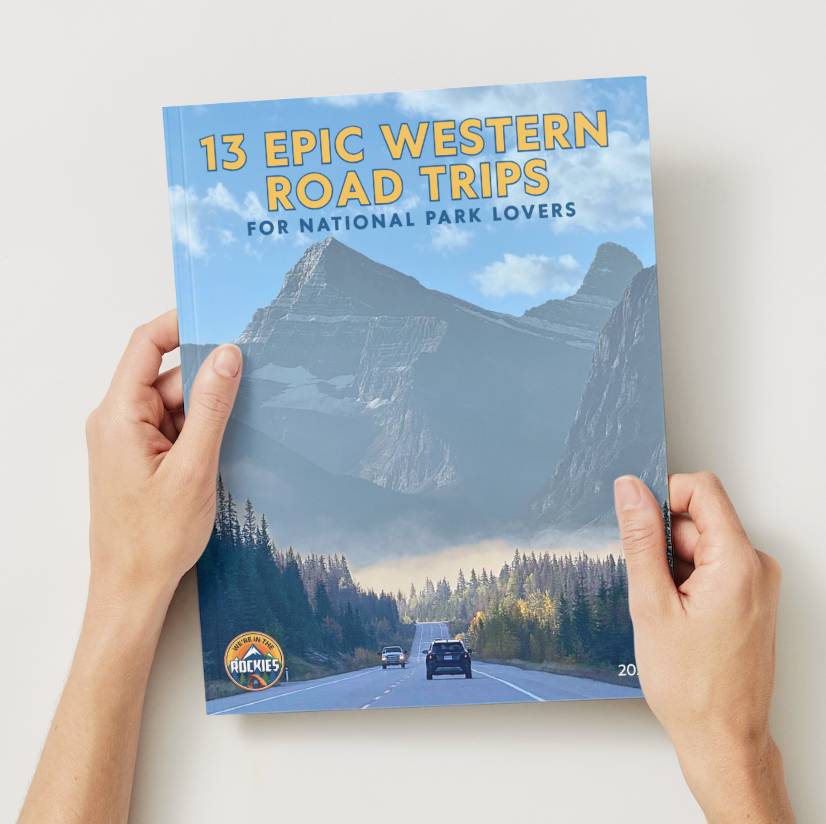
13 road trip ideas across the West so you know where to go, how long to stay, and what to see
*Sample routes from 4–31 days across national parks and hidden gems
*Driving times + best stops so you don’t miss the good stuff
*Season + weather notes to avoid closed roads and peak‑crowd days
*Lodging ideas in the right spots so you cut backtracking
The drive to Medano Pass is a primitive road that should only be attempted with 4×4 vehicles. On this drive, you’ll pass through wetlands and forests, and you might get lucky to spot bison at the Zapata Ranch. There are 9 creek crossings and deep sand on the road.
The drive over Medano Pass is 22 miles, one-way. It typically takes between 2 and 3 hours each way. Medano Pass sits at 10,040 feet of elevation. The pass is typically open from late May/June through the fall. Check out the National Park website before venturing out; they give updates and trail conditions.
KNOW BEFORE YOU GO: It’s recommended to reduce the air pressure in your tires to 20 psi before attempting the drive. There is an air pump at the Great Sand Dunes Visitor Center that is available from 7:00 am to 9:00 pm daily. If you are planning on driving straight through, without returning to the park, you will need to carry an air compressor with you.
If you do not have a 4×4 vehicle, rentals and tours are available. A few local companies are Dunes 4×4 Ltd, which offers half-day tours, and Custer County Jeep Rentals, which offers single-day or multi-day rentals.
FUN FACT: Medano is a Spanish word that translates to “dune” in English.
During the summer and autumn, the Great Sand Dunes offer free ranger programs. These typically take place daily, staffing and weather permitting. They host dark sky walks, campfires, educational events for children, and more! Check out their calendar for more information.
Each spring and fall, over 20,000 Sandhill Cranes stop in the San Luis Valley during their migration. You’ll find them hanging out in the nearby fields and wetlands. The best location to view the Sandhill Crane Migration is in Monte, which is located an hour west of the Great Sand Dunes. The nearby Monte Vista National Wildlife Refuge hosts a popular crane festival each March. They encourage people to visit during the migration to view the phenomenon for free.
There are no restaurants in the Great Sand Dunes, so you will need to pack some food and snacks to bring with you. Besides the Great Sand Dunes Oasis, the nearest restaurants are located in Alamosa, about 30 minutes from the dunes.
The Oasis is a market located near the entrance of the Great Sand Dunes. This is the only restaurant within 20 miles of the park. They have a restaurant that serves breakfast, lunch, and dinner. They offer traditional American food as well as Southwest specialties, which contain local red or green chilies. They are open seasonally. Check out their menu.
The Rubi Slipper is a classic American restaurant located in Alamosa. They have a large menu where you can find chicken-fried steak, seafood, ribeyes, and sandwiches. They have a menu of 20+ burger options, which have won several awards. They also have award-winning desserts, with a variety of options like homemade cheesecakes, chocolate cake, churros, and more.
I’m going to recommend Emma’s because you must try authentic southwestern food while you’re in the area! They have all of the traditional dishes like green chile burritos, tacos, and enchiladas. They also make stuffed sopapillas, which are what they are known for.
Piñon Plats Campground is located within the Great Sand Dunes National Park. They offer 88 non-electric sites for ~$20 a night. Some sites can accommodate RVs up to 35 feet. There are flush toilets, potable water, and a dishwashing station. Sites can be reserved up to 3 months in advance at recreation.gov. They book up quickly during the late spring and summer.
Last time I stayed here, I had tiny raccoon paw prints covering my car in the morning, so definitely lock your car doors at night!
The Great Sand Dunes Oasis has tent camping, RV sites with full hook-ups, cabins, and rooms available to rent. Sites start at ~$30 a night and go up from there. They have showers, a restaurant, and a general store on the grounds. They are open seasonally from April through October. Tent sites do not allow for reservations, but all other reservations can be made by calling them at 719-378-2222.
The Great Sand Dunes National Park offers something unique: backcountry camping on the dunes. They offer 20 backcountry campsites per night to sleep on the dunes. You have to camp a mile and a half from the parking lot, which honestly doesn’t seem that far. I’ve never tried this, but I definitely will on my next visit! This option is available year-round and only costs ~$6 per permit. Permits must be obtained through recreation.gov.
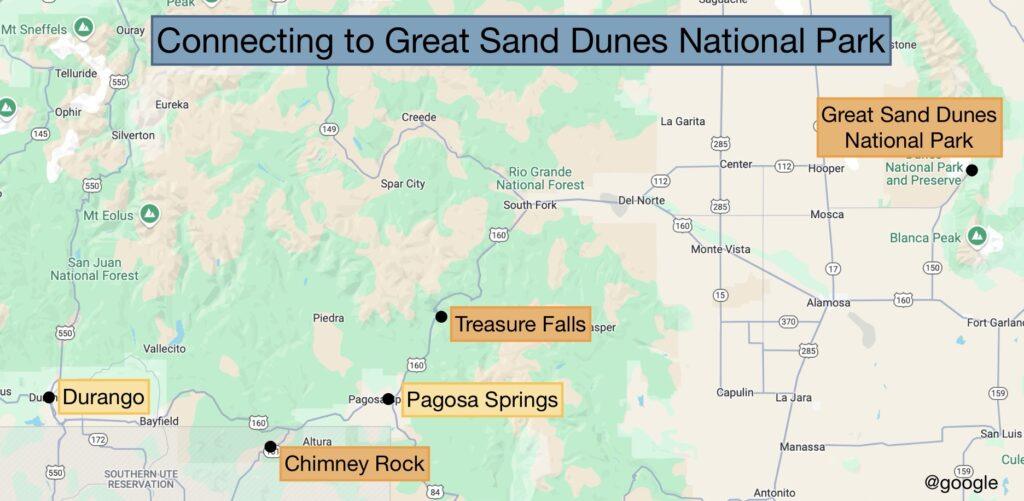
There are a variety of ways to reach the Great Sand Dunes. The closest town to the Great Sand Dunes National Park is Alamosa, which is about 35 miles away. From Main Street, you’ll head east onto US-160 for 14.5 miles. You’ll see a sign pointing left to the national park via CO-150. Once you turn here, you’ll continue for another 16.5 miles. This drive takes about 40 minutes.
If you’re arriving from the east on I-25, you’ll take exit 52 for Walsenburg/Alamosa and head west. You’ll follow the signs for US-160, which will lead you straight to CO-150, which leads to the park.
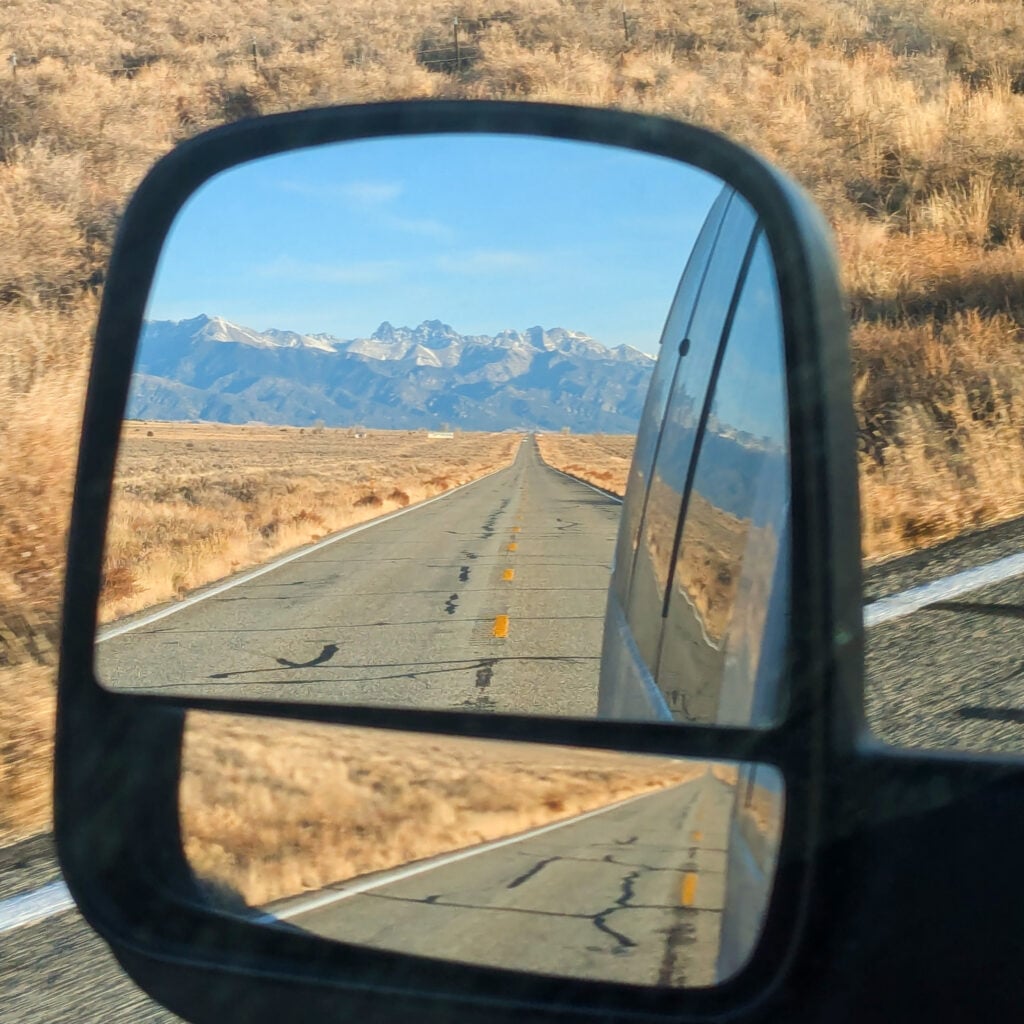
When to Start Your Day: To get the most out of your trip to the Great Sand Dunes, you should start your day early, especially if you aren’t staying nearby or are renting sand boards for the day.
What to Wear: Layers are always a great idea in Colorado. Mornings tend to be a bit chilly, while afternoons can be extremely warm if it’s sunny.
Check out our recommended gear page or our Amazon shop for our favorites.
What to Bring: Sunscreen. A headlamp. A backpack with water and snacks.
Cell Phone Service: Verizon has the best overall coverage in the area; however, cell service is spotty or nonexistent in the dunes and backcountry of the park.
Bring Your Doggo: Dogs are allowed on the dunes up to the High Ridge and on some frontcountry trails. There are some areas of the park that do not allow dogs, though.
Services Within the Park: The nearest gas station to the park is at the Sand Dunes Oasis Gas Station, located 5 miles from the park. Otherwise, all other services are located in Alamosa.
Elevation Factors: Elevation throughout the park ranges from 7,520 feet to over 13,000 feet. If you are not used to high elevations, stay hydrated and watch for any signs of altitude sickness.
RV restrictions: RVs are allowed in the park.
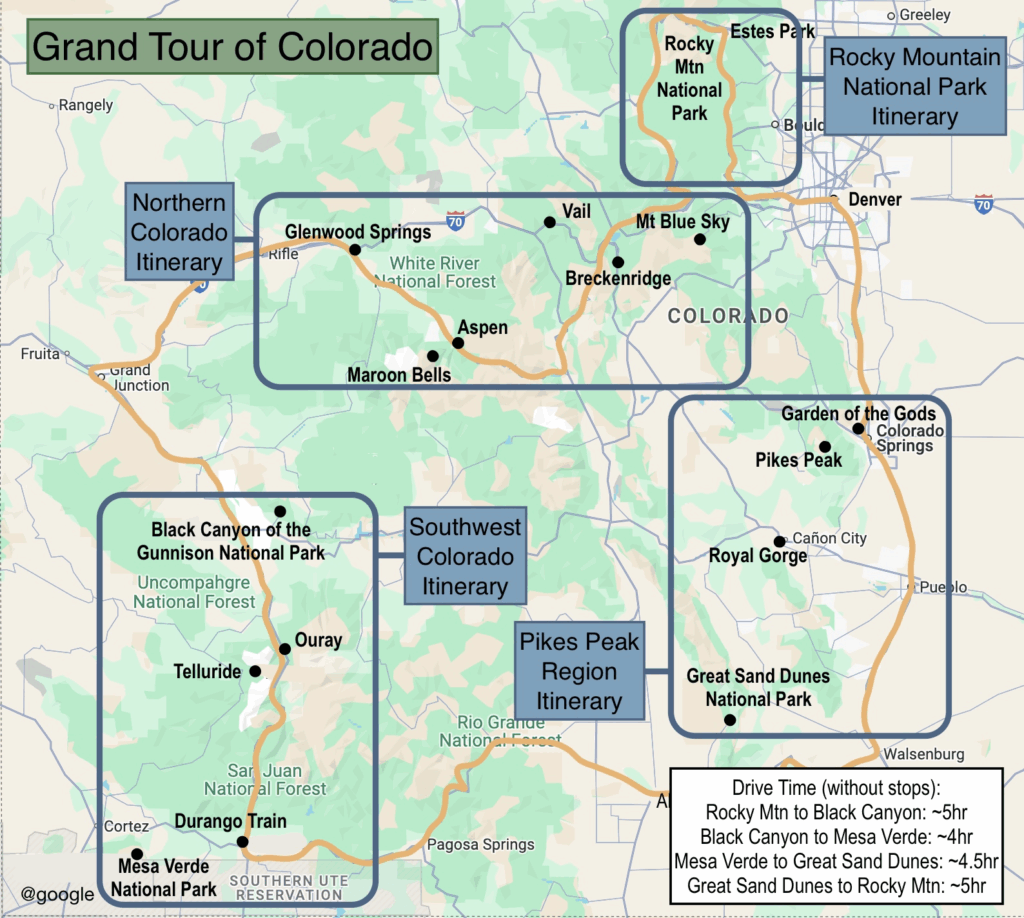
Great Sand Dunes National Park is just the beginning of cool things you can do in Colorado. You can go on an Epic Colorado Road Trip in just 7-14 days. Colorado has four national parks, including Rocky Mountain, Black Canyon of the Gunnison, Great Sand Dunes, and Mesa Verde! Plus, there are amazing mountain towns like Aspen, Vail, and Telluride (just to name a few), and stunning train rides too!
Check out our articles and YouTube videos for tips on how to make this trip happen for yourself. If you really want to make planning your trip easy, check out our travel guides! Hope you make it to Colorado soon.
10 Things To Know Before Driving the Pikes Peak Highway
The Durango & Silverton Narrow Gauge Railroad: Our Full Review + Helpful Tips
PERFECT One Day Itinerary for Ouray, Colorado (+ Where to Eat)
One Perfect Day in Aspen, Colorado: Maroon Bells, Walking Tour, and Independence Pass
How to Visit Mesa Verde National Park (1-Day Itinerary + Where to Stay and Eat)
How to Drive the Million Dollar Highway (+ Great Stops)