Did you know that protecting the sequoia tree was the reason behind creating three of the first four national parks? They are really that amazing, and a trip to walk among these ancient giants is an opportunity I hope everyone gets at least once in their lifetime. But, how much time should you spend at this park, and what are the best things to see?
One full day is the perfect amount of time to spend in Sequoia National Park. This will allow visitors time to visit the General Sherman Tree (the largest tree in the world), enjoy views from Moro Rock, walk the Big Trees Trail, explore the Giant Forest Museum, drive through a sequoia tree, and take pictures and look for wildlife in Crescent Meadow. If you have some extra time, you can catch a waterfall at Tokopah Falls, do one of the other longer hikes in the park, or take a tour of Crystal Cave.
I’m Cheryl, and I spend a month on the road every year exploring the national parks in the West. My husband and I have helped over 20,000 people have incredible trips with our guides since 2020. Today, I want to share with you the exact plan we give our family and friends when they visit this magnificent park.
Make your trip planning EASY, avoid the crowds, and see places most people don’t know about
Inside the guide:
*Step-by-step plan that will take you to the best hikes, viewpoints, drives, and must-do stops
*Exact time-frames and star-ratings so you can make the best use of your time and money
*Best Friend Guarantee: Love it or get your money back
*Stay in the right spot with our area recommendations to reduce time driving and waiting in entrance lines
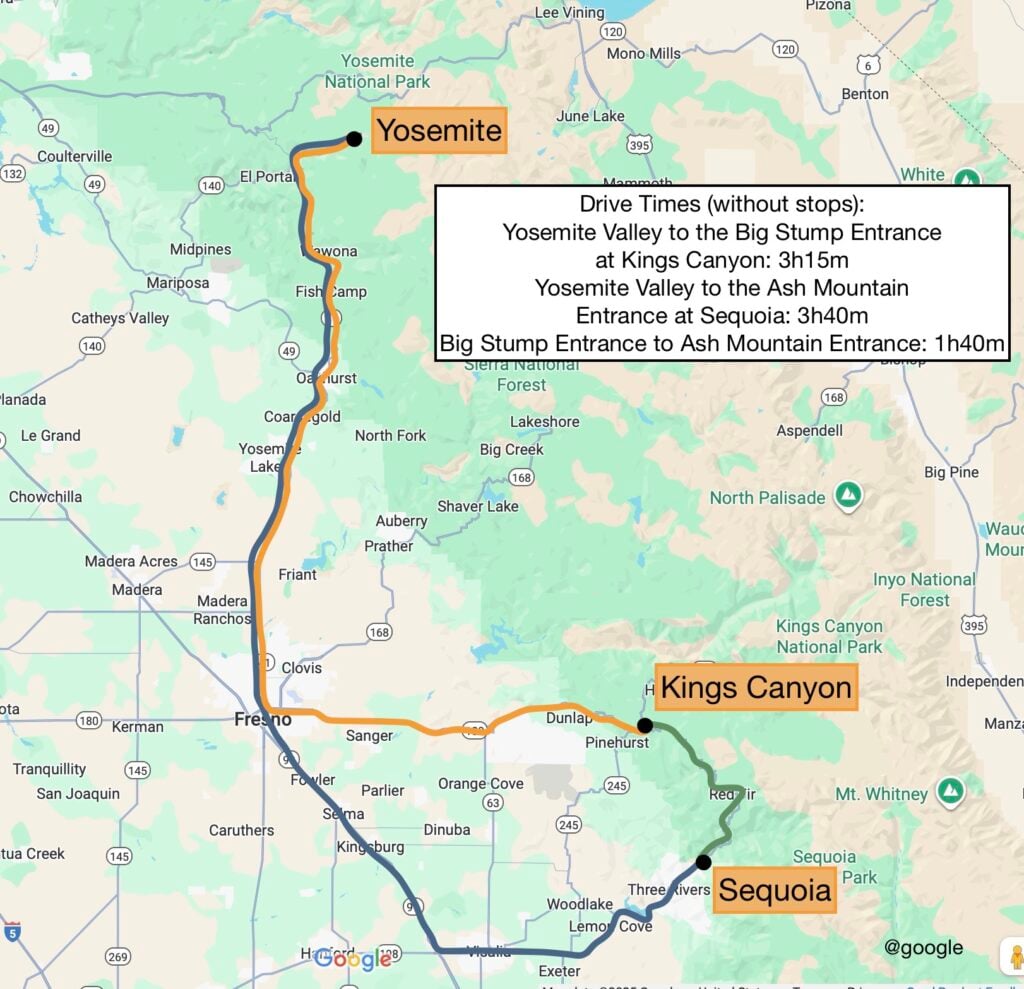
You can’t mention Sequoia without bringing up Kings Canyon National Park. Although they are separate national parks, they are managed by one entity, AND you pay one entry fee to visit both. Each park has its own entrance- The Big Stump Entrance for Kings Canyon and the Ash Mountain Entrance for Sequoia. Once you enter one of the parks, you can drive to the other park without having to drive through a separate entrance.
If you were to enter the Big Stump Entrance (Kings Canyon) by driving HWY180 from Fresno, taking the General Grant HWY to connect the parks, and then exiting at the Ash Mountain Entrance (Sequoia) heading toward Three Rivers, it will take 5-6 hours without stopping. Partly because the roads through these parks are incredibly winding, which limits the speed at which you can drive.
IMPORTANT TO KNOW: The Big Stump Entrance (Kings Canyon) rarely has a line, regardless of when you enter the park. The Ash Mountain Entrance (Sequoia) is more popular, and the line here can be over an hour long in the summer, holidays, and weekends if you are entering the park between the hours of 9 am and 1 pm. Either get to this gate by 8 am or wait until around 2 or 3 pm when the crowds start clearing out.
Many people make the mistake of thinking that they can visit both of these parks in a single day. We’ve found that half a day for Kings Canyon and a full day for Sequoia is perfect. Both parks contain giant sequoia trees, mountains, and meadows. But Sequoia is much more crowded and will require extra time.
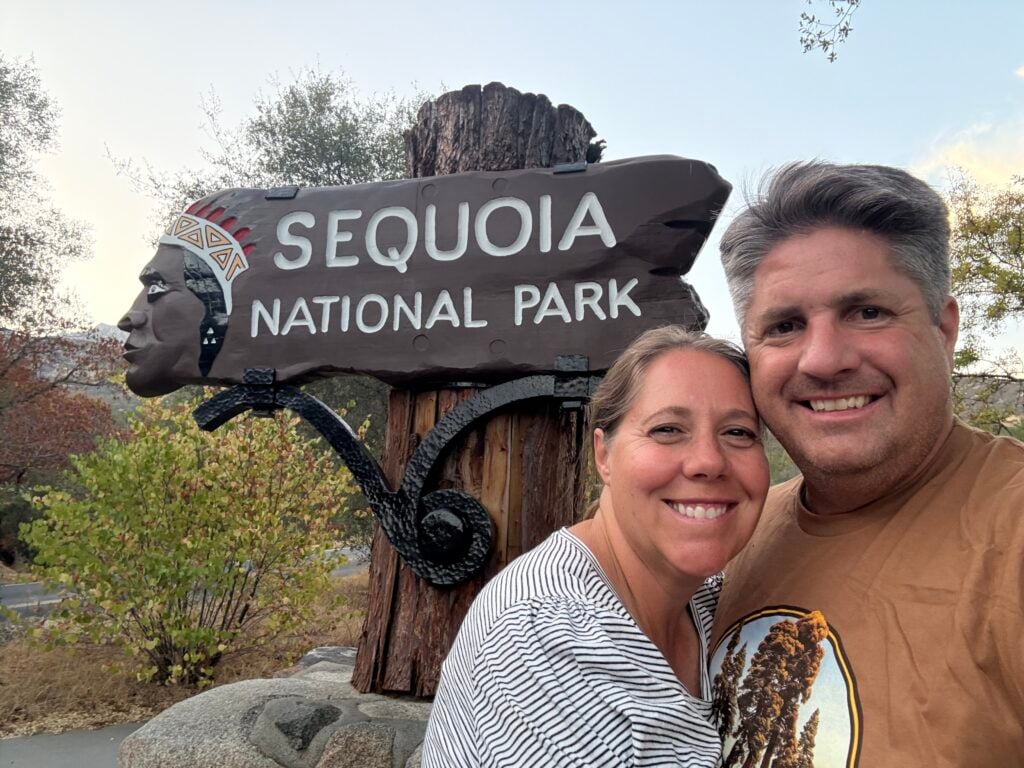
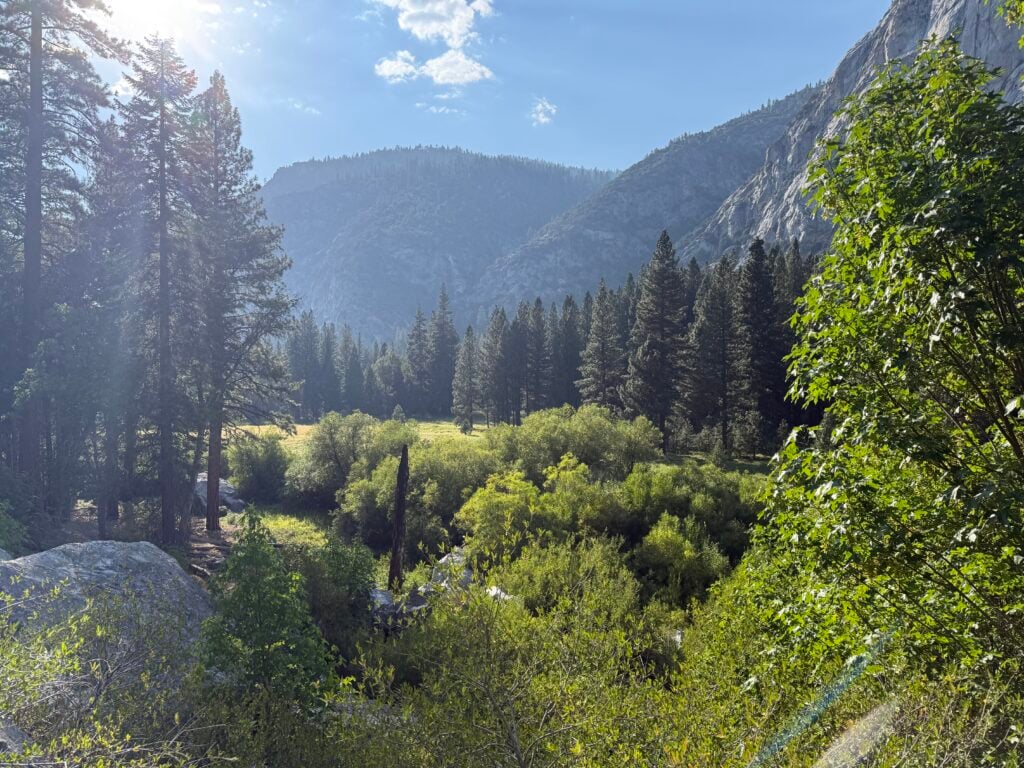
Kings Canyon National Park is a delightful escape from the crowds of some of California’s more crowded parks. It offers a delightful diversity of things to see, including canyon views, a scenic drive, waterfalls, and giant sequoia trees. It is one of my favorite “hidden gem” national parks and one I don’t think you should skip if you are on part of a larger California road trip. Read more about it in my article One PERFECT Day in Kings Canyon National Park (+ Where to Eat and Stay).
This itinerary is written for the regular traveler who has one to two days to see this wonderful park and wants to see the best sites without doing too much hiking.
I often travel with my retired parents AND my four children (who are now teens). This itinerary would work for any of them because it has some good variety, short, easy walks, and lots of flexibility.
We visited for a full day and did almost all the things we wanted to do. I’ve included the things we did that we loved and a few things that we will prioritize on our next trip.
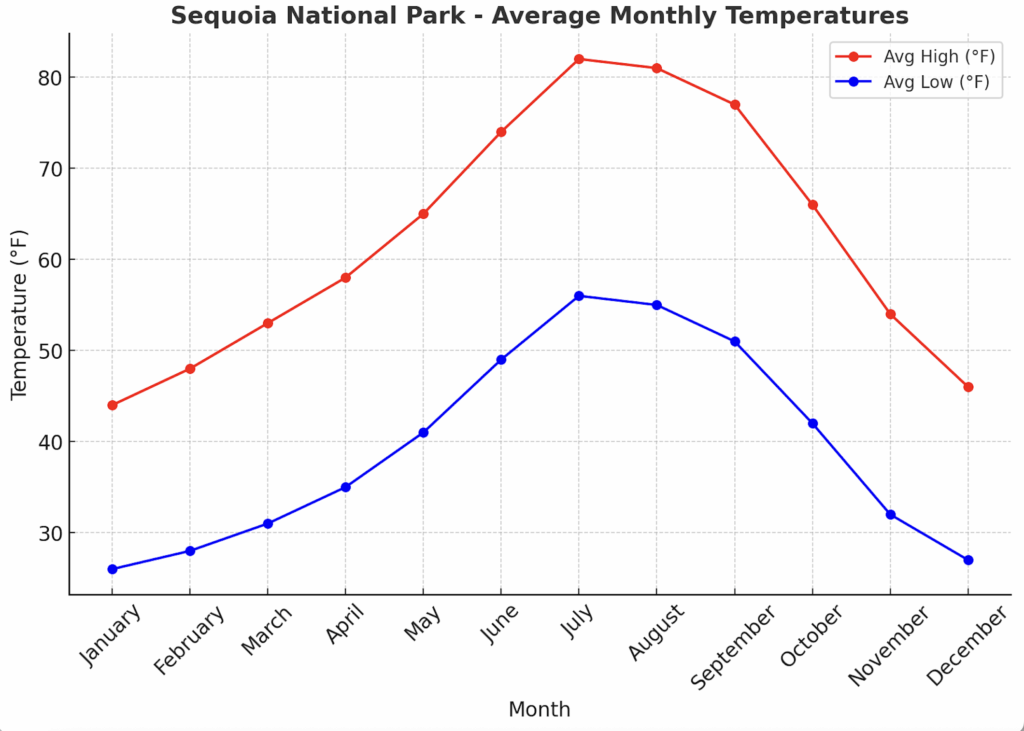
When we visited in August, it was over 90 degrees and a bit too hot for our liking. Plus, it was very crowded. May and September have the most pleasant temperatures, but April through October are all good times to visit.
Sequoia does get snow and parts of the park will close down to vehicles, including Crescent Meadow Road, Moro Rock Loop Road, and Mineral King Road. However, these parts of the park remain open for winter recreation like snowshoeing.
As far as what time of day to visit, we recommend getting to the entrance by 8 am to avoid long lines at the Ash Mountain Entrance (remember, you can use the Big Stump Entrance for Kings Canyon, too- and it never has a line) and to ensure you can find parking. If this is too early for you, we recommend arriving around 3:00 pm. By this time, most of the crowds have thinned out, making it easier to see the sights without the hassle.
PRO TIP: Look up the sunset time of the day you are visiting so you know how much time you have to see the park. If you are visiting in the summer, you may be able to see much of the park in the afternoon.
Because Sequoia National Park is so popular, parking and getting around can be a bit of a challenge. The good news is that there are a few parking lots to choose from, a great shuttle system, and even hiking trails to connect popular sites.
The shuttle system is free and no reservations are required. You just get in line and hop on. I highly recommend using it because the parking lots within the park will fill up in the morning and do not begin to empty until mid-afternoon. If you attempt to drive from site to site, it could be a frustrating experience, having to circle the parking lots until spots open up.
When we visited, we parked our car until late afternoon and then did a mixture of riding the shuttles and using trails to connect the sites.
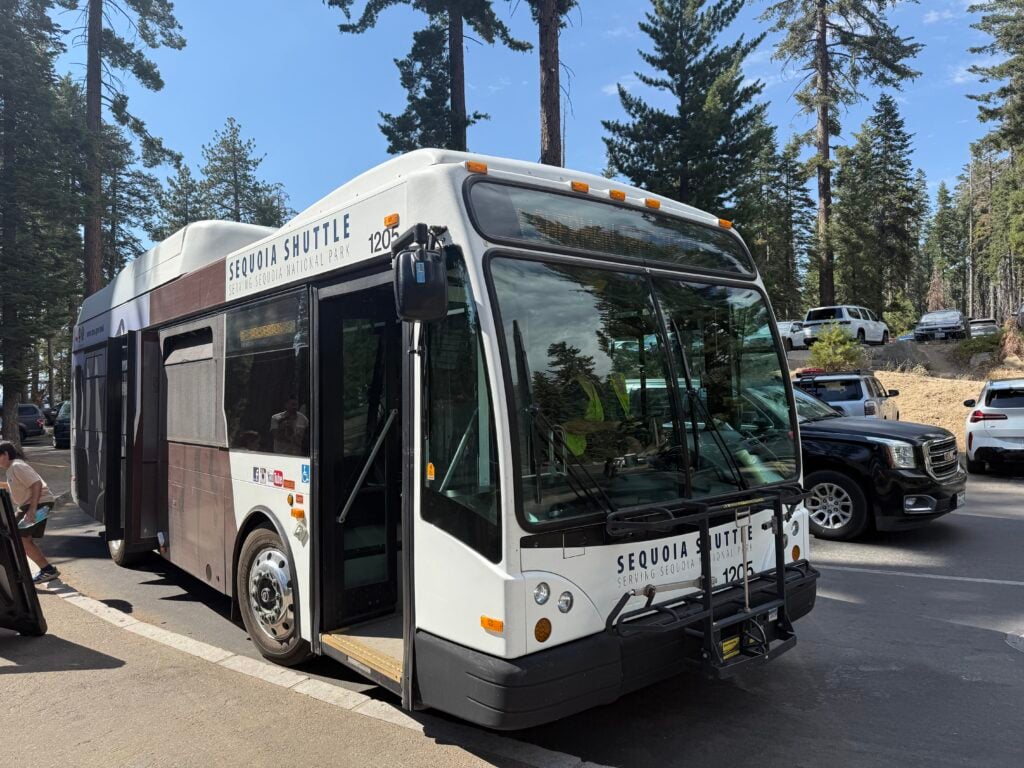
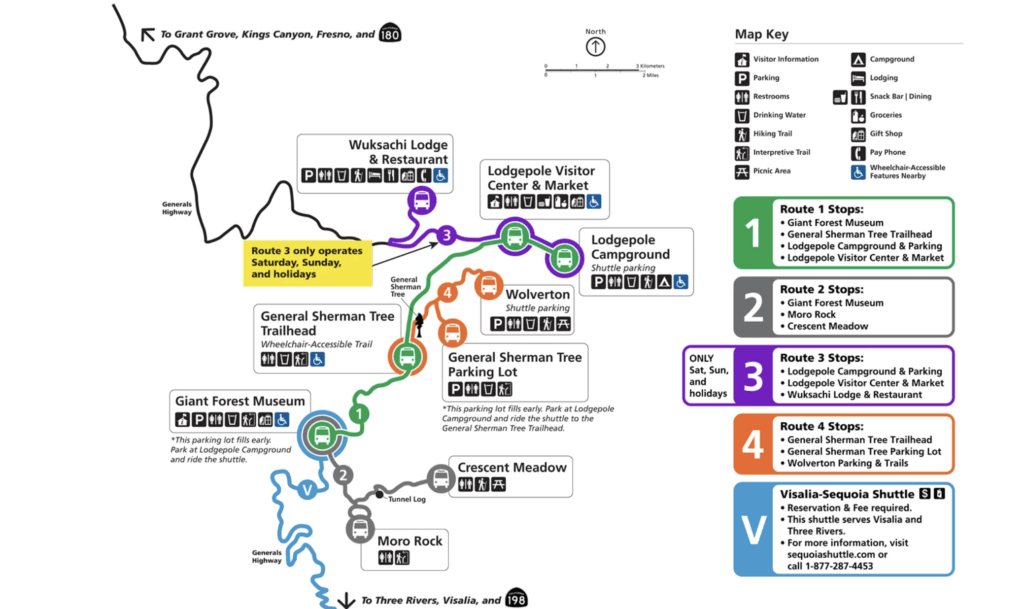
Sequoia uses three shuttles to service the park, with two additional ones that run seasonally. Route #1 is the primary one that will get you through the majority of the park. From there, you can hop on Route #2 or Route #4 to get to some of the most popular sites.
Route #3 only runs on weekends and holidays and its main purpose is to get people to and from the lodging and campgrounds.
Visalia-Sequoia Shuttle is a paid shuttle that you have to reserve and it transports visitors from the gateway town of Visalia into Sequoia and could be a great option if you don’t want to deal with parking your car.
It’s time to see one of the coolest national parks around! I have you starting at the biggest tree in the world- the General Sherman Tree! We parked here because 1) we couldn’t wait to see this majestic giant, 2) this parking lot tends to fill up last, and 3) it worked well for us entering the park through the Big Stump Entrance and then exiting the park at the Ash Mountain Entrance. Feel free to reverse it if it works better for your plans and lodging.
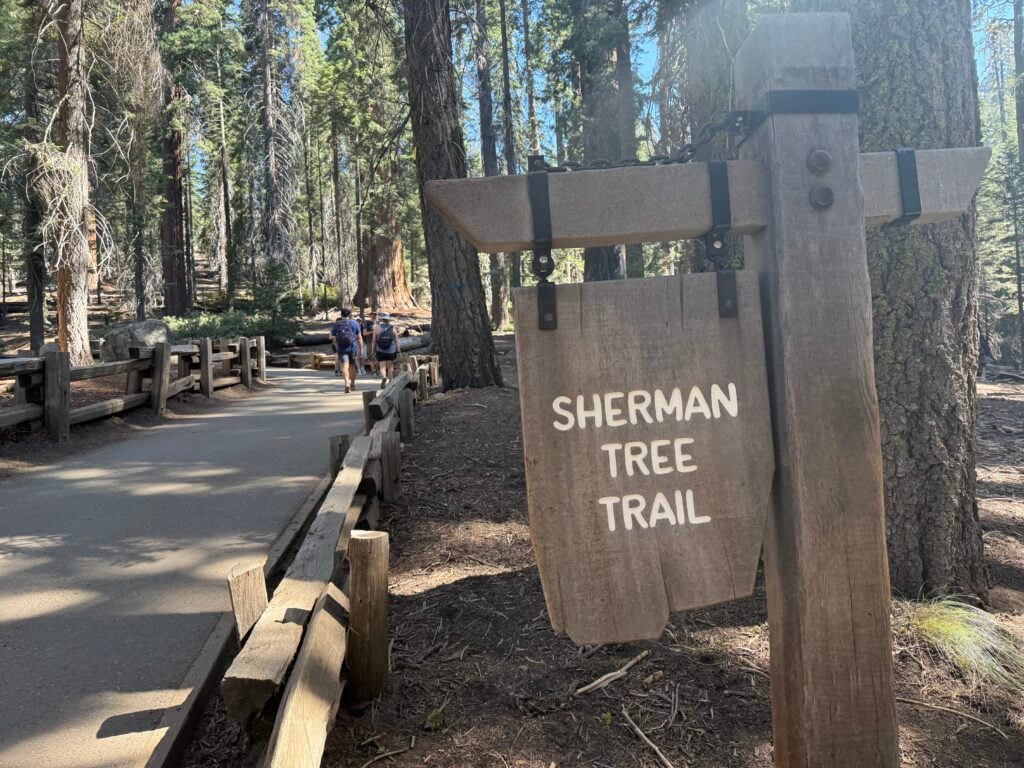
There are two parking lots to access this site. We parked at the Main General Sherman Tree Parking Lot because it is a downhill walk. It’s a short, paved trail with some stairs to the General Sherman Tree. It’s a wonderful, shaded walk through several big trees (in addition to Sequoias) and there are signs along the way that teach you about the General Sherman Tree.
GOOD TO KNOW: There is a second parking lot and a second trailhead to the General Sherman Tree. The trail is accessible and the parking lot mostly has handicap parking spaces. If you wish to do the easier trail to the General Sherman Tree but don’t have a handicap placard, you can take the shuttle to this trailhead.
You will know when you have arrived because of the dozens of people staring at the tree in awe, taking photos. This is a short stop that should take no more than 45 minutes, including the walk to and from the tree, but there are a lot more amazing sequoias to see in this area.
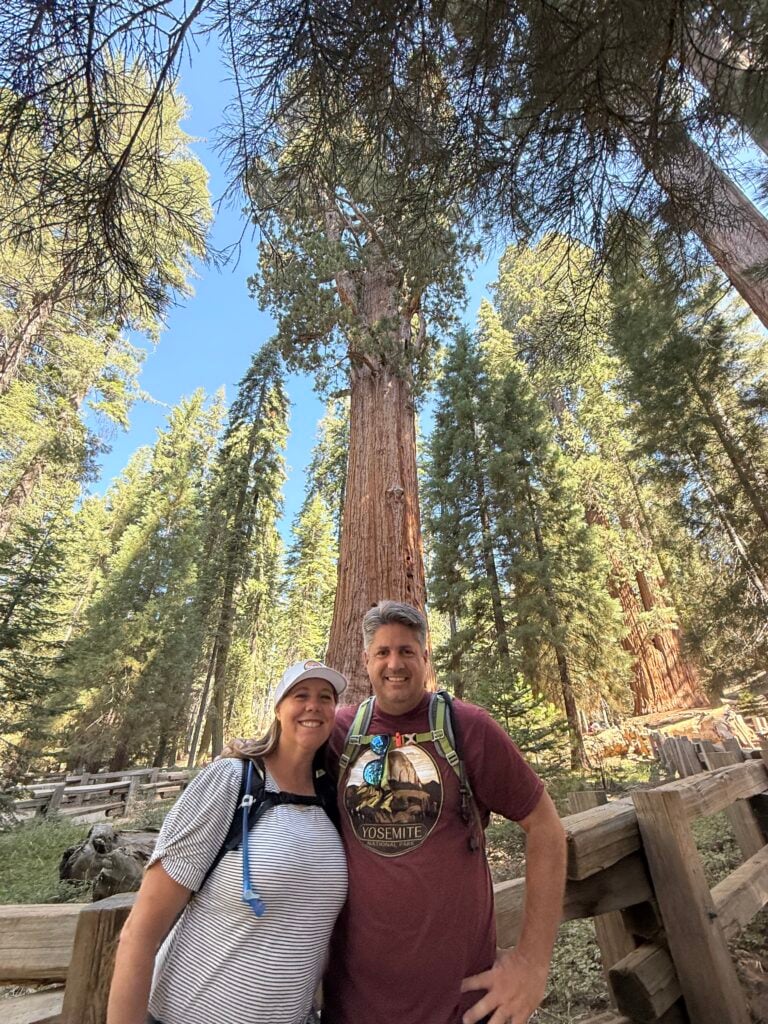
Largest tree in the world by volume. It is 275 feet tall and weighs 2.7 million pounds
The trunk is as big as a basketball court
You could build 100 houses from the wood of its trunk
It is 2200-2700 years old. General Sherman was already huge when the Roman Empire began!
One of the most photographed sites in the world. If you want a picture that shows the entire General Sherman Tree, set your phone to “pano”, start at the bottom, and work your way up
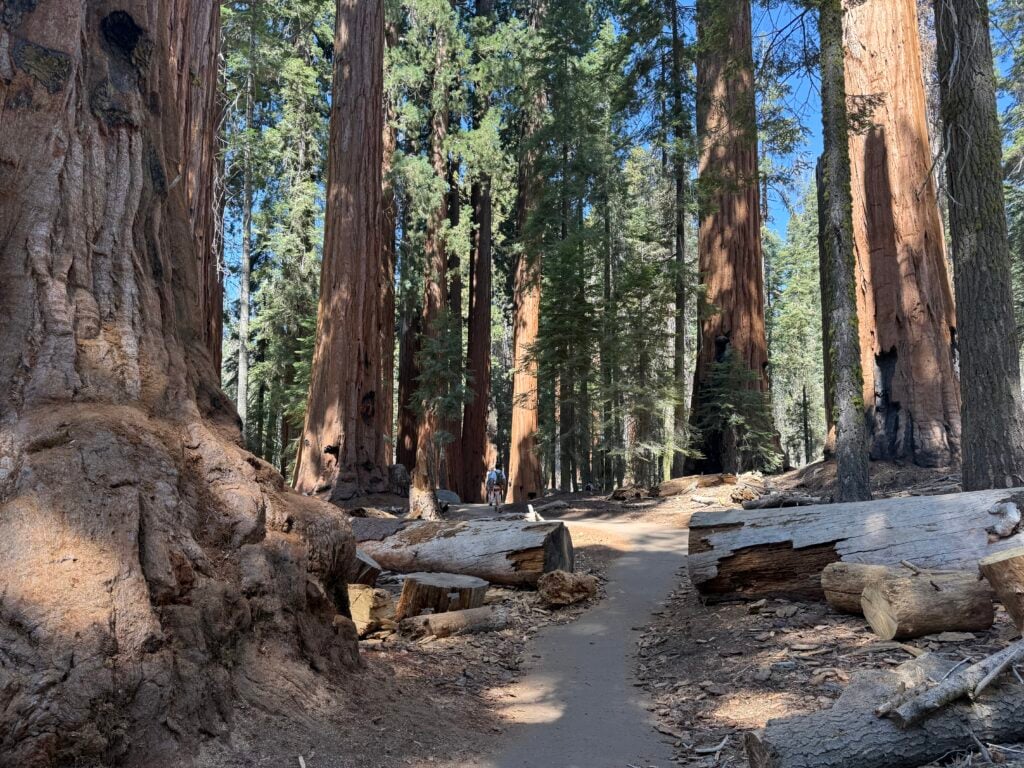
Congress Trail. Instead of heading back, we chose to take the Congress Trail, Hazelwood Nature Loop, and Alta Trail to our next stop, the Big Trees Trail. It is my husband’s favorite forest hike because it got us away from the crowds and we saw dozens of other giant Sequoia trees. It was shady, packed dirt, and an easy and gradual downhill walk. I am unsure of the exact distance of the trail because there are several spur trails in the area, and the maps the NPS provides aren’t very good. It took us a little over an hour, mostly because we stopped often to enjoy the trees. Here’s the exact trail we took.
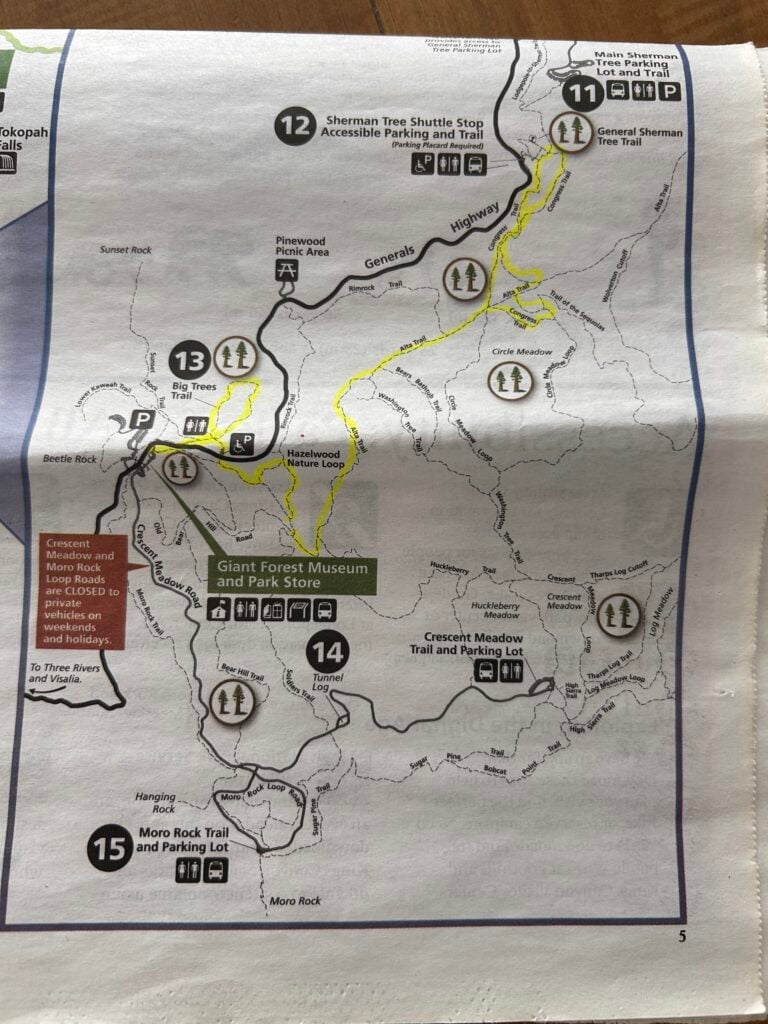
PRO TIP: Take a picture of any maps on the signs you see as you are hiking. The maps of the trails in Sequoia are tricky and you often have to look at a couple of maps to navigate some of the trails in this area. They also sell better maps in their gift shops and visitor centers.
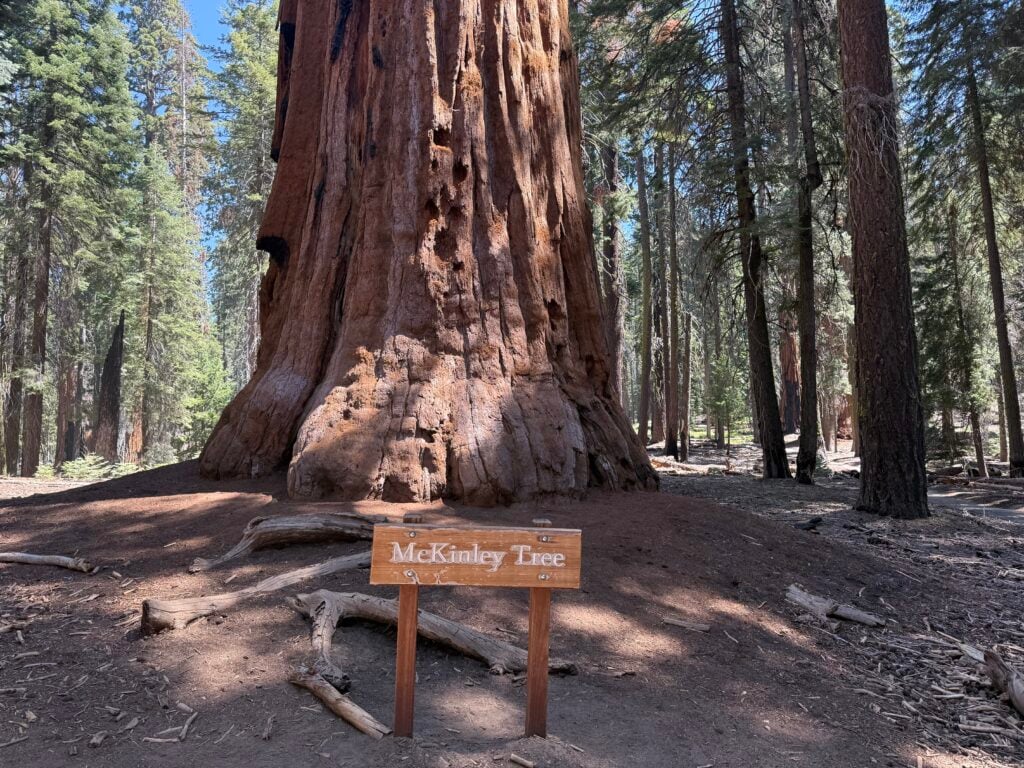
Something fun about the Congress Trail is that many of the trees are named after presidents. George Washington, Abraham Lincoln, Franklin D. Roosevelt, William McKinley, and Calvin Coolidge all have trees named after them (just to name a few). The George Washington Tree used to be the 2nd largest tree in the grove, but was struck by lightning 20 years ago and the top half of the tree was destroyed.
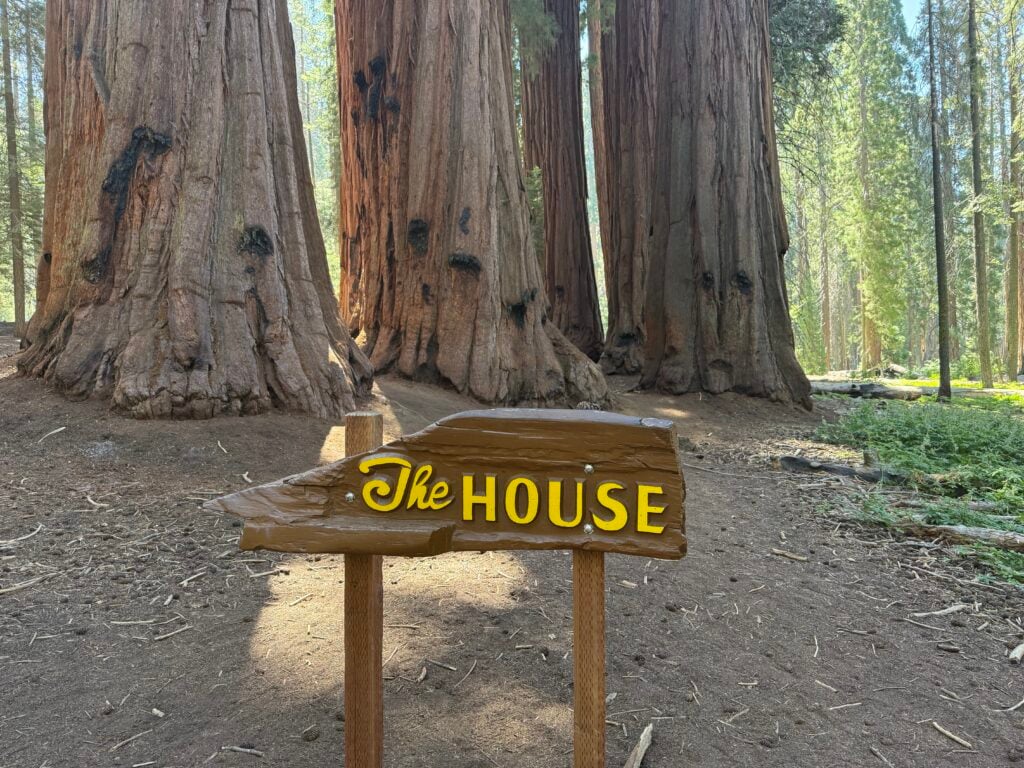
There are also two large groves of trees called “The Senate” and “The House.” One of my favorite stops was the Room Tree. It’s a giant sequoia that is hollowed out inside. It’s so big you can climb inside and it’s a giant room. This was caused by the inside of the tree being burned in a forest fire. Surprisingly, this tree is still alive and healthy.
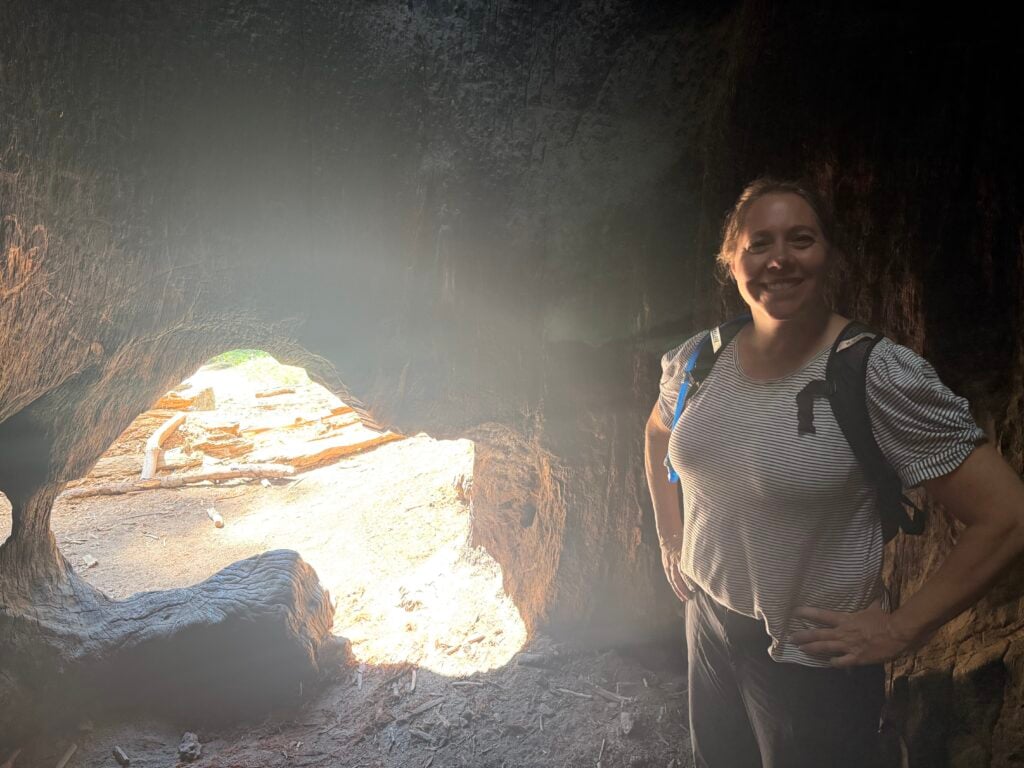
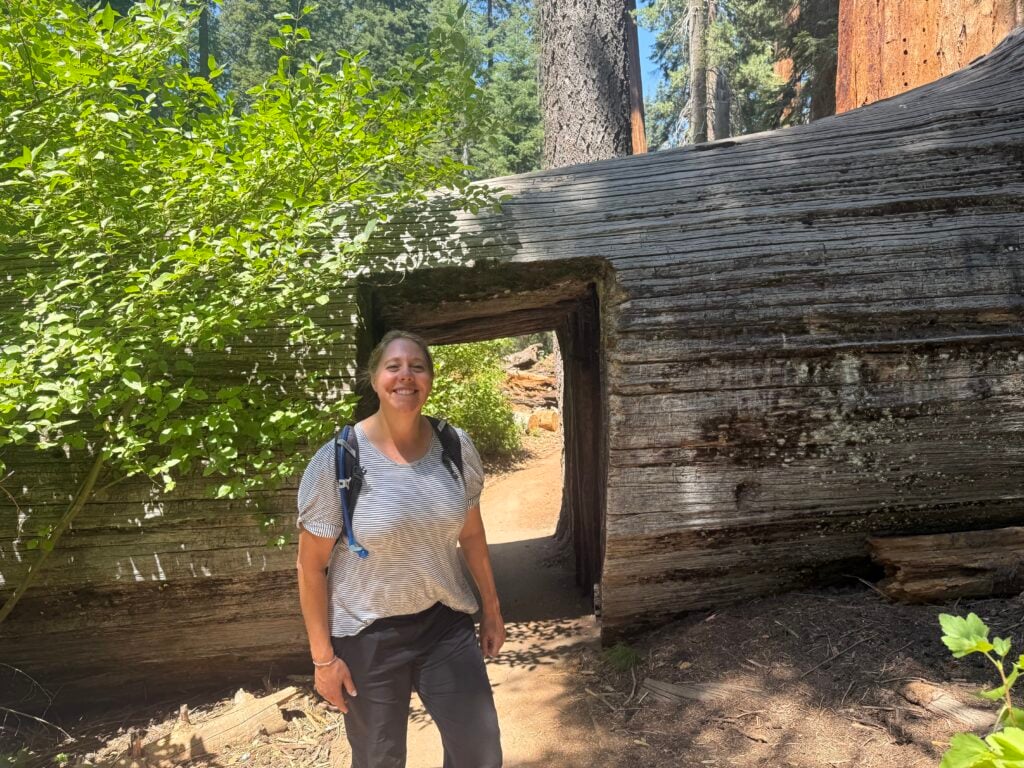
FUN FACT: Sequoias have very thick bark and are extremely fire-resistant. It’s common for trees to have huge portions of their trunk burnt and still be alive.
13 road trip ideas across the West so you know where to go, how long to stay, and what to see
*Sample routes from 4–31 days across national parks and hidden gems
*Driving times + best stops so you don’t miss the good stuff
*Season + weather notes to avoid closed roads and peak‑crowd days
*Lodging ideas in the right spots so you cut backtracking
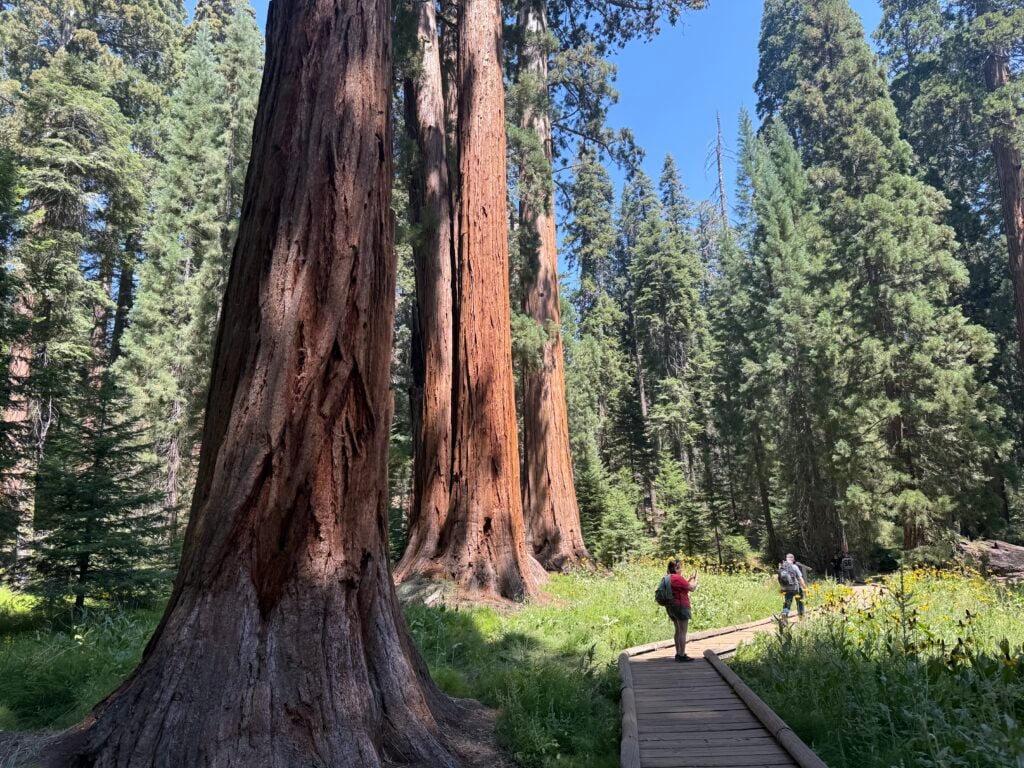
The Big Tree Trail is really popular. It’s an easy, flat, paved, and accessible 0.7-mile loop where you see more sequoias as you walk around a pretty meadow. There are several benches along the trail. We stopped and enjoyed our picnic lunch here. If you hiked the Congress Trail and are tired, you have our permission to skip this trail because it’s not as cool as the Congress Trail.
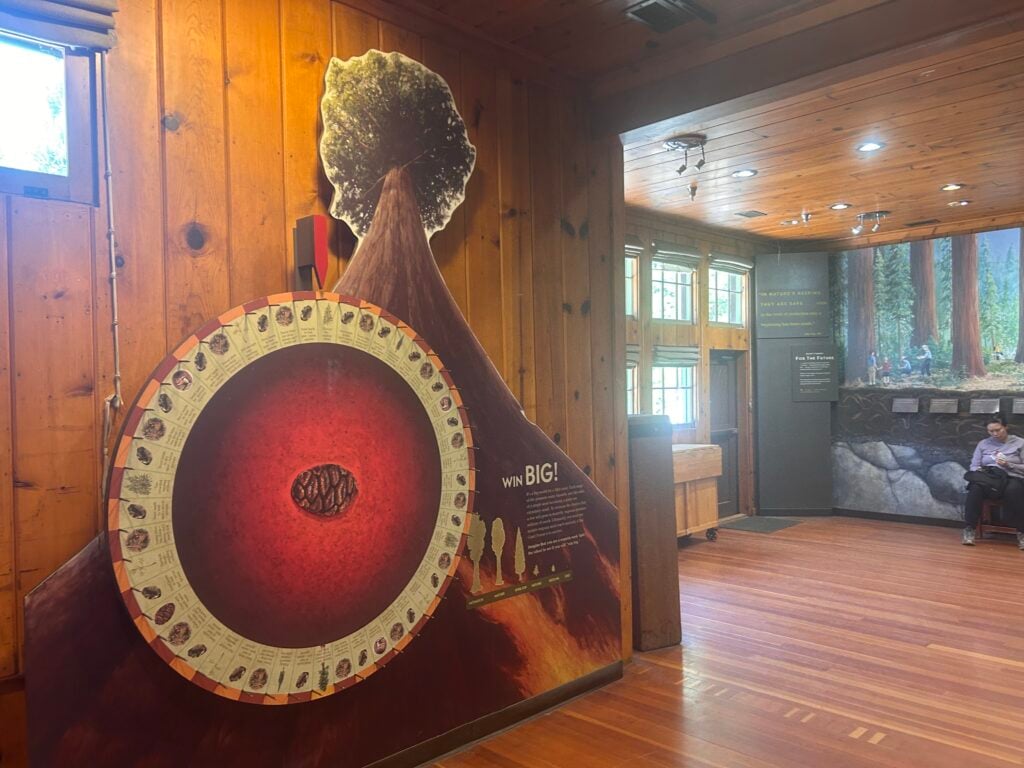
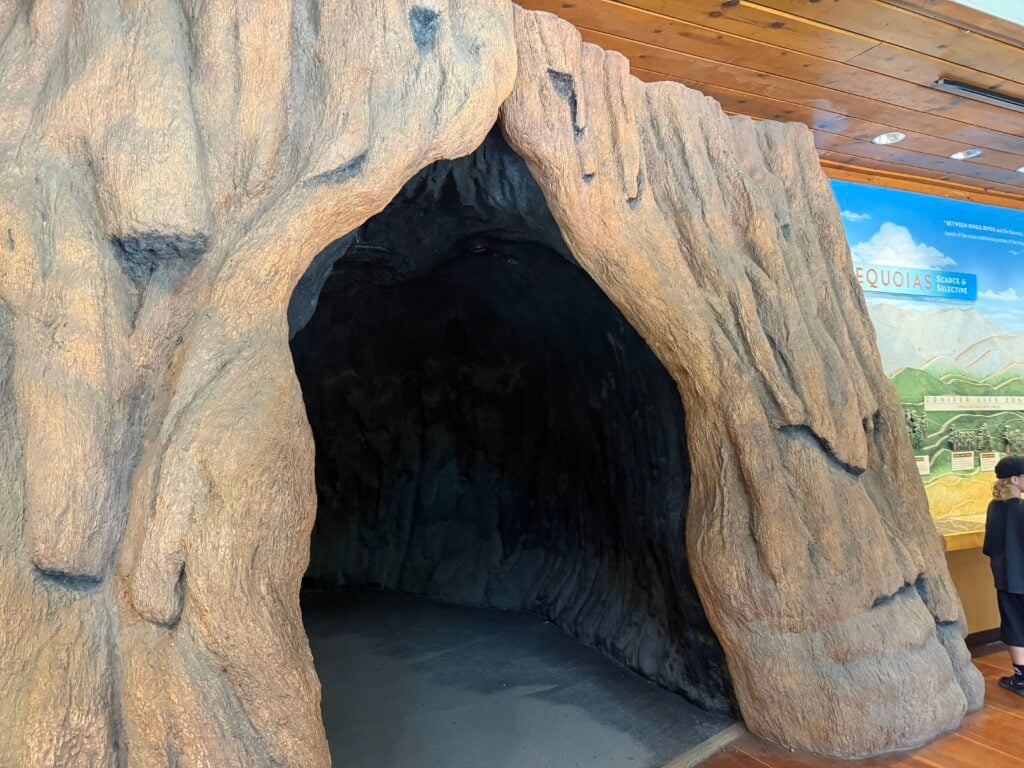
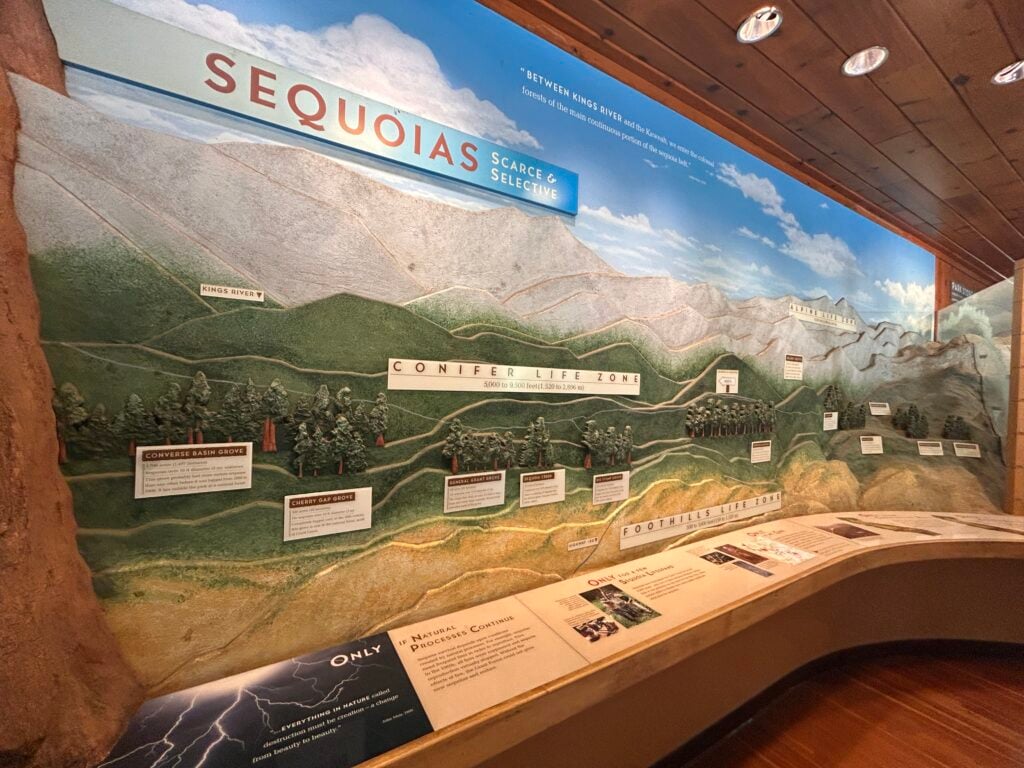
Sequoia National Park has a few visitor centers/museums and they are all pretty good… but this one is our favorite! We spent at least 30 minutes here. It is newer and has wonderful displays for kids and adults alike. Some of my favorites included the wheel of destiny with the fate of a sequoia pinecone. You spin the giant wheel and see if your pinecone makes it to adulthood.
There was also a great display that compared the size of the sequoia trees to common objects to put things in perspective. For example, if you cut a sequoia down, it would cover almost an entire football field!
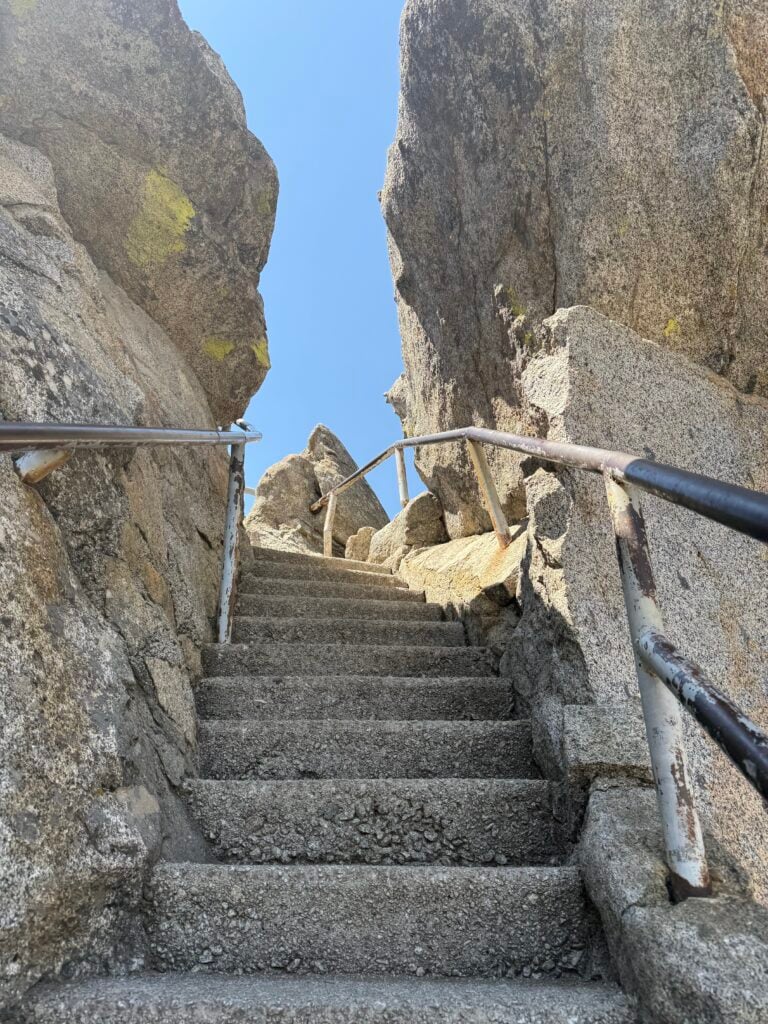
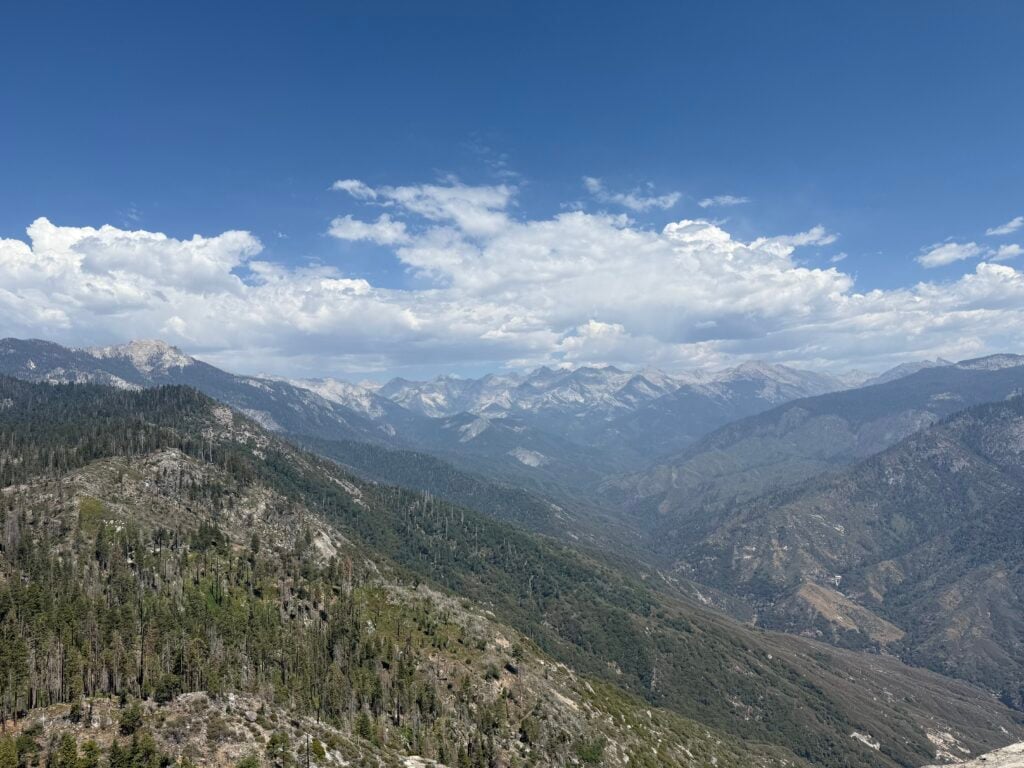
What is Moro Rock, you ask? It’s a super cool, giant granite dome, thousands of feet in the air, where you can get amazing panoramic views of Sequoia National Park. It’s like the junior version of Half Dome in Yosemite without all the fuss of permits, gripping to chains and ropes, and hiking 16 miles.
Instead, you catch the shuttle to the trailhead and climb the 400 steps it takes to get to the top. It’s steep and challenging, but the views are worth it. Plus, it only took us about 15 minutes to get there.
You’ll have to share it with dozens of other travelers, but enjoy the excitement and energy in the air.
There is actually a fallen sequoia tree that you can drive through. It’s a really fun photo op. You ought to check it out. It’s a fun way to end your day and hopefully, at this point, the crowds have cleared out and you shouldn’t have too big of a line.
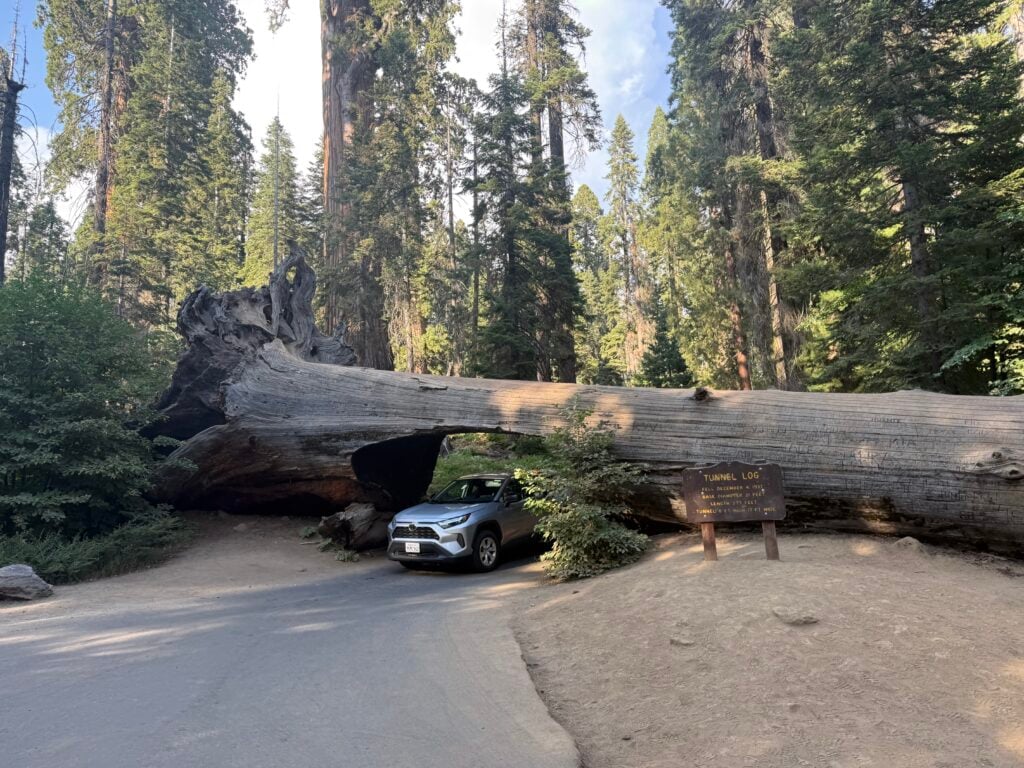
PHOTO TIP: Have someone from your vehicle hop out before you drive through and take a pic. Be careful with the low clearance. We saw some people stick their heads out of the sunroof and almost get a nasty bonk on the head.
If you have more than one day to explore Sequoia, here are a couple of popular sites you may want to check out. Also, remember that Sequoia and Kings Canyon are separate parks, but are right by each other. If you are trying to choose between doing Kings Canyon or the activities below, do Kings Canyon. You can read our exact plan for Kings Canyon in our article One PERFECT Day in Kings Canyon National Park (+ Where to Eat and Stay).
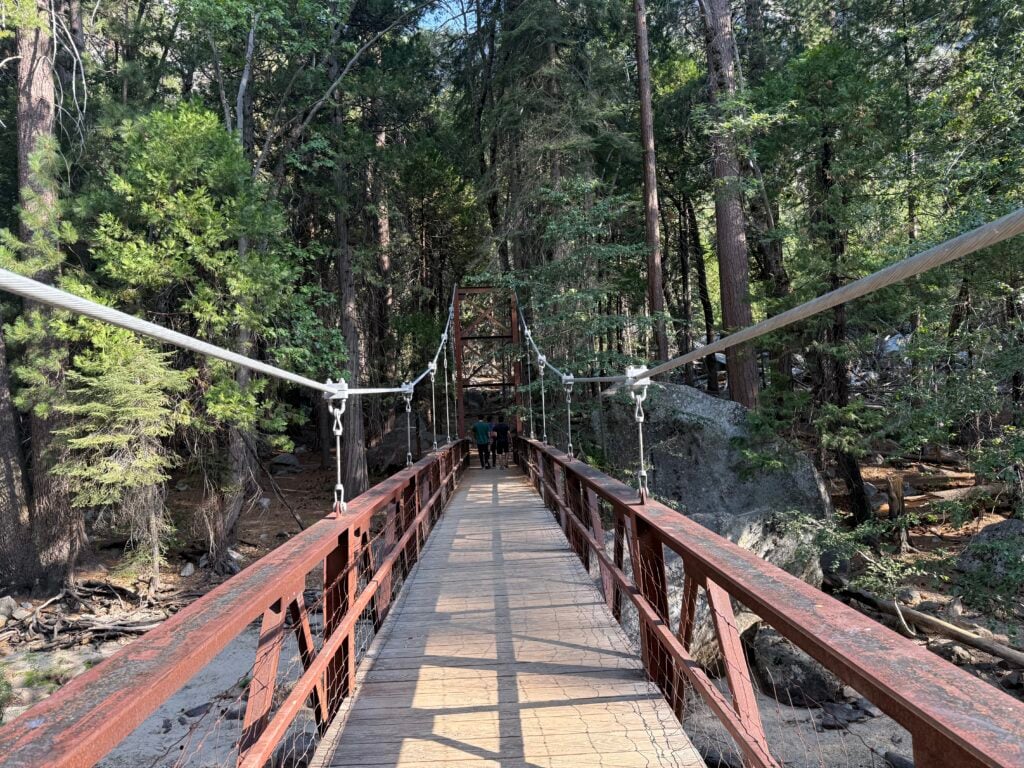
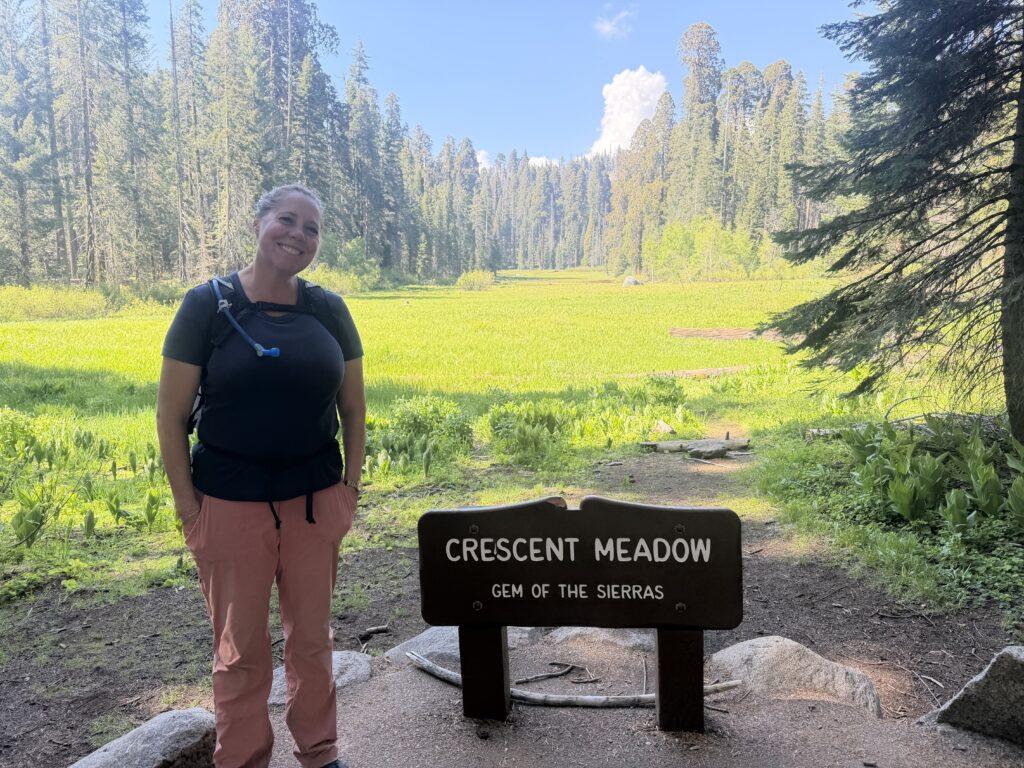
There is a picnic area and a 1.5-mile loop through the meadow and sequoia trees. It’s common to see wildlife here and there are wildflowers, depending on the season you travel. This is also a popular spot for photographers. You can learn more about it on the NPS website.
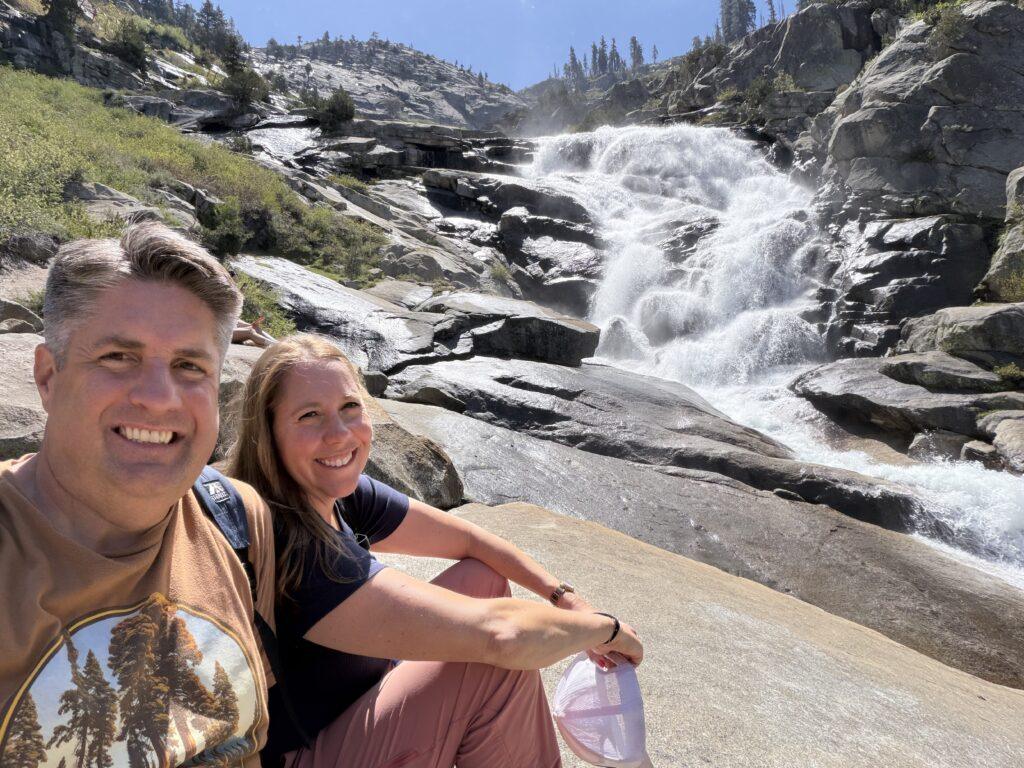
This 3.4-mile, round-trip hike was easy/moderate and WONDERFUL! We loved walking through the meadow and forest, and being rewarded with an incredible waterfall at the end.
It’s not as crowded as the rest of the park and is a wonderful stop if you have a second day. Learn more about it here.
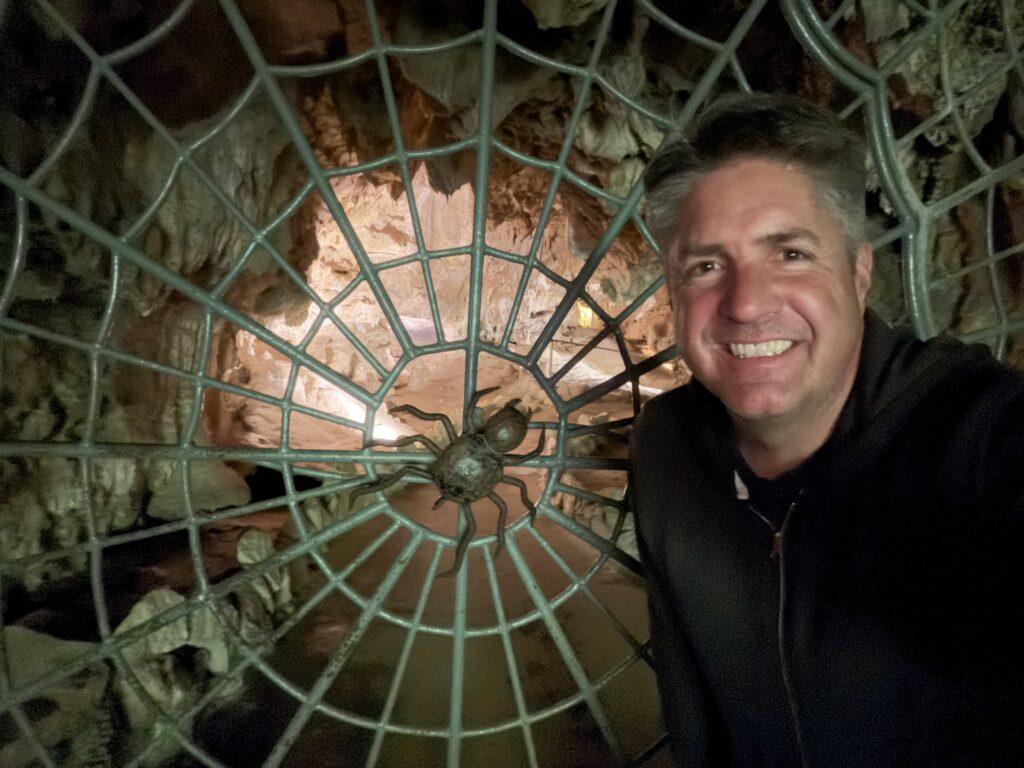
This is a marble cavern and gets really high reviews. The tours are guided and run by the Sequoia Park Conservancy and you must book them online in advance. You can do that on their website. Tours are 1/2 a mile long and require climbing a steep trail. They also cost ~$20 per person.
The drive to get there is on a remote, winding road that took us about 40 minutes. Our tour group had 35 people but it was easy for us to hear our tour guide and we all fit in the same rooms.
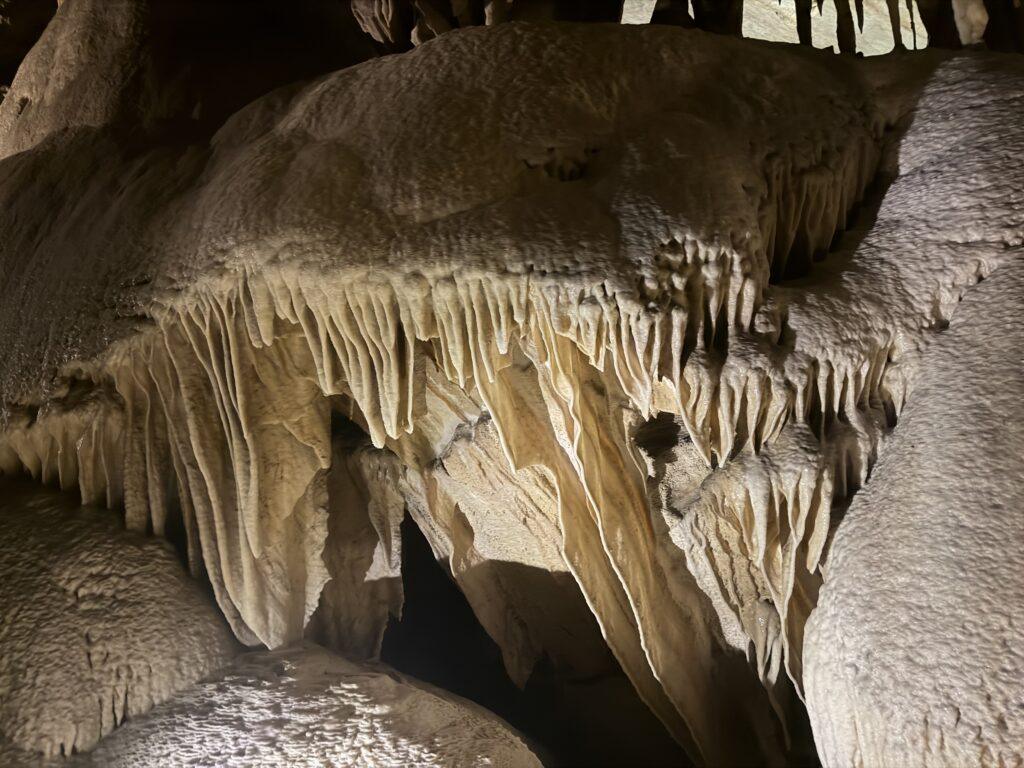
The cave was wonderful. It is much more decorated (has more formations) than Boyden Caverns in Kings Canyon. There is also a fairly swift stream running through much of it, but you stay on a trail where your shoes stay dry.
We loved our experience, but would only recommend this if you have 2 days in the park. The total tour time was 2 hours plus 40 minutes driving each way. This eats up half a day and we think seeing the sequoias should be the #1 priority.
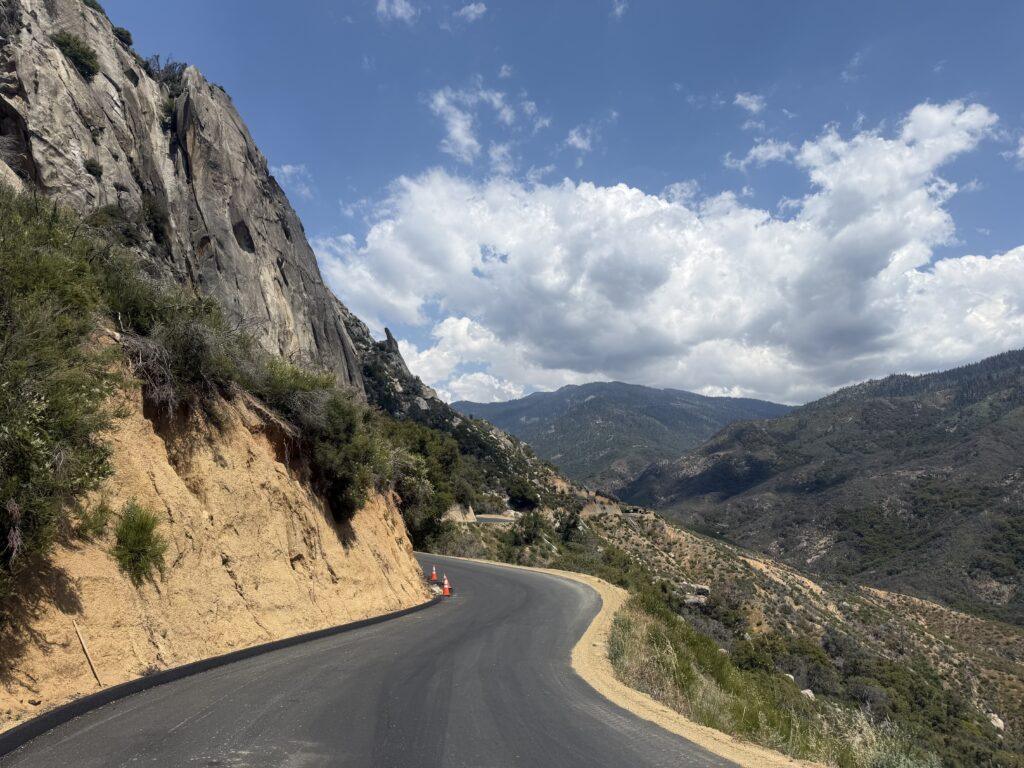
This rugged part of the park has a completely different entrance from the rest of the park. It’s about a 2-hour drive on an incredibly winding road where you are traveling at 15 miles per hour for much of it. Some parts of the road are so narrow that you have to back up and find a pull-out spot to let other cars pass. Although a 4-wheel drive, high clearance vehicle is not required, we were glad we had a Jeep. Trailers are allowed on the road, but I think towing anything would be a TERRIBLE idea!
The drive is very scenic with mountain views and even some giant sequoias along the way. You can even stop in the very small, mountain town of Silver City for lunch and famous pie.
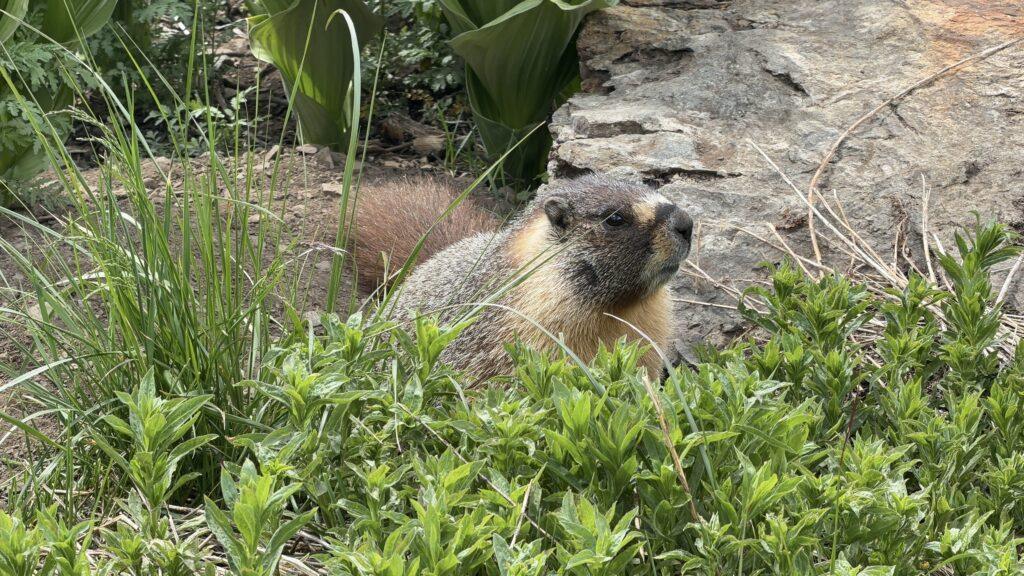
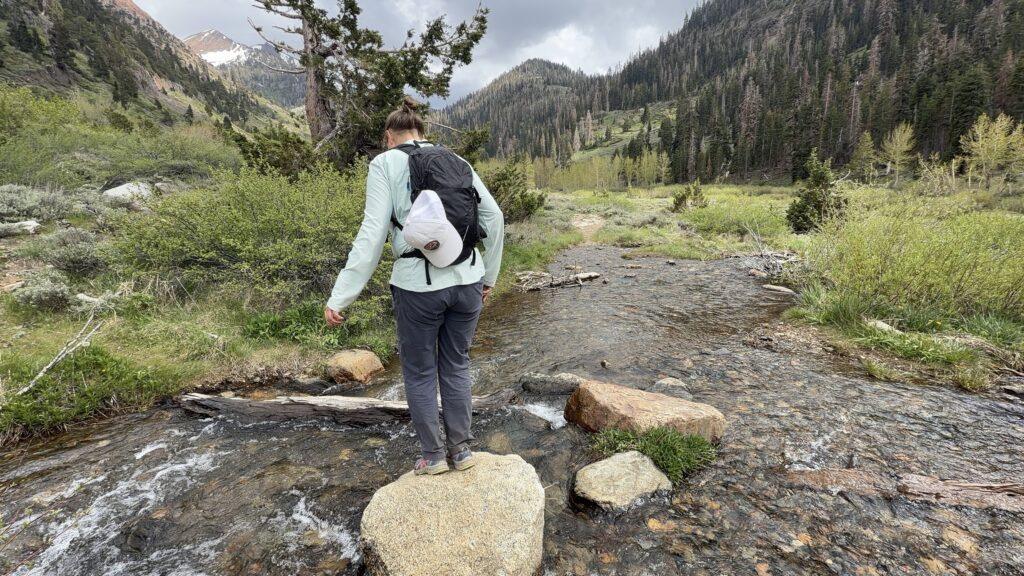
The reward is some of the best wilderness hiking you will ever do. We hiked the Franklin Lakes Trail for ~3 hours and never saw another person. We did see dozens of marmots, deer, 6 waterfalls, and incredible mountain views.
We chose to do the beginning of Franklin Lakes because it was relatively easy. Most of the hikes in this area are strenuous and perfect for avid hikers.
Exploring Mineral King will take the better part of a day. Our hike was one of our favorites in the area and we enjoyed escaping the crowds, but we HATED the drive back. You already have to drive lots of winding roads driving to the main entrance of Sequoia National Park, so make sure to weigh your tolerance for driving roads like this multiple days. Read more about Mineral King here.
When to Start Your Day. If entering through the Ash Mountain Entrance, get there before 8 am. If you are a late riser, the park is very pleasant after 3 pm.
What to Wear. Comfy shoes you can do easy hikes in, sun protection, a hat, and sunglasses.
What to Bring. Binoculars and a water bottle. A picnic lunch, if you don’t want to eat at the restaurants in the park.
For Your Comfort. Due to the winding roads, take some Dramamine or get a motion sickness patch before visiting if you struggle with motion sickness.
Road Conditions. The roads are paved and drivable in a regular car (excluding winter)
Cell Phone Service. Don’t plan on having service. It’s spotty at best.
Don’t Bring Your Doggo. Dogs are not allowed on the trails or in buildings,
excluding trained service animals.
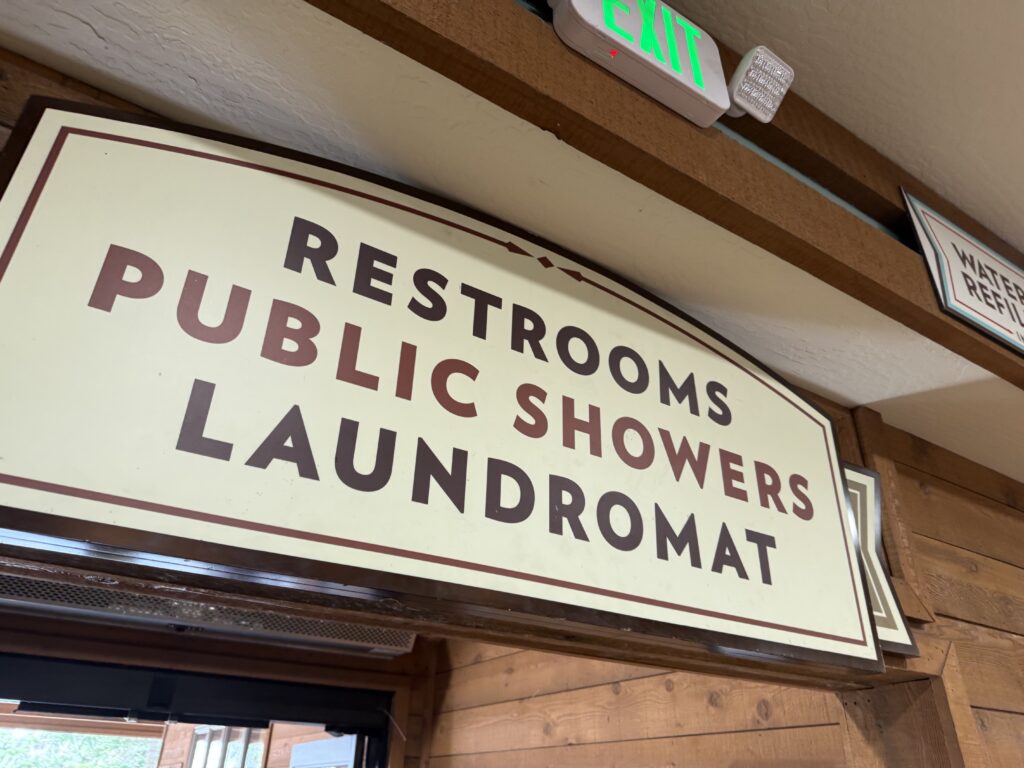
Services Within the Park: Restaurants, gift shops, laundry, lodges, and campgrounds.
Get our done‑for‑you, 7-9-day route with exact drives, maps, and must‑see stops so you don’t waste time in traffic or miss the best views.
Inside the guide:
*Day‑by‑day plan for Yosemite, Sequoia & Kings Canyon, including the best hikes, drives, and sites
*Details You Need: including time frames, driving routes, and where to sleep each night to reduce backtracking
*Best Friend Guarantee: Love it or get your money back
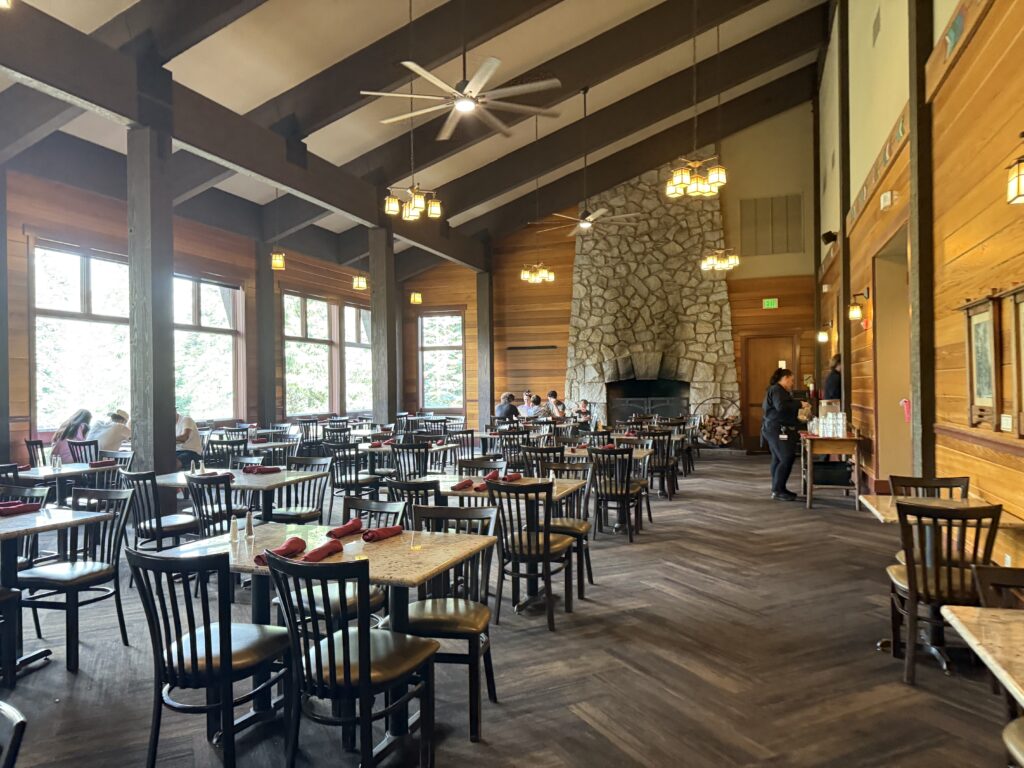
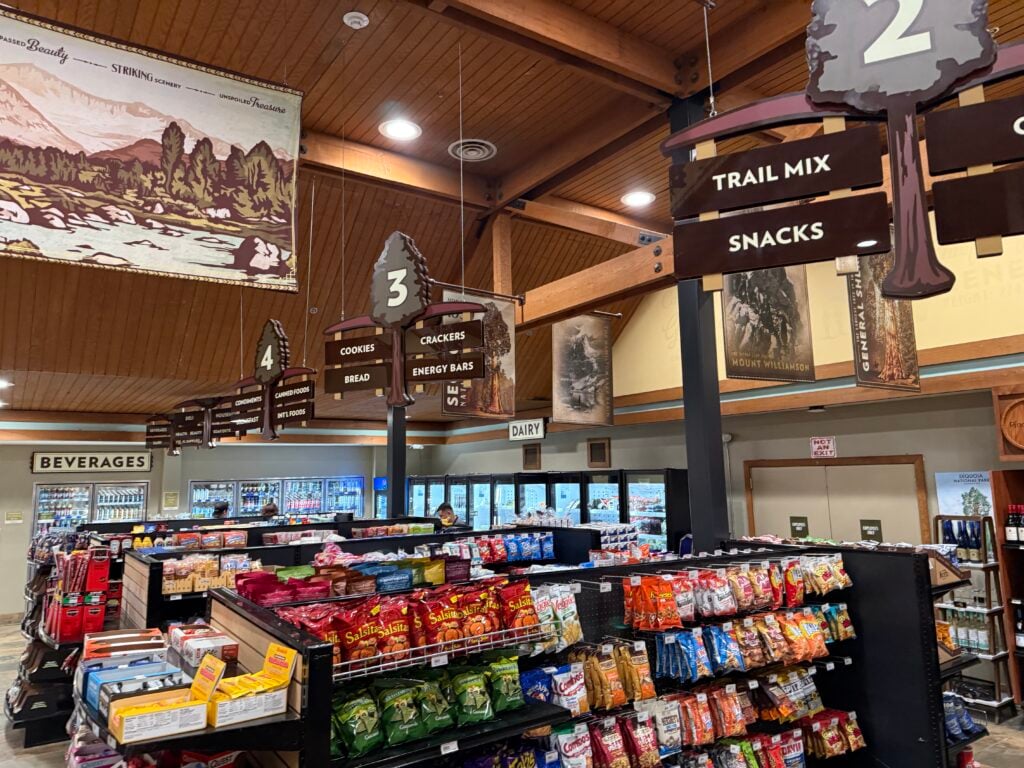
We love to pack picnics, but there are actually some good places to eat inside Sequoia. The Wuksachi Lodge has a couple of options, including the Peaks Restaurant (fine dining), which looked very nice. Reservations are recommended for dinner and you can plan on spending between $30-$50 per meal. They serve typical fare you would find at a steakhouse. Breakfast and lunch are less formal and less expensive. We find that it’s a great way to get a nice dining experience without the high cost of dinner. They also have the Pizza Deck, a cheaper and less formal option.
We chose to grab something from the Lodgepole Grill. There are burgers, wraps, and salads here. We had to order our food from a kiosk, but our California wrap and fruit cup were really good– unusual for national park food! Keep in mind that this cost us ~$20 for this simple meal. We also grabbed a couple of $5 ice cream bars from the market.

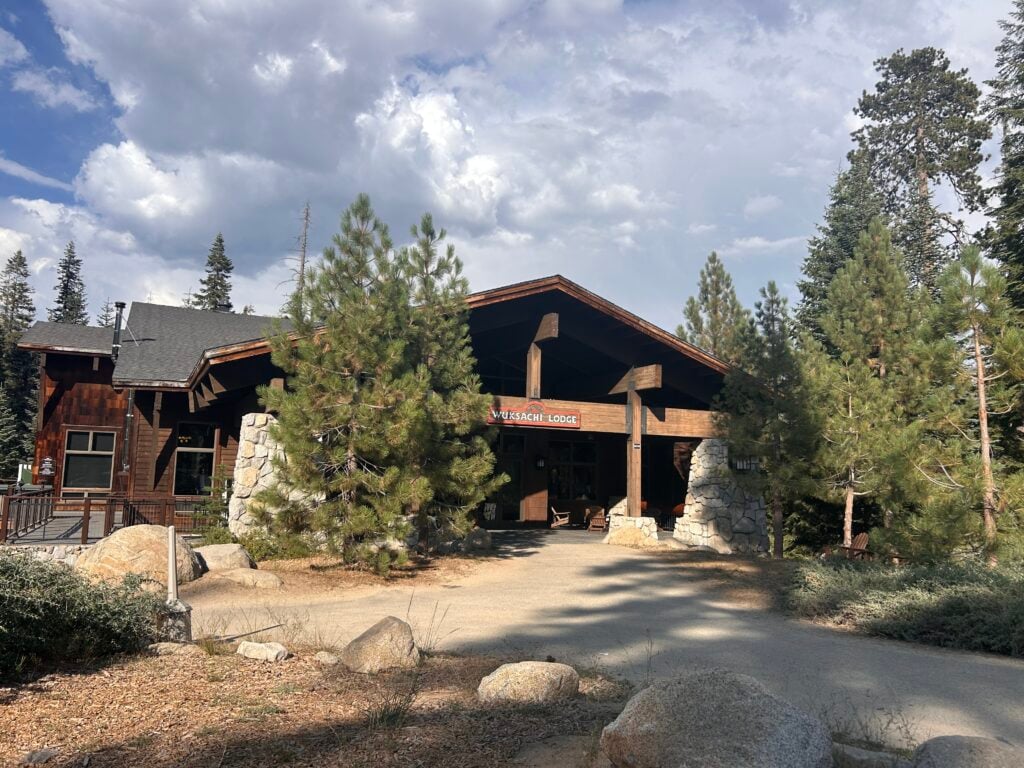
There are lots of places to stay when visiting Sequoia. The Wuksachi Lodge is right inside the park and has rooms inside the lodge (no cabins). This is a very nice lodge and has a nice restaurant as well. On holidays and weekends, a shuttle is available to pick up guests from here and take them into the park. Rooms start ~$300 a night and go up from there during peak travel season.
John Muir Lodge and Cabins and the Cedar Grove Lodge are lodging options within Kings Canyon National Park. The John Muir Lodge offers rooms and cabins. During peak season, rooms start around $300 a night. The Cedar Grove Lodge only has rooms in the lodge and they start around $220.
There are also several campgrounds within these two parks. Check out all the campgrounds at the NPS website.
INTERESTING: Sequoia National Park was established in 1890 and is one of our oldest national parks. It was very common for parks back then to have a lot of lodging because people had to visit the parks by train or horse and buggy, and needed a place to spend the night.
If you want to save some money and stay outside of the park, you can stay in Three Rivers or Visalia. Visalia is a bigger city and is ~45 minutes away. Three Rivers is small but only ~15 minutes away. Keep in mind that once you enter the park, it’s around a 45-minute drive to get to the main sights.
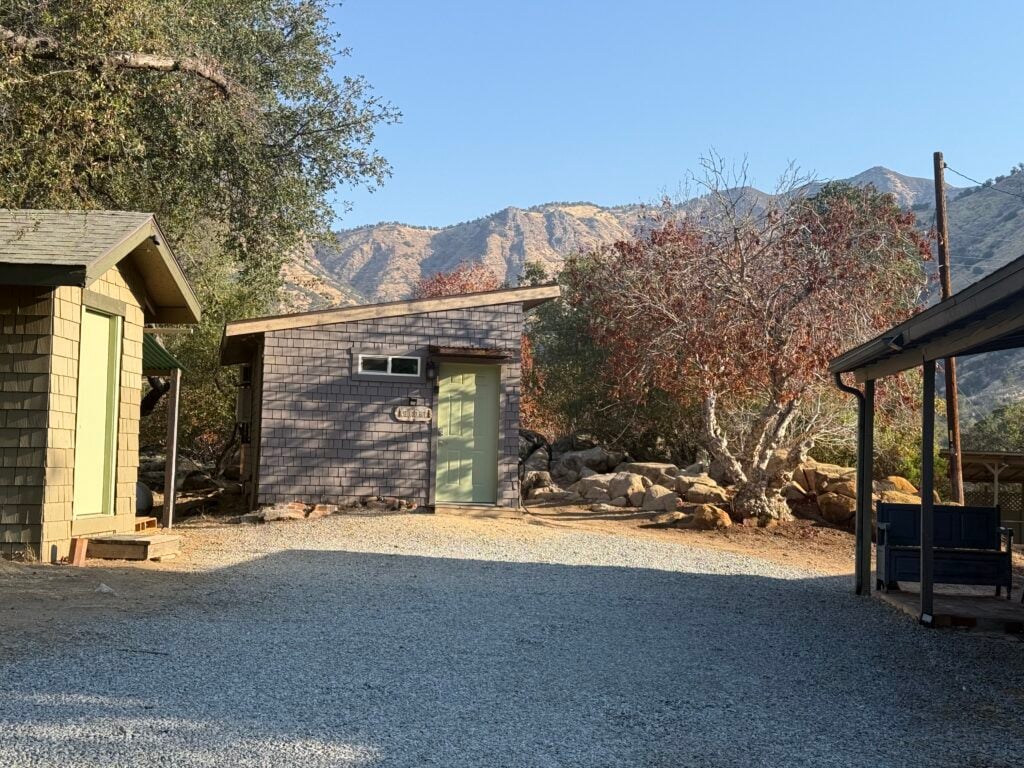
We stayed at the Sequoia Hut (book here). It was simple, clean, and comfortable, and I would stay here again. Plus, the price was right- around $130 a night.
If you are on a longer California road trip, it’s a good idea to stay one night in or near Kings Canyon and another night in or near Sequoia to reduce driving time.
If Yosemite National Park is part of your travel plans, check out our articles on Yosemite!
Best (and Worst) Times to Visit Yosemite National Park
7 CAN’T MISS Hikes in Yosemite National Park
Driving in Yosemite: 10 Things You Need to Know
What is the Best Entrance to Yosemite? Yosemite’s 5 Entrances
Where to Stay When Visiting Yosemite: The Complete Guide (Inside and Outside the Park)
How to Get to Yosemite: Airports, Roads, and Shuttles