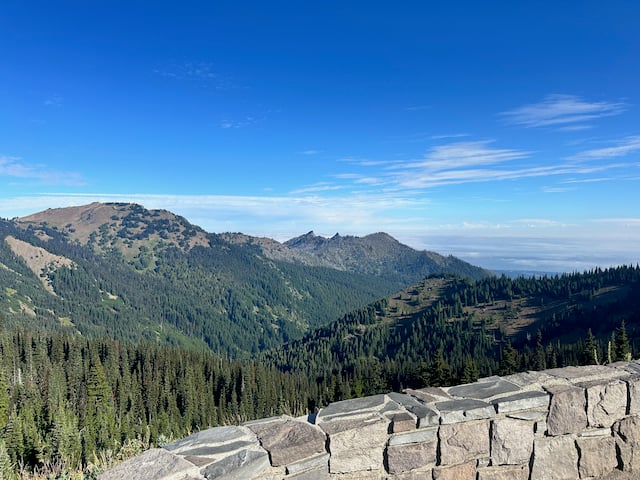
Olympic National Park is located on the Olympic Peninsula with Highway 101 encompassing the park, equalling over 300 miles if you drive it in a loop. There are five main entrances to the park and a few beach accesses as well. So you may be wondering, which entrance should I use?
The most popular entrances to Olympic National Park are Port Angeles and Sol Duc Falls. However, the best park entrance is determined by the direction of travel, the amount of time allowed for travel, and the type of activities on the agenda.
I’m Brittany, an avid hiker and adventurer. I’ve spent weeks at a time getting to know Olympic National Park, so I will walk you through all of the entrances and what they have to offer.
Olympic is a unique national park for several reasons.
First, it’s diverse. I can’t think of another national park that has beaches, rainforests, towering mountain peaks, and lakes.
Second, it is huge in size. It is usually at least a one-hour drive to get from one section of the park to another.
Third, as you go between sections of the park, you will usually leave the park and then use a different entrance to get to the section of the park you are traveling to.

You will need a National Park Pass to access this land. They are available to purchase at several entrances throughout the park. The passes range from ~$15 to $30, depending on your mode of transportation. Passes are valid for one week and cover up to 7 passengers in the vehicle. An America the Beautiful pass is $80 and can get you into any national park for a year. This park is cashless, so be prepared with a card when you visit. You can purchase these or just find out more information on the national park website.
Get our done‑for‑you, 2-5 day plan with exact drives and must‑see stops so you don’t waste time in traffic or miss the best views
Inside the guide:
*Step-by-step plan that will take you to the best mountains, beaches, rainforests, and lakes
*Exact time frames and star-ratings so you can make the best use of your time and money
*Best Friend Guarantee: Love it or get your money back
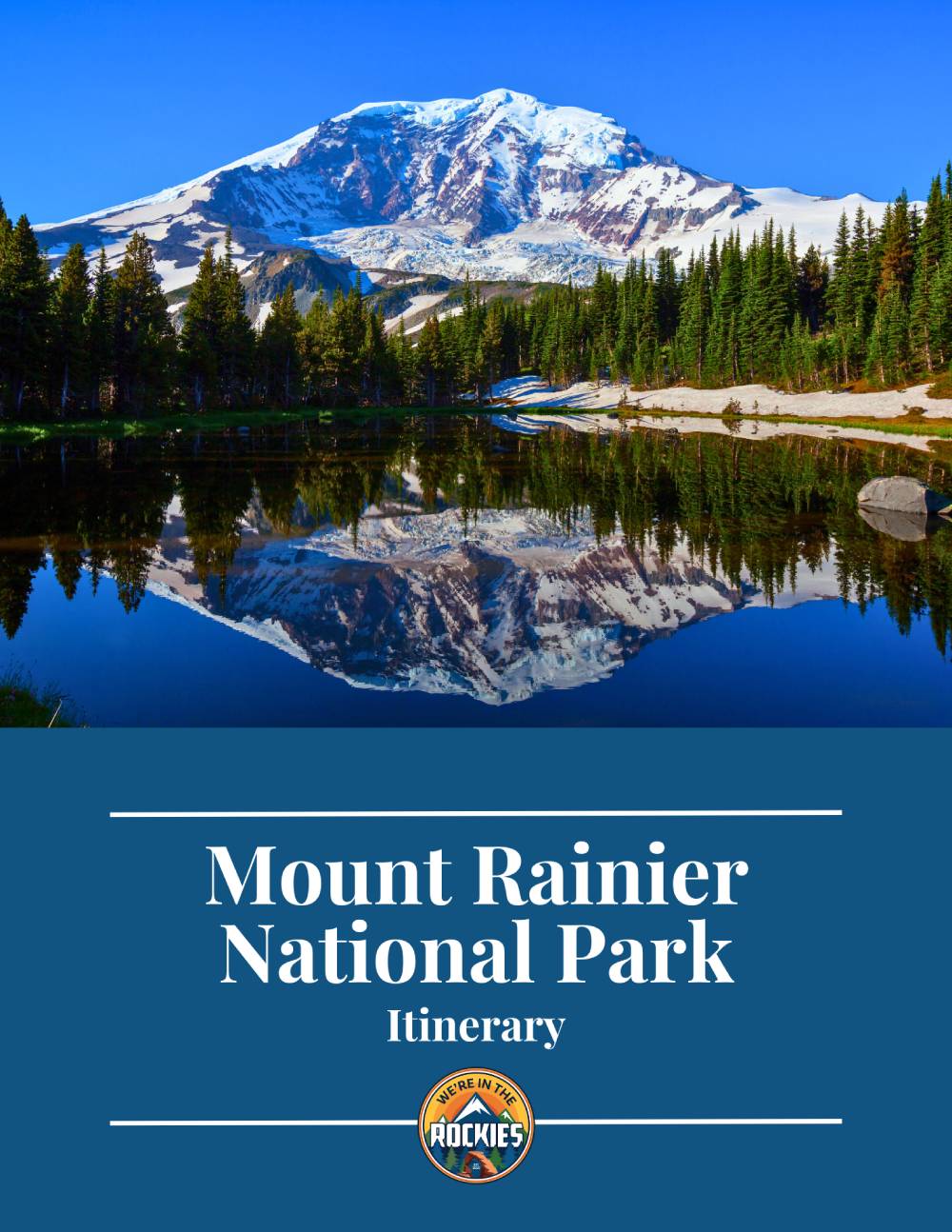
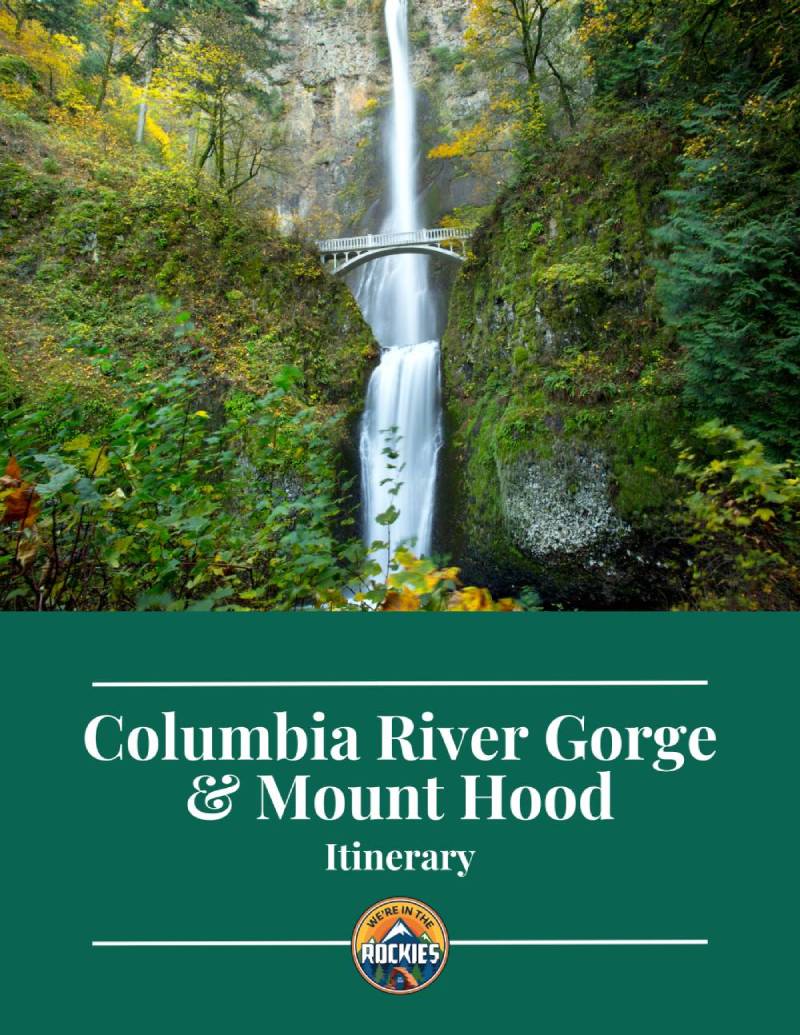
*Visiting more in the PNW? Save big $ and get guides for Olympic, Mount Rainier, the Oregon Coast, and the Columbia River Gorge with our PNW Bundle.
I’ll start with the most popular entrance to the park, Port Angeles.
Location: The entrance is in the town of Port Angeles, so it has easy access to grocery stores and restaurants. It also offers the main visitor center for the park, where you can purchase passes, attend ranger talks, and view exhibits.
This entrance to the park offers the easiest access to Hurricane Ridge. From the entrance, it is a 17-mile one-way drive and will take you to one of the most breathtaking views in the park. There is also a seasonal shuttle to Hurricane Ridge from Port Angeles.
Lodging and Camping: There are several lodges and hotels in Port Angeles; these might be a good option if you want to be well-rested before heading off on your grand adventure. There is also a National Park campground 5 miles from the entrance, Heart O’ the Hills. This campground is open year-round. There are 97 campsites, offering first-come, first-served only. This site features RV spots, flushable toilets, and potable water.
Hiking: There are several hiking trails in this area for any hiking level.
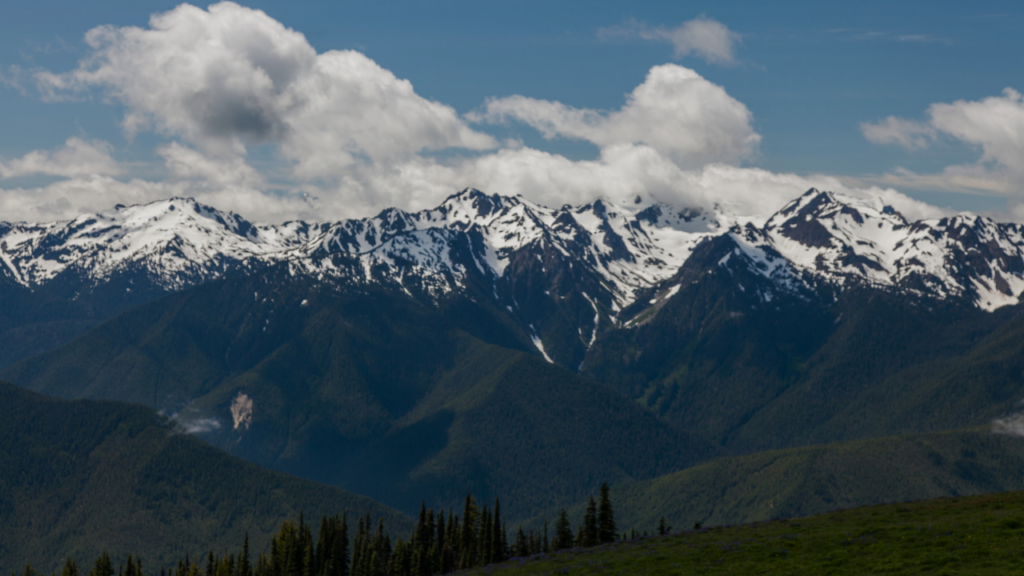
This is probably the most scenic entrance to the park.
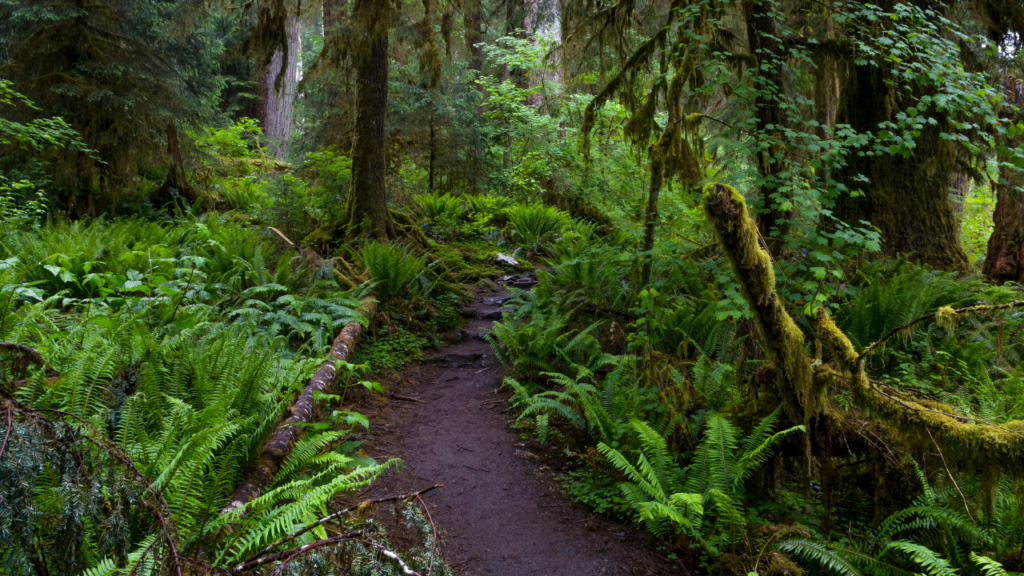
Location: The Hoh Rain Forest is accessed via the Upper Hoh Road, which is 18 miles from Highway 101. You’ll be driving through an old-growth forest, next to a thriving river, and while most of the road is straight, it is narrow and winding in some areas. The nearest town with gas and amenities is Forks, 31 miles away.
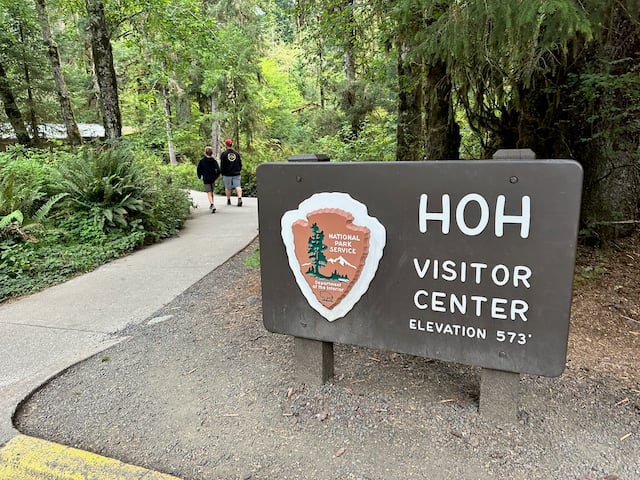
Visitor Center: At the end of the 18-mile drive, you’ll find the Hoh Rain Forest Visitor Center. Here you will find ranger-led walks and a gift shop. The visitor center has limited hours during the winter and is open from 9 am-5 pm in the summer.
Lodging and Camping: The only lodging opportunity is the Hoh Rainforest Campground. It is open year-round but may close suddenly due to weather conditions. Reservations are required from June to September. Outside of peak season, the sites are first-come, first-served. This campsite offers RV sites, flushable toilets, and potable water.
Hiking: There are three main hiking trails at the Hoh Visitor Center.
DISCOVER: 7 Can’t-Miss Hikes in Olympic National Park: A Quick and Easy Guide
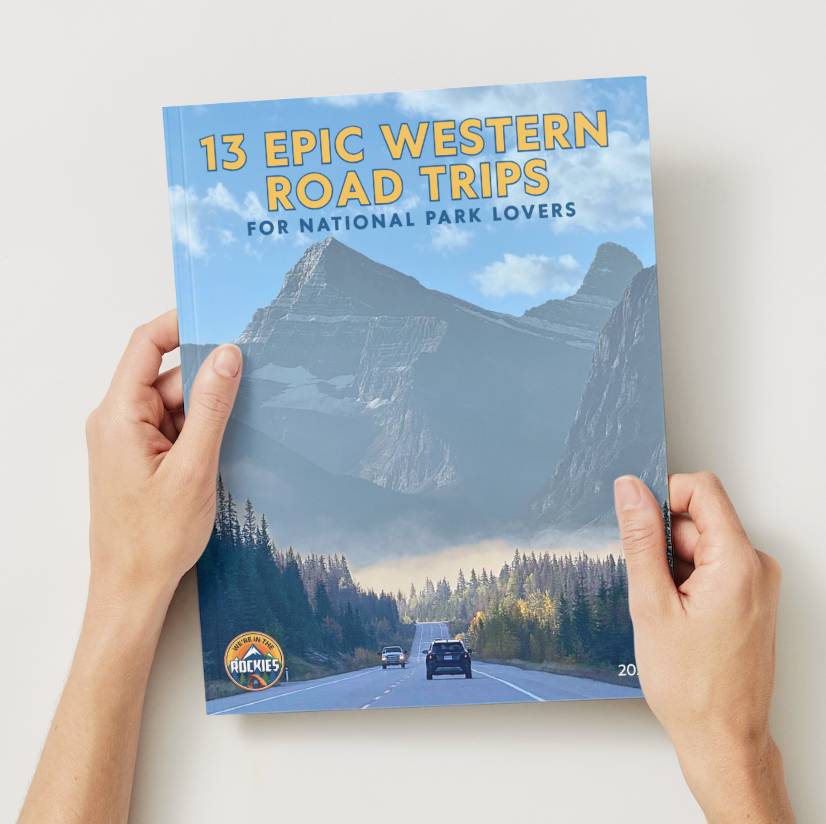
13 road trip ideas across the West so you know where to go, how long to stay, and what to see
*Sample routes from 4–31 days across national parks and hidden gems
*Driving times + best stops so you don’t miss the good stuff
*Season + weather notes to avoid closed roads and peak‑crowd days
*Lodging ideas in the right spots so you cut backtracking
The Quinault entrance is where the National Park meets the National Forest, so you might need a National Forest Pass (unless you have an America the Beautiful Pass) to access part of the land here. This pass is $5 for the day or $30 for the year and can be purchased at the Quinault Rain Forest Ranger Station.
Location: The access point for Quinault is 3 miles from Highway 101. This features a drive that takes you 30 miles around Lake Quinault. The closest town to Quinault is Amanda Park, 3 miles away. Here, you will find a gas station and a mercantile for your everyday needs.
Visitor Centers: While there isn’t a National Park-specific visitor center here, there is a ranger station in Amanda Park inside the Internet Cafe. You cannot purchase National Park passes in this area of the park. The nearest place to do so is in Kalaloch.
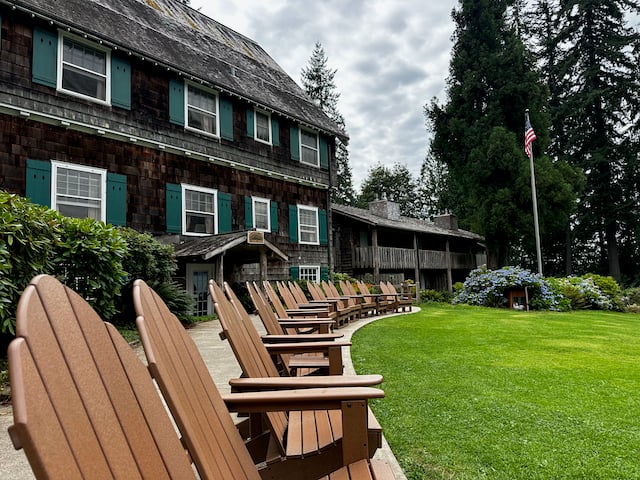
Lodging: There are several places to stay near the Quinault entrance, including 4 campgrounds and a lodge. For the National Park-specific campgrounds, you will need to venture a bit off the beaten path, but the National Forest campgrounds have easier access.
Hiking: There are many hikes in the Quinault region, ranging from half a mile to 20+ miles. It is a perfect destination for all types of hikers. To keep this list short, I’ll just mention my favorite hikes that aren’t too far from the beaten path.
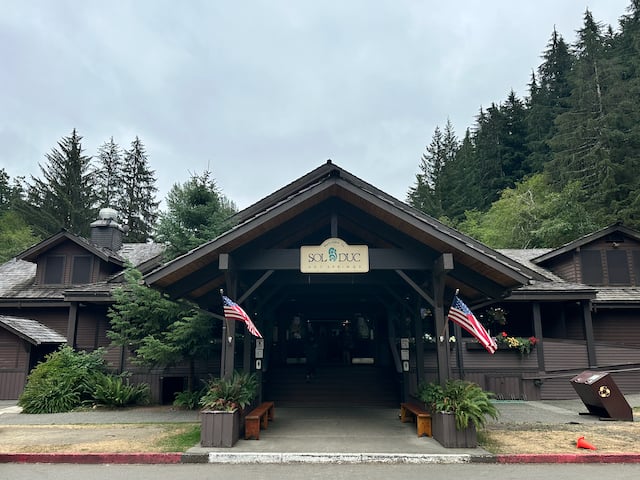
The Sol Duc Falls entrance is one of the most popular entrances to the park.
Location: It is 14 miles from Highway 101. The road out is fully paved and takes you through beautiful scenery of towering trees, plus a chance to view wildlife.
This entrance features the Sol Duc Hot Springs and a waterfall hike. Sol Duc Falls sits an equal distance from Forks and Port Angeles, 40 miles away, which is where the nearest gas stations are located. This part of the park has no cell reception, so I highly recommend downloading maps of the area. The road does close seasonally, so check the conditions before you head out.
Visitor Center: There isn’t a National Park visitor center here, but there is the Eagle Ranger Station that is open seasonally. There is a kiosk at the entrance of the Sol Duc Valley that allows you to self-pay your entrance fees.
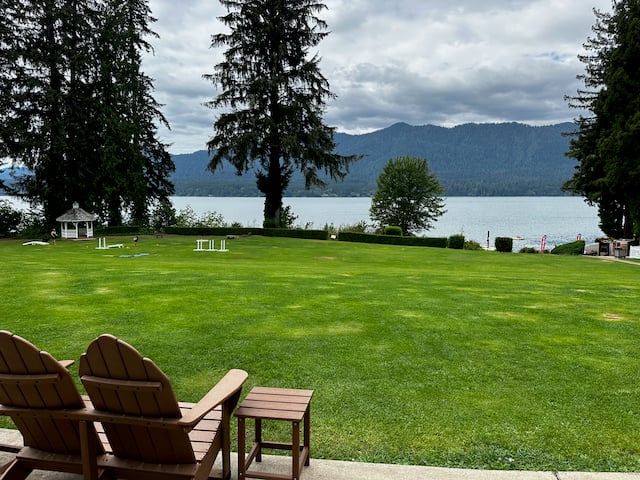
Lodging: There are a few options for lodging near Sol Duc, whether it’s a campground or the lodge; both offer modern amenities in the middle of the forest.
Hiking:

A quick guide to choosing between the Oregon Coast, Olympic, Mount Rainier, and the Columbia River Gorge
*See what you can realistically do in the time you have (3-13+ days)
*Choose the RIGHT regions for you. Do you like to hike, relax, eat good food, take scenic drives?
*Avoid the classic PNW mistakes that waste hours in the car
The staircase entrance is the least-used entrance of the park.
Location: It is situated on the southeastern part of the park, 9 miles from Highway 101. It is mostly paved, but the last few miles are gravel with some pretty serious potholes. The nearest town with amenities is Hoodsport, 16 miles away. With that being said, there are some beautiful hiking trails in this area that will offer you the serenity you might be looking for.
Visitor Center: The Staircase Ranger Station is open in the summer and offers information, exhibits, and wilderness permits.
Lodging: There is only one campground at the end of the Staircase Road; however, there are a few lodges and resorts in Hoodsport. The Staircase Campground has 49 sites and features potable water and flush toilets from May to September. Off-season, there are pit toilets available. There are sites that must be reserved in advance, as well as first-come, first-served.
Hiking: The Staircase offers hiking trails with big streams and rapids in the area.
There are a few other access points in the park along the beaches. Only one of these has a pay station, Kalaloch. So, you will need to pay online or visit another Ranger Station to pay the park fee.
Kalaloch: Kalaloch is the most visited beach entrance in the park, located on the southwest side of Olympic. This area is great for walks on the beach as well as tidepooling and birding. Here, you will find a Ranger Station open only in the summer. You can join in on ranger walks, get visitor information, and visit the bookstore. Kalaloch does have a campground, Kalaloch Campground, which is open year-round with 175 sites. They must be reserved for summer visits because they fill up fast!
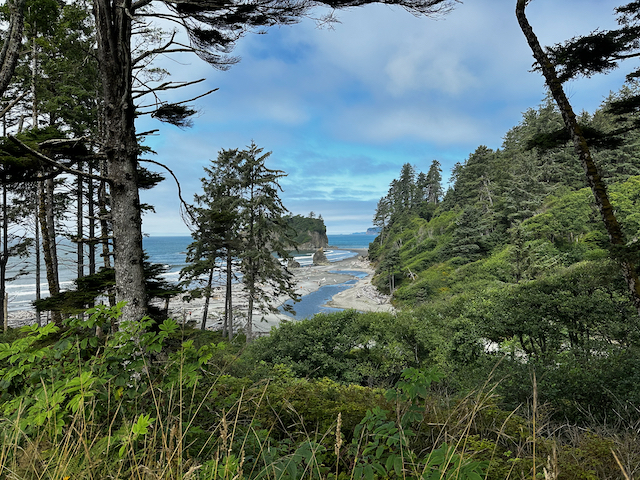
Ruby Beach: Located 9 miles from Kalaloch, off Highway 101. There is a short walk to the beach from the parking lot. This is one of the most iconic beach views in the park, which is a large rock housing trees that sprout out of the top.
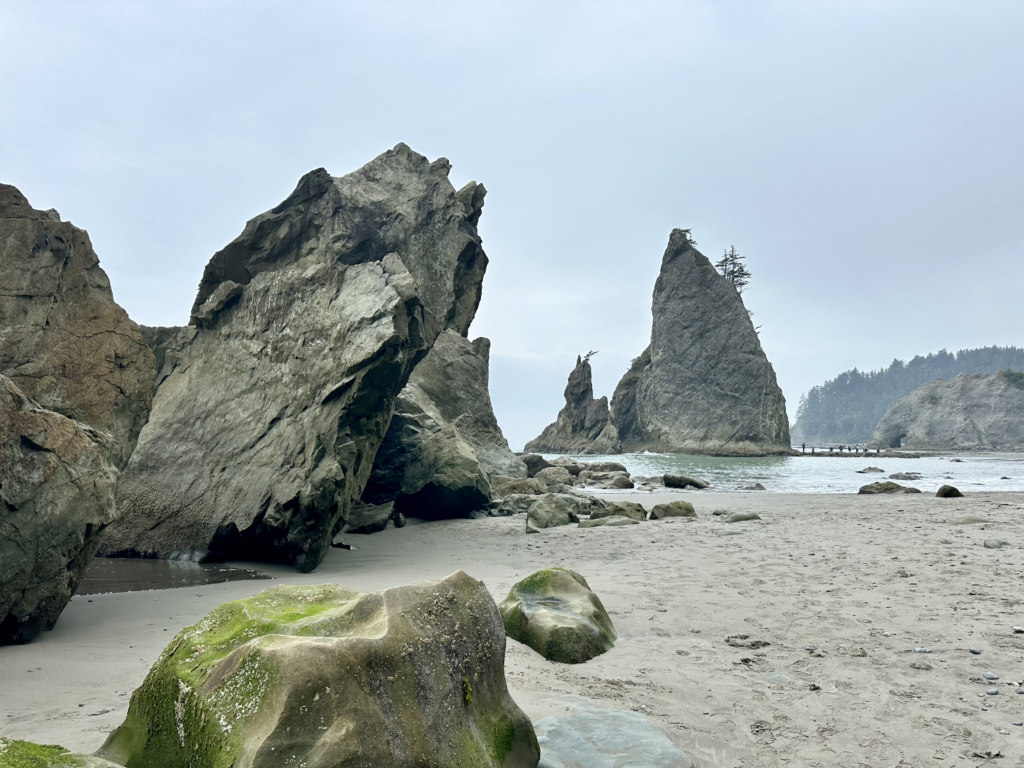
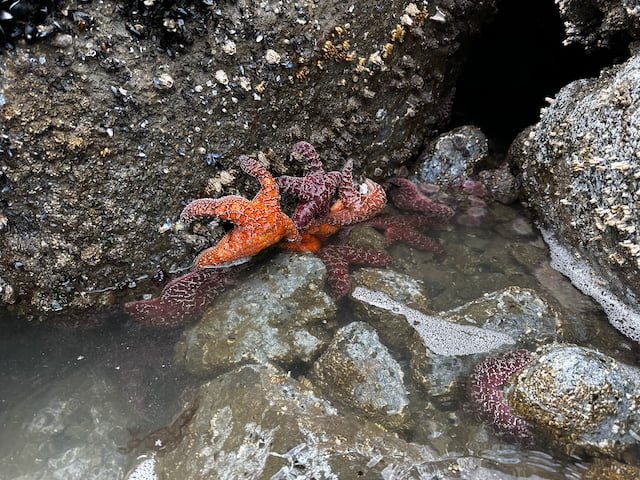
Rialto Beach: 14 miles west of Forks via Mora Road. This is one of my favorite places in the park! A hike down the beach takes you to the Hole-In-The-Wall, which is a famous spot for tide pooling. Just check the tide charts before you go.
La Push: 15 miles from Highway 101 via WA 110. Here you will find First, Second, and Third Beach. If you are looking for a walk through the forest, along a rugged coastline ending at a beach, this is the place for you. This string of beaches is on the tribal lands of the Quileute Nation. Your National Park pass does give you access to this area, but please be respectful of the land and follow tribal guidelines. Read more in our article How to Visit La Push Near Olympic National Park (Best Beaches + Hole in the Wall Hike).
DON’T MISS: How to Visit Cape Flattery (+ Permits)
Get our done‑for‑you, 7‑17 day route with exact drives, maps, and must‑see stops so you don’t waste time in traffic or miss the best views
Inside the guide:
*Day‑by‑day plan for Olympic, Mount Rainier, the Oregon Coast, & the Columbia River Gorge
*Details You Need: Time frames, driving routes, and where to sleep each night to reduce backtracking
*Best Friend Guarantee: Love it or get your money back
CHECK OUT: Driving in Olympic: 10 Things You Need to Know
Whatever entrance you do choose to explore, just enjoy nature.

Most travelers want to visit the most popular sites and still avoid the crowds. We created a step-by-step itinerary so you can visit the best places at the right times.
OLYMPIC TRIP PLANNER: To read or watch all of our content about Olympic National Park, check out our Olympic Homepage
THINGS TO DO: Don’t miss all that Olympic has to offer, including hikes, Lake Crescent, Kalaloch and Ruby beaches, the Hoh Rain Forest, Hurricane Ridge, and Sol Duc Hot Springs.
WHERE TO EAT: Don’t miss the best places to eat in Olympic National Park
GREAT CITIES TO STAY OR CHECK OUT: Learn about where to camp when visiting Olympic plus things to do in Port Angeles, Port Townsend, Sequim, and Forks.
KNOW BEFORE YOU GO: Find out how to get there, the best time to visit, which is the best entrance, and all about driving around Olympic