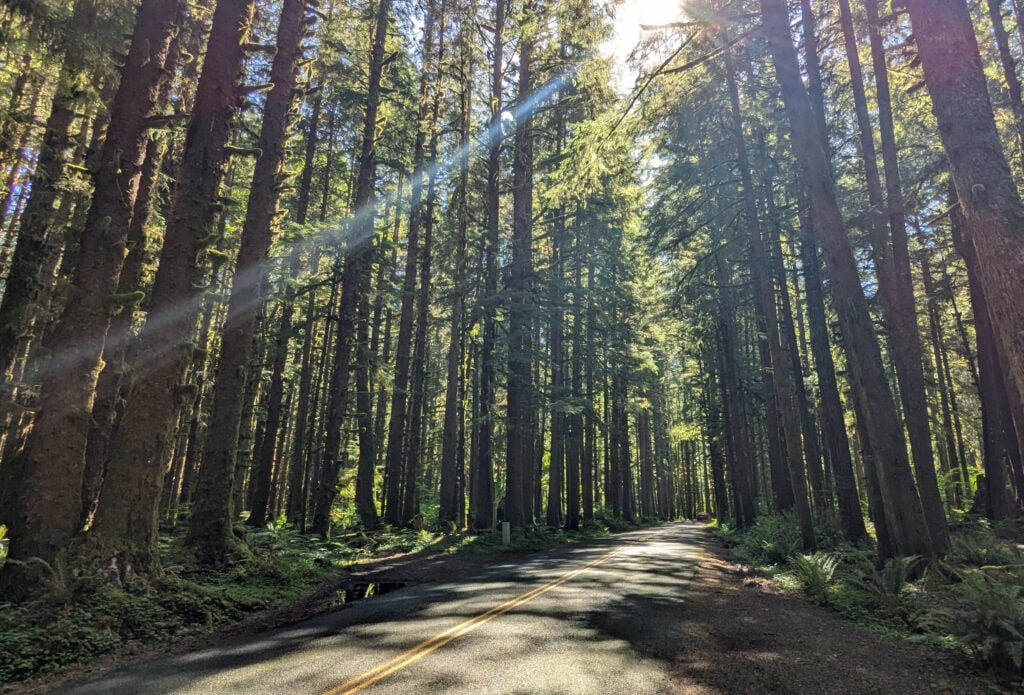
Olympic National Park is a vast park with many areas to explore. If you’re planning on making a drive through Olympic, it can be a little overwhelming trying to plan everything and figuring out where to go and what you need to know.
When visiting Olympic, it is helpful to know how to get around the park, when is the best time to visit, what to expect on the drive, and what amenities are in the area. Included in this article are also essential tips for visiting and the best spots to see along the way.
I’ve been traveling to Olympic National Park for years, hiking and driving all around the park. Keep reading to learn about my top 10 things you need to know before visiting.
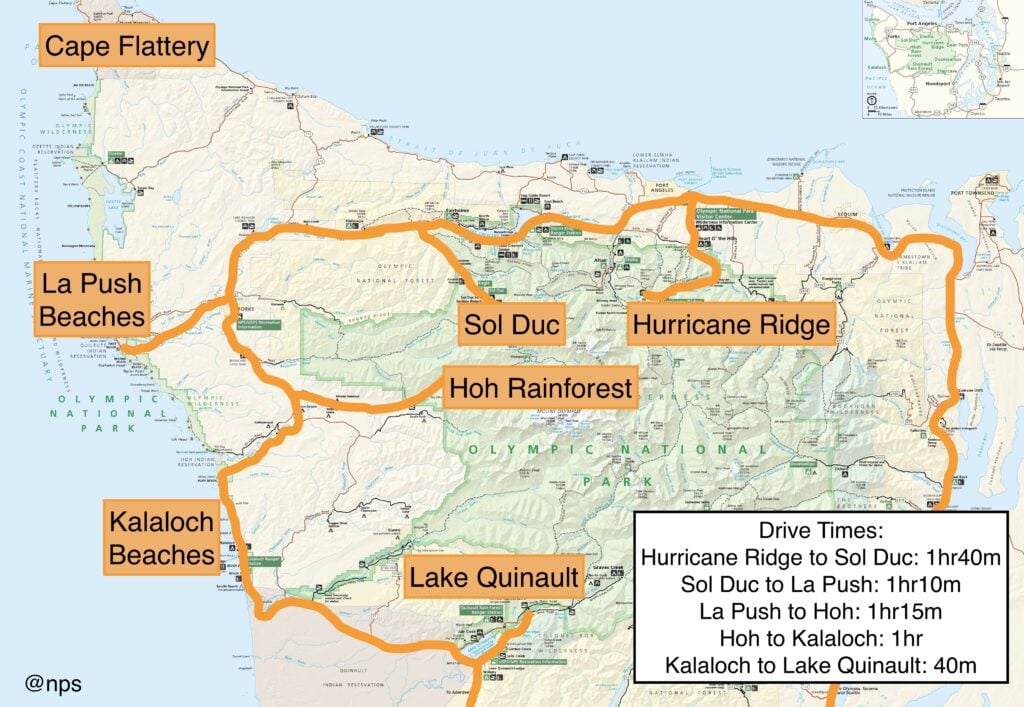
I think one of the biggest things you need to know before you visit is how Olympic National Park is laid out. Many people base their trip on Google Maps’ predictions of estimated drive time. These are wildly inaccurate and do not take into consideration things like traffic, taking detours to visit places like the Hoh Rain Forest or Sol Duc Falls, and any construction that is happening in the park.
Most maps also make it hard to comprehend just how big the park is. Olympic National Park is about a million acres. The drive is essentially one big circle with offshoots taking you further into the park. These offshoot roads are one-way in and one-way out.
Olympic National Park is surrounded by the ocean on two sides, which means you can only access the park from the east side or the south side. The eastern side is accessed via Port Townsend. Port Townsend is the “Gateway to the Olympics”; it grants access to Hurricane Ridge, or you can start your drive from here headed west towards Lake Crescent. The south side of the park is located by Lake Quinault. From here, you’ll drive north towards Kalaloch and beyond.
You will most likely start your drive from the Seattle area, Aberdeen, or Portland. From these starting locations, expect to drive 2.5 or more hours just to arrive at Olympic National Park. If you are driving Olympic National Park as a loop, the drive is around 6 hours with no stops. If you drive the park as an out-and-back from Port Angeles to Quinault, it is about a 5-hour drive without stops. Read more about How to Get to Olympic National Park (Road Trip Ideas + Airports).
CHECK OUT: Perfect Olympic Peninsula Road Trip (Map + Where to Stay)
Get our done‑for‑you, 2-5 day plan with exact drives and must‑see stops so you don’t waste time in traffic or miss the best views
Inside the guide:
*Step-by-step plan that will take you to the best mountains, beaches, rainforests, and lakes
*Exact time frames and star-ratings so you can make the best use of your time and money
*Best Friend Guarantee: Love it or get your money back
*Visiting more in the PNW? Save big $ and get guides for Olympic, Mount Rainier, the Oregon Coast, and the Columbia River Gorge with our PNW Bundle.
There is minimal public transportation in Olympic National Park, so having your own vehicle is a must! With that being said, for the right, creative person, you could get around on a bike or by walking many miles a day. There is a public transportation system through the county that connects Port Angeles and Forks while making other pit stops like Lake Crescent. This bus does not take you to the majority of the park, though, and is mostly used by locals to commute.
There is a seasonal shuttle that goes from Port Angeles to Hurricane Ridge, but this is currently the only shuttle provided by the National Park Service. This is designed to reduce the amount of traffic on Hurricane Ridge, because it is a very busy location with minimal parking. If you want to take this shuttle, it’s only ~$2 round trip, and there is free parking at the transit center. The Hurricane Ridge shuttle runs from late May through September 1st.
Bringing an RV to Olympic National Park can be a great experience; however, it limits the places that you can go. Roughly 3/4th of the park would still be accessible, and camping options are out there, but not as many options as someone traveling in a smaller vehicle. Some of the places with limited RV accessibility are the North Shore Road of Quinault and the parking lot for Hurricane Hill at Hurricane Ridge. Finding a campground with availability for housing over 21 feet might be difficult as well. If you have a longer rig and need ample parking, I suggest booking your campsite as soon as possible.
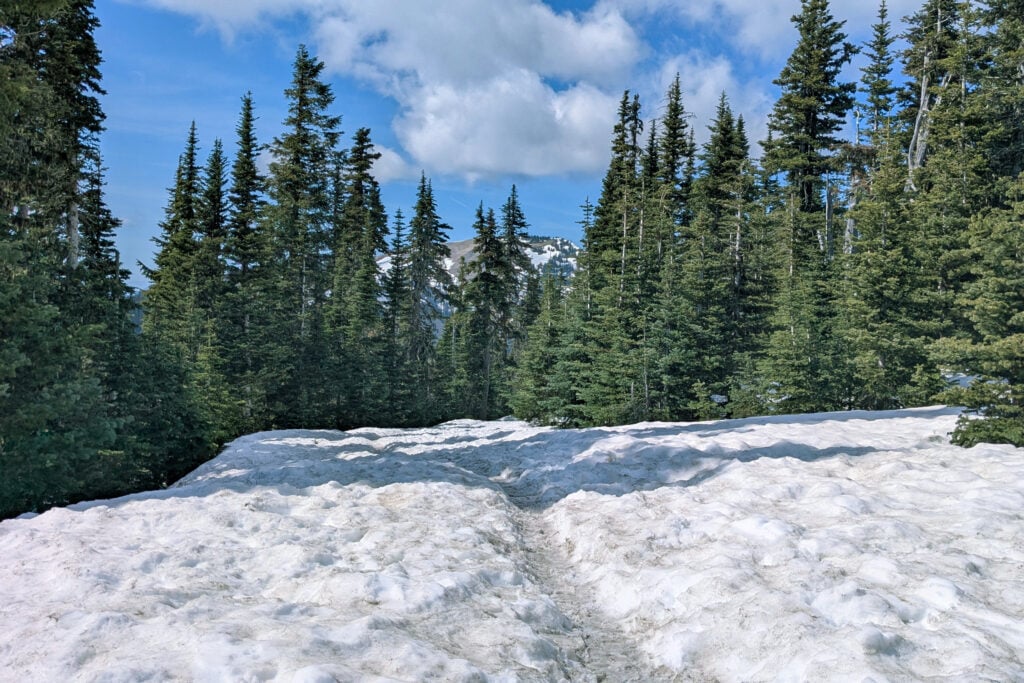
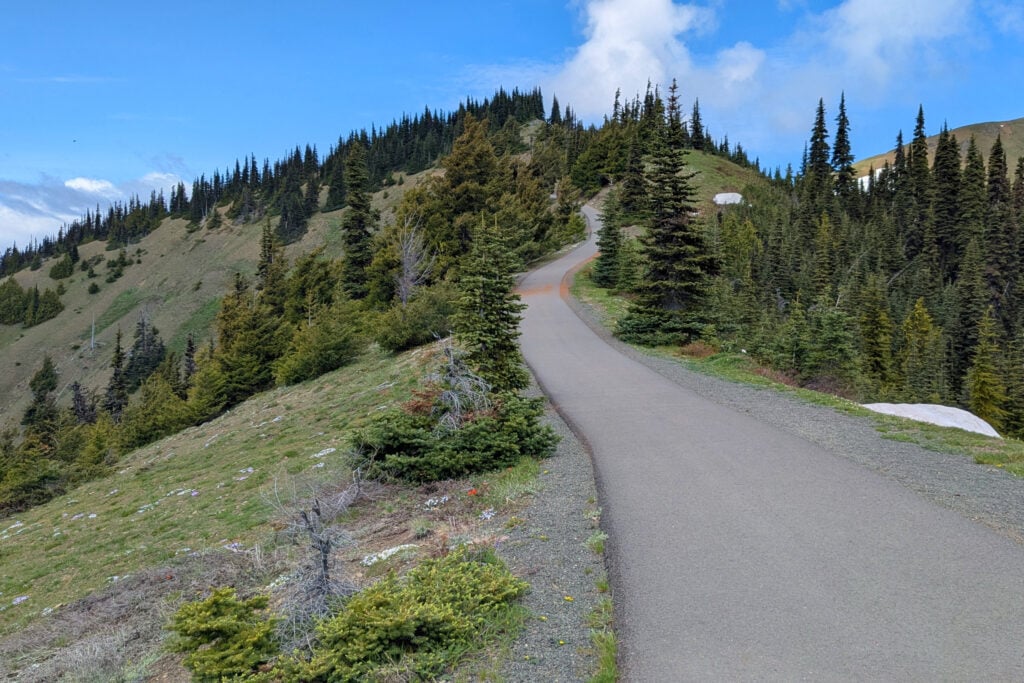
The ideal time to visit is going to vary between people, depending on what you are seeking during your visit. Fewer crowds? Good weather? Snowy mountaintops?
It is possible to visit Olympic National Park year-round. With Olympic being a temperate rainforest, the lower elevations get minimal snow, but they get about 10 feet of rain every year. The only area of the park completely closed during the winter is the Sol Duc Falls road. Even Hurricane Ridge, the snowiest place in the park, opens the road on weekends for snow sports and tubing.
My favorite times to visit are mid-May or late September. Both of these times offer fewer crowds, but are outside of the extremely wet season that the Olympic Peninsula is known for. There will still be rainy days, but you’ll likely find sunshine during your visit, too.
The only downside of visiting in May is that spring snowmelt brings rushing waters that can be destructive to the park, causing landslides and unexpected road washouts, which leads to more closures. So, visiting in May can mean having to be more flexible and possibly having to change your itinerary last minute. Also, while Hurricane Ridge is open during this time, there is still a significant amount of snow, making trails hard to access.
Late September is much more manageable, with construction finished in the park, more areas are open and accessible, plus you get to see the mushrooms thriving, and trees start changing colors. The first snowfall isn’t usually until October, so you don’t have to worry about the springtime melt off like you do in May. You do get more moody coastlines and fog-dense forests, though, as nature starts to prepare for winter.
Find out more about when to visit in our article The Best (and Worst) Times of Year to Visit Olympic National Park.
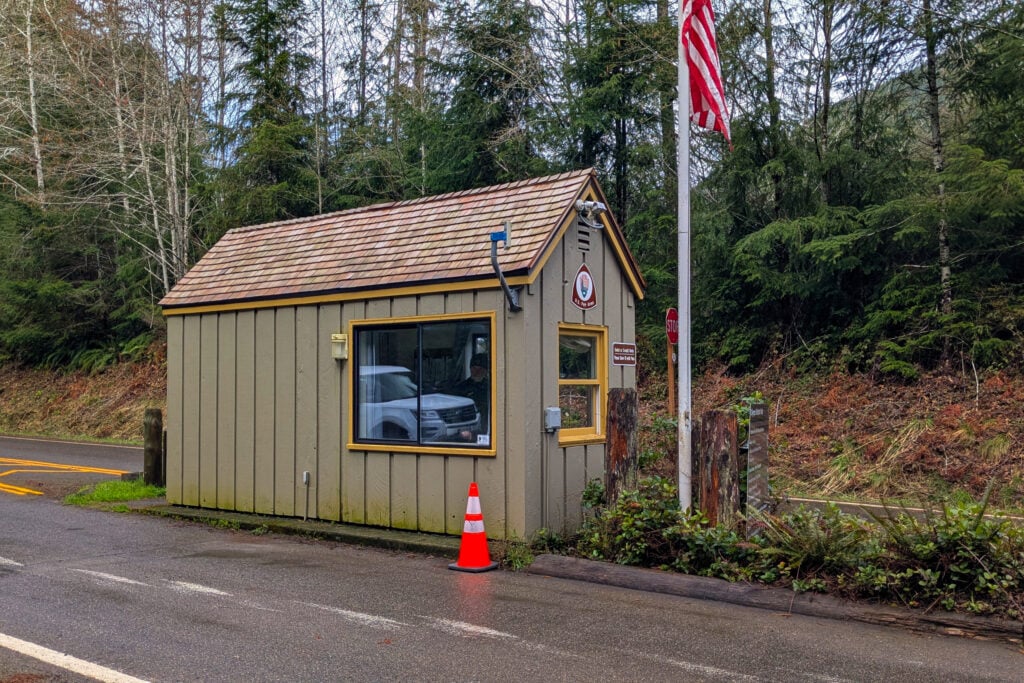
While Olympic National Park is a vast, remote wilderness with many access points, there are only a few entrance stations. Meaning you’ll need to purchase a National Park Pass online or stop by one of the entrance stations or the main Olympic National Park Visitor Center in Port Angeles.
The entrance stations are located at the Hoh Rain Forest via Upper Hoh Road, at the Sol Duc Valley, and at Hurricane Ridge. Other popular areas like Quinault, La Push, and Kalaloch do not have entrance stations, but do have Ranger Stations which are open limited hours during the summer when staffing allows. You can read more in our article, Which Entrance Should I Use For Olympic National Park? Olympic’s 5 Entrances Explained.
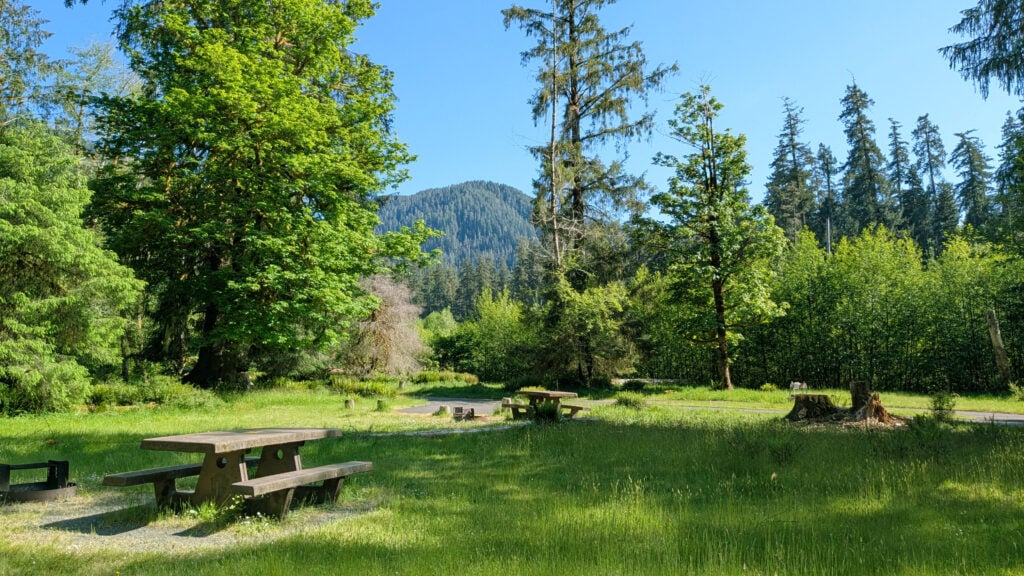
No reservations are required to visit Olympic National Park. However, you will most likely need a reservation for camping in the park throughout the summer. Campground reservations are through recreation.gov. Some campgrounds like Heart O’ the Hills, South Beach, and Ozette are first-come, first-served year-round.
Camping reservations are released in three tiers: 6 months, 2 weeks, and 4 days in advance.
13 road trip ideas across the West so you know where to go, how long to stay, and what to see
*Sample routes from 4–31 days across national parks and hidden gems
*Driving times + best stops so you don’t miss the good stuff
*Season + weather notes to avoid closed roads and peak‑crowd days
*Lodging ideas in the right spots so you cut backtracking
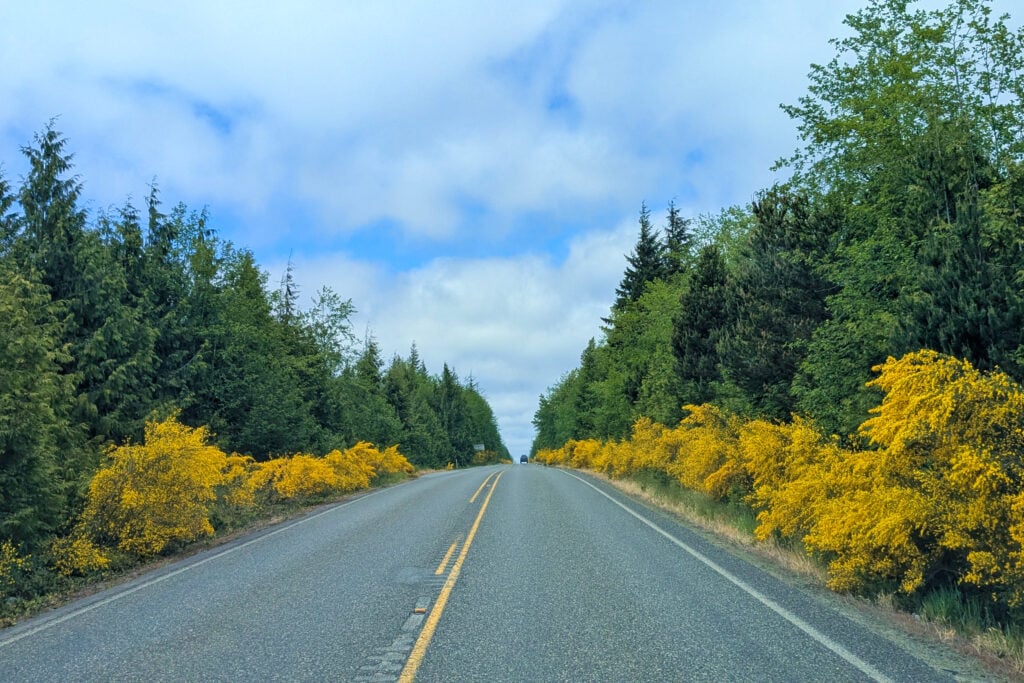
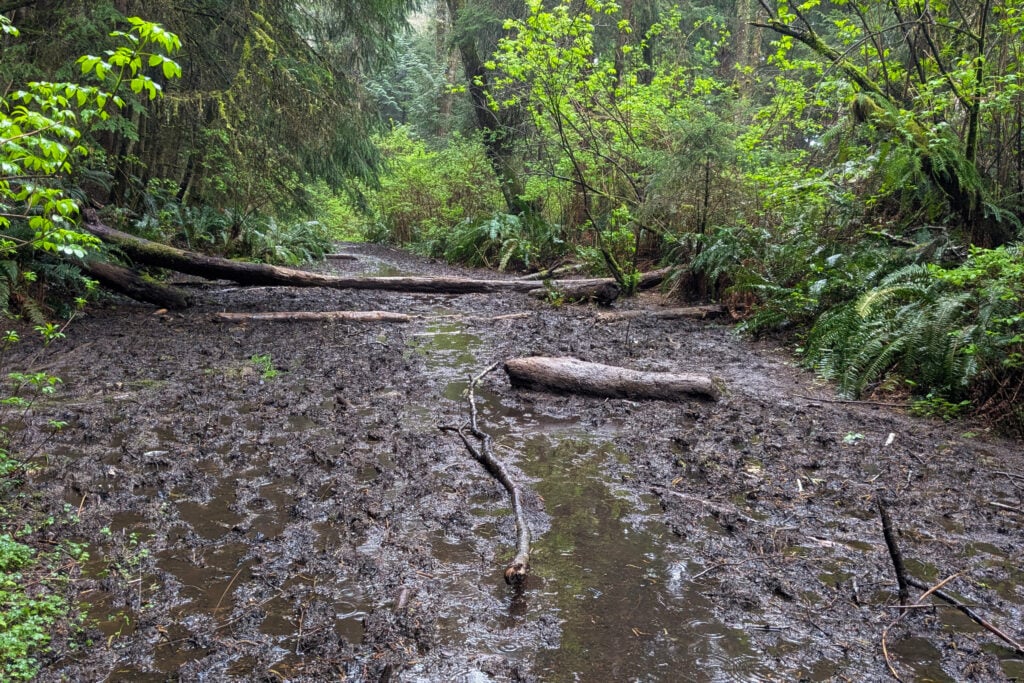
The drive around the Olympic Peninsula via Highway 101 is fairly smooth. It’s the spur roads that are a little less maintained. I remember my last drive to the Hoh Rain Forest was so bumpy and filled with potholes, I couldn’t even drive the speed limit, which was only 35mph. This goes for the North Shore of Lake Quinault as well. The park has resorted to spray-painting circles around the potholes, which can be hard to see in direct sunlight. My advice would be to drive slowly and take your time.
As far as traffic goes, it’s fairly minimal throughout the park. Lines can start forming at the Hoh Entrance Station and the Hurricane Ridge Entrance Station, but most places in the park are not as crowded as other National Parks that I’ve visited. I will say, logging is a huge industry on the Olympic Peninsula, so logging trucks tend to hold up traffic quite a bit. The majority of Highway 101 is a two-lane highway, so use caution when passing.
In the spring and summer, there is construction happening everywhere. Many parts of Highway 101 are down to one lane during this time. There is generally a traffic light directing traffic through the construction zones. These traffic lights have wait times on them, letting you know about how long it’ll be until your side turns green. I’ve seen the wait times be up to 26 minutes before.
Cell service throughout Olympic National Park is limited. It is possible to go days without cell service, depending on where you are visiting. Downloading offline maps of the area has saved me many times.
The majority of Olympic National Park is remote wilderness with limited amenities. It’s important that you track your mileage and take advantage of gas stations when you see them. Gas Stations along Highway 101 are located in Port Angeles, Forks, and Amanda Park. There are a couple of other gas stations along the route that are randomly placed. I will note that the gas station in Forks is priced above average, so fueling up in Port Angeles or Amanda Park will save you a little money.
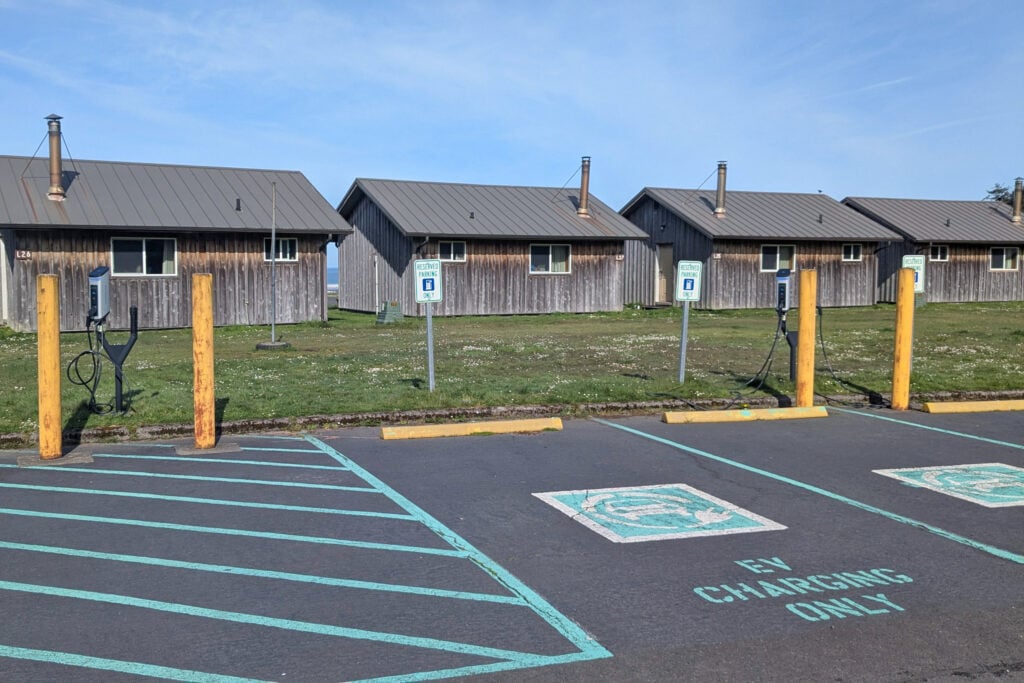
There are a few EV charging stations in the area as well. There is a charging station at the Kalaloch Lodge and Mercantile, in Forks at the Dew Drop Inn, Lake Crescent Lodge, and several locations in Port Angeles.
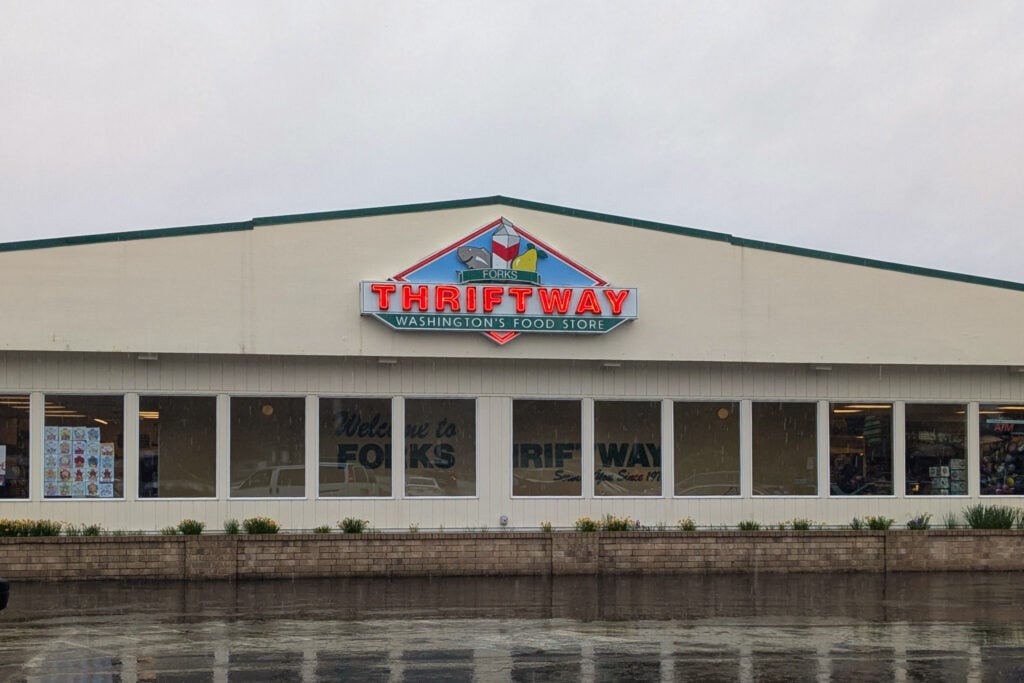
For most visitors, Olympic National Park isn’t a day trip; it’s a multi-day experience. It’s important to note that grocery stores and restaurants are limited and are more on the high end of the price scale because of the remoteness of the area. Many dishes are ~$20+ per meal.
I always suggest stocking up on groceries at the beginning of your trip. Preparing breakfast and lunch will save you time and money throughout your trip. Each area of the park does have at least one restaurant, though, whether it’s offered through a lodge or locally owned. The exception to this is Hurricane Ridge, where the nearest restaurant is in Port Angeles, 18 miles away.
Grocery stores are located in Port Angeles, Forks, and Aberdeen. These towns are also hubs for things like restaurants and gift shops. Find out our recommendations for where to eat in our article Where to Eat In and Around Olympic National Park.
A quick guide to choosing between the Oregon Coast, Olympic, Mount Rainier, and the Columbia River Gorge
*See what you can realistically do in the time you have (3-13+ days)
*Choose the RIGHT regions for you. Do you like to hike, relax, eat good food, take scenic drives?
*Avoid the classic PNW mistakes that waste hours in the car
There are three main ecosystems within the Olympic National Park: the beaches, dense forests, and sub-alpine terrain. If you don’t have time to visit every section of the park, I recommend stopping to experience each of these three environments.
DON’T MISS: How to Visit Mount St. Helens: 9 Things To Do
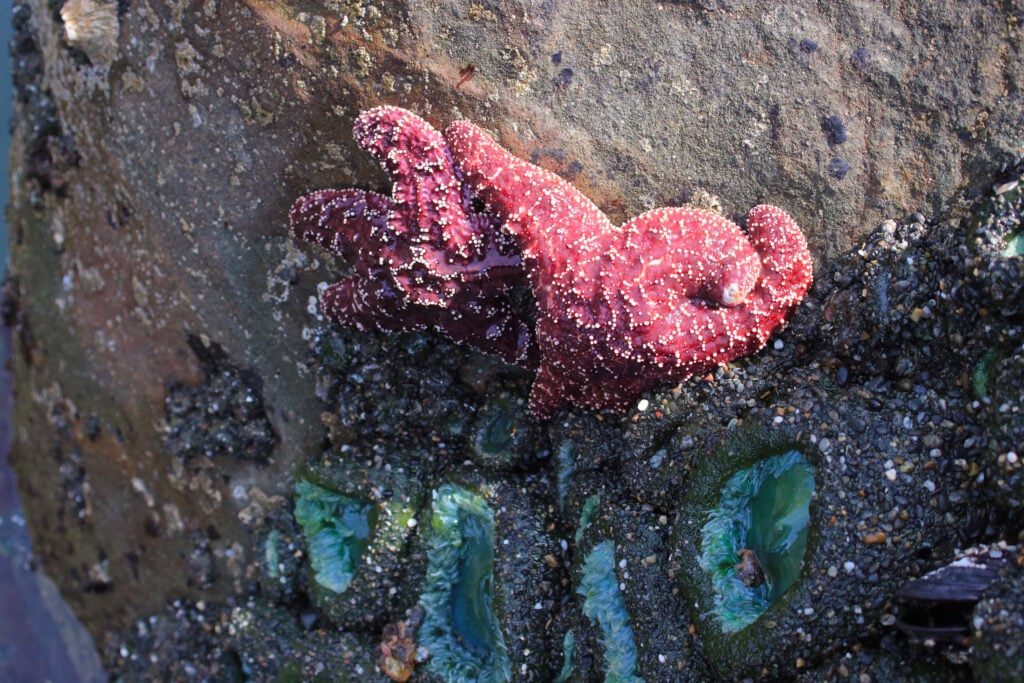

There are a few beaches to visit in Olympic National Park. The easiest to access are Kalaloch and Ruby Beaches. Both of these are located right along Highway 101. These two beaches are only 4 miles apart. They provide ease of access with short trails to the beach. Ruby Beach is known for its sea stacks and tide pooling opportunities. Kalaloch is my go-to sunset beach. At Kalaloch, you can park at the campground day-use area and walk right to the beach. There are other beaches, further from Highway 101, like La Push and Rialto, but they do require more of a detour.
DISCOVER: A Perfect 6 Day Itinerary for Olympic (For First Timers)
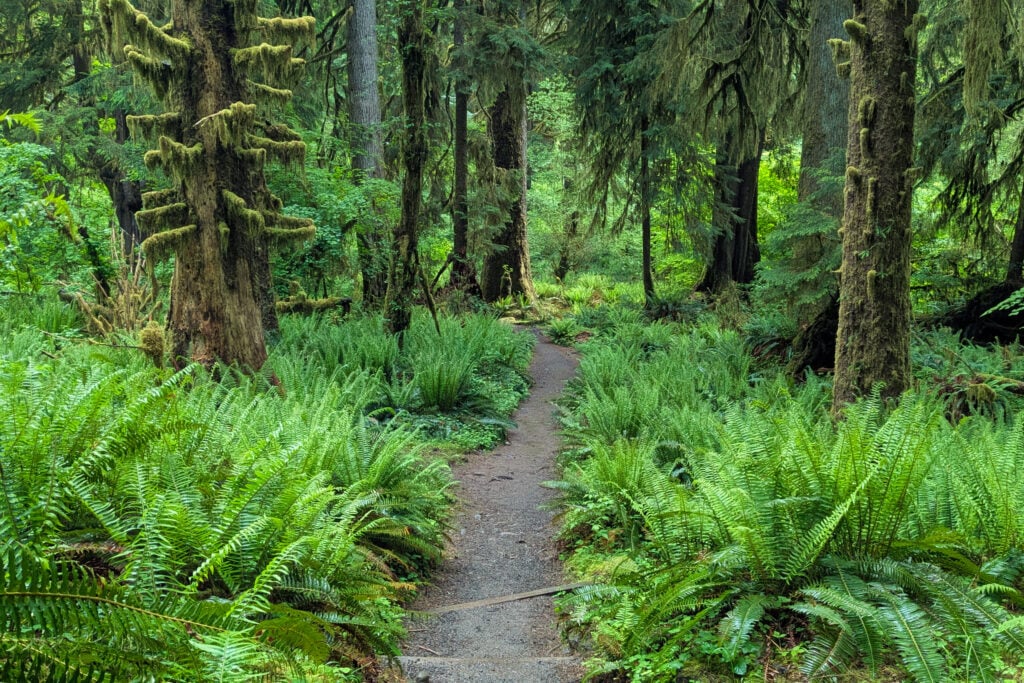
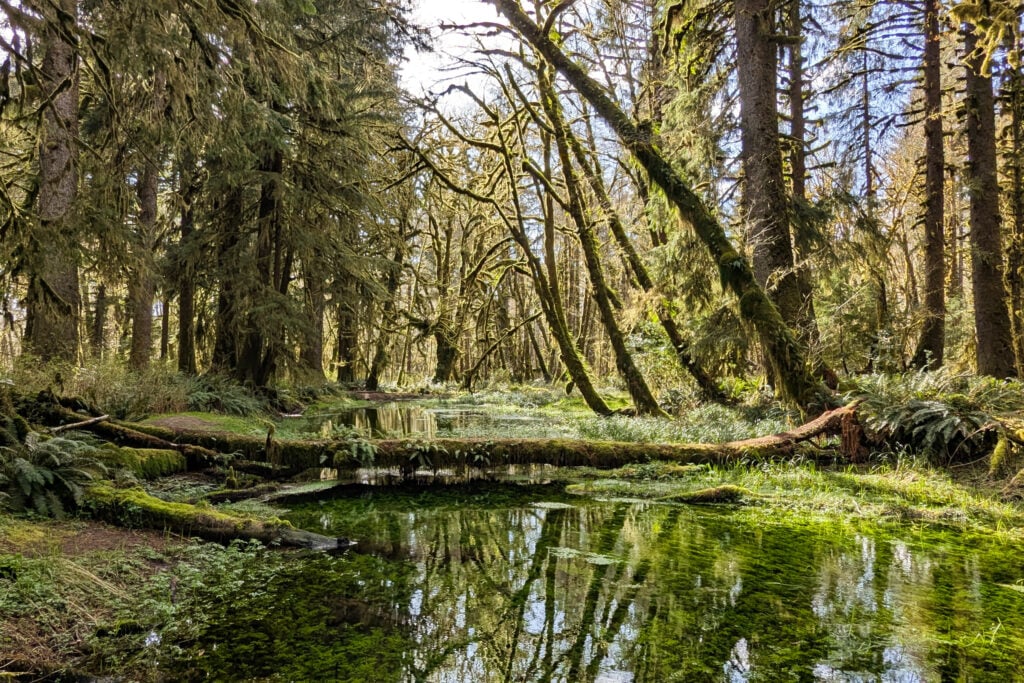
There are several areas that lead you into the forests of Olympic National Park. These are the most diverse areas within the park, each offering a different atmosphere. The most popular forest to visit is the Hoh Rain Forest, which features moss-covered trees next to the gushing Hoh River. My favorite forest to explore in the park is the Quinault Rain Forest. This area features many waterfalls, rushing streams, and solitude on your forest walks, as this is a less-visited area of the park.
This area also features Lake Quinault, which is a glacially fed lake that offers additional exploring, like paddling and swimming. Lake Crescent is also a great stopping point if you like forests, lakes, and waterfalls. Lake Crescent, which is also a glacially fed lake, has several pull-offs along Highway 101. There is also a main parking area at the Storm King Ranger Station, which offers lakeside parking, hiking trails, and a boat ramp.
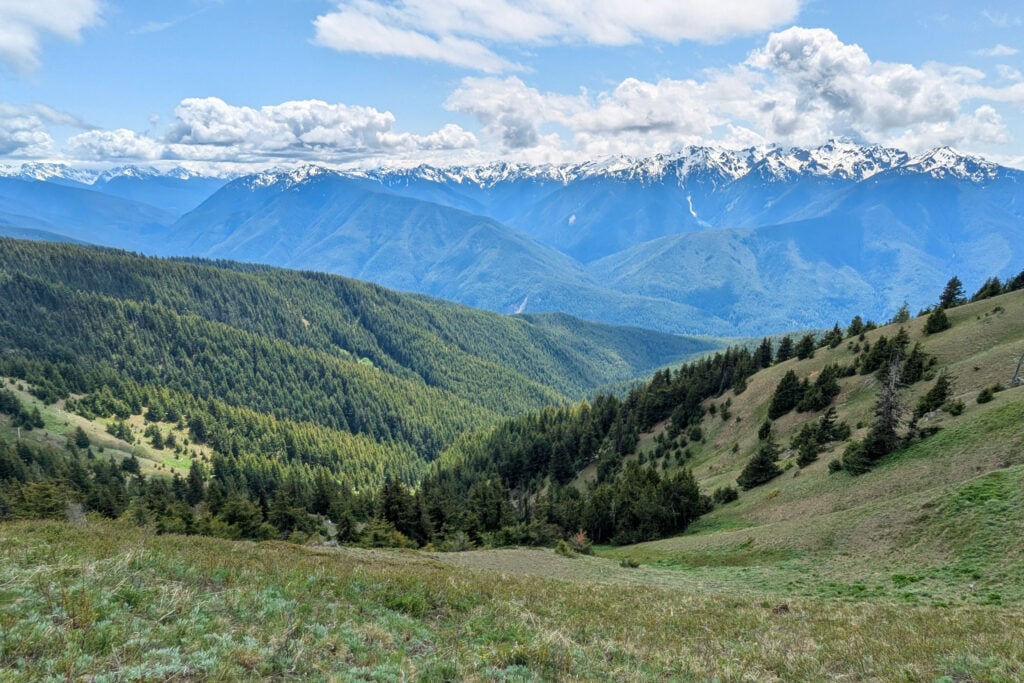
While there are many backcountry hiking trails throughout the park that lead you to the mountaintops, the easiest to access is Hurricane Ridge. This is the only area in the park that you can drive high above tree line, rewarding you with sweeping views of the surrounding mountains and valleys. The drive is 18 miles from Port Angeles via the Hurricane Ridge Road. This cliffside drive is well worth the detour!
Get our done‑for‑you, 7‑17 day route with exact drives, maps, and must‑see stops so you don’t waste time in traffic or miss the best views
Inside the guide:
*Day‑by‑day plan for Olympic, Mount Rainier, the Oregon Coast, & the Columbia River Gorge
*Details You Need: Time frames, driving routes, and where to sleep each night to reduce backtracking
*Best Friend Guarantee: Love it or get your money back
Whether you’re a first-timer to Olympic National Park or you’ve visited before, these 10 tips will give you an insight into updated conditions throughout the park and some recommended tips for your visit. The best tip I can provide, though, is just to visit. It’s an incredible park with lots to see and do.
Most travelers want to visit the most popular sites and still avoid the crowds. We created a step-by-step itinerary so you can visit the best places at the right times.
OLYMPIC TRIP PLANNER: To read or watch all of our content about Olympic National Park, check out our Olympic Homepage
THINGS TO DO: Don’t miss all that Olympic has to offer, including hikes, Lake Crescent, Kalaloch and Ruby beaches, the Hoh Rain Forest, Hurricane Ridge, and Sol Duc Hot Springs.
WHERE TO EAT: Don’t miss the best places to eat in Olympic National Park
GREAT CITIES TO STAY OR CHECK OUT: Learn about where to camp when visiting Olympic plus things to do in Port Angeles, Port Townsend, Sequim, and Forks.
KNOW BEFORE YOU GO: Find out how to get there, the best time to visit, which is the best entrance, and all about driving around Olympic